By Aamer Madhani and Vladimir Isachenkov
Presidents Joe Biden and Vladimir Putin spoke for nearly an hour late Thursday amid growing alarm over Russia's troop buildup near Ukraine, a simmering crisis further complicated as the Kremlin has stepped up its calls for security guarantees and test fired hypersonic missiles to underscore its demands.
Putin requested the call, the second between the leaders this month, ahead of scheduled talks between senior U.S. and Russian officials set for Jan. 10 in Geneva.
White House officials said that the call began at 3:35 p.m. EST and concluded 50 minutes later, after midnight in Moscow. There was no immediate readout from either side.
Russia has made clear it wants a written commitment that Ukraine will never be allowed to join NATO and that the alliance's military equipment will not be positioned in former Soviet states, demands that the Biden administration has made clear are non-starters.
The White House said ahead of the call that Biden would tell Putin that a diplomatic path remains open even as the Russians have moved an estimated 100,000 troops toward Ukraine and Kremlin officials have turned up the volume on its demands for new guarantees from the U.S. and NATO.
Those demands are to be discussed during the talks in Geneva, but it remains unclear what, if anything, Biden would be willing to offer Putin in exchange for defusing the crisis.
Draft security documents Moscow submitted demand that NATO deny membership to Ukraine and other former Soviet countries and roll back its military deployments in Central and Eastern Europe.
The U.S. and its allies have refused to offer Russia the kind of guarantees on Ukraine that Putin wants, citing NATO’s principle that membership is open to any qualifying country. They agreed, however, to hold talks with Russia to discuss its concerns.
The security proposal by Moscow has raised the question of whether Putin is making unrealistic demands in the expectation of a Western rejection that would give him a pretext to invade.
Steven Pifer, a career foreign service officer who served as U.S. ambassador to Ukraine in the Clinton administration, said the Biden administration could engage on some elements of Russia's draft document if Moscow is serious about talks.
Key NATO members have made clear there is no appetite for expanding the alliance in the near future. The U.S. and allies could also be receptive to language in the Russians' draft document calling for establishing new consultative mechanisms, such as the NATO-Russia Council and a hotline between NATO and Russia.
“The draft treaty’s proposed bar on any NATO military activity in Ukraine, eastern Europe, the Caucasus, or Central Asia is an overreach, but some measures to limit military exercises and activities on a reciprocal basis might be possible,” Pifer, who is now a senior fellow at Brookings Institution, wrote in an analysis for the Washington think tank.
Biden planned to tell Putin that for there to be “real progress” in the talks they must be conducted in “a context of de-escalation rather than escalation,” according to a senior administration official who briefed reporters before the call. The official spoke on the condition of anonymity.
The call was set up on Putin’s initiative, Kremlin spokesperson Dmitry Peskov said Thursday.
“The goal of the conversation is clear — to continue discussing the issues that were on the agenda during the recent conversation via video conference,” Peskov told reporters. That Dec. 7 call focused on the Russian troop movements, which have unsettled Ukraine and other European allies, as well as Moscow's demand for security guarantees.
Biden and Putin, who met in Geneva in June to discuss an array of tensions in the U.S.-Russia relationship, are not expected to take part in the January talks.
In the Dec. 7 video call, the White House said, Biden put Moscow on notice that an invasion of Ukraine would bring sanctions and enormous harm to the Russian economy. Russian officials have dismissed the sanction threats.
Last week, Russia test-fired Zircon hypersonic missiles, a provocative move that Peskov said was meant to help make Russia’s push for security guarantees “more convincing." The test was the first time Zircon missiles were launched in a salvo, indicating the completion of tests before the new missile enters service with the Russian navy next year and arms its cruisers, frigates and submarines.
U.S. intelligence earlier this month determined that Russian planning was underway for a possible military offensive that could begin as soon as early 2022, but that Putin had yet to determine whether to move forward with it.
Oleksiy Danilov, the secretary of Ukraine’s Security and Defense Council, said Thursday his country believes there is no immediate threat of a major Russian invasion.
“Our experts say that the Russian Federation just physically can’t mount a big invasion of our territory,” Danilov said. “There is a time period needed for preparations.”
The U.S. military has flown surveillance flights in Ukrainian airspace this week, including a flight Thursday by an Air Force E-8C JSTARS aircraft, according to Chuck Pritchard, a spokesman for U.S. European Command. That plane is equipped to provide intelligence on ground forces.
Pritchard said such flights are conducted with European allies “routinely” and the missions this week were “not in response to any specific event.”
Moscow and NATO representatives are expected to meet in the days after the Geneva talks, as are Russia and the Organization for Security and Co-operation in Europe, which includes the United States.
Russia has denied an intention of launching an invasion and, in turn, accused Ukraine of hatching plans to try to reclaim control of the territories held by Moscow-backed rebels by force. Ukraine has rejected the claim.
At the same time, Putin has urged the West to move quickly to meet his demands, warning that Moscow will have to take “adequate military-technical measures” if the West continues its “aggressive” course “on the threshold of our home.”
As Biden prepared for the talks with Putin, the administration also sought to highlight the commitment to Ukraine and drive home that Washington is committed to the “principle of nothing about you without you” in shaping policy that affects European allies.
Secretary of State Antony Blinken spoke on Wednesday with Ukrainian President Volodymyr Zelenskyy.
Past military incursions by Putin loom large.
In 2014, Russian troops marched into the Black Sea peninsula of Crimea and seized the territory from Ukraine. Russia's annexation of Crimea was one of the darker moments for President Barack Obama on the international stage.
The U.S.-Russia relationship was badly damaged near the end of President George W. Bush's administration after Russia’s 2008 invasion of its neighbor Georgia after Georgian President Mikheil Saakashvili ordered his troops into the breakaway region of South Ossetia.
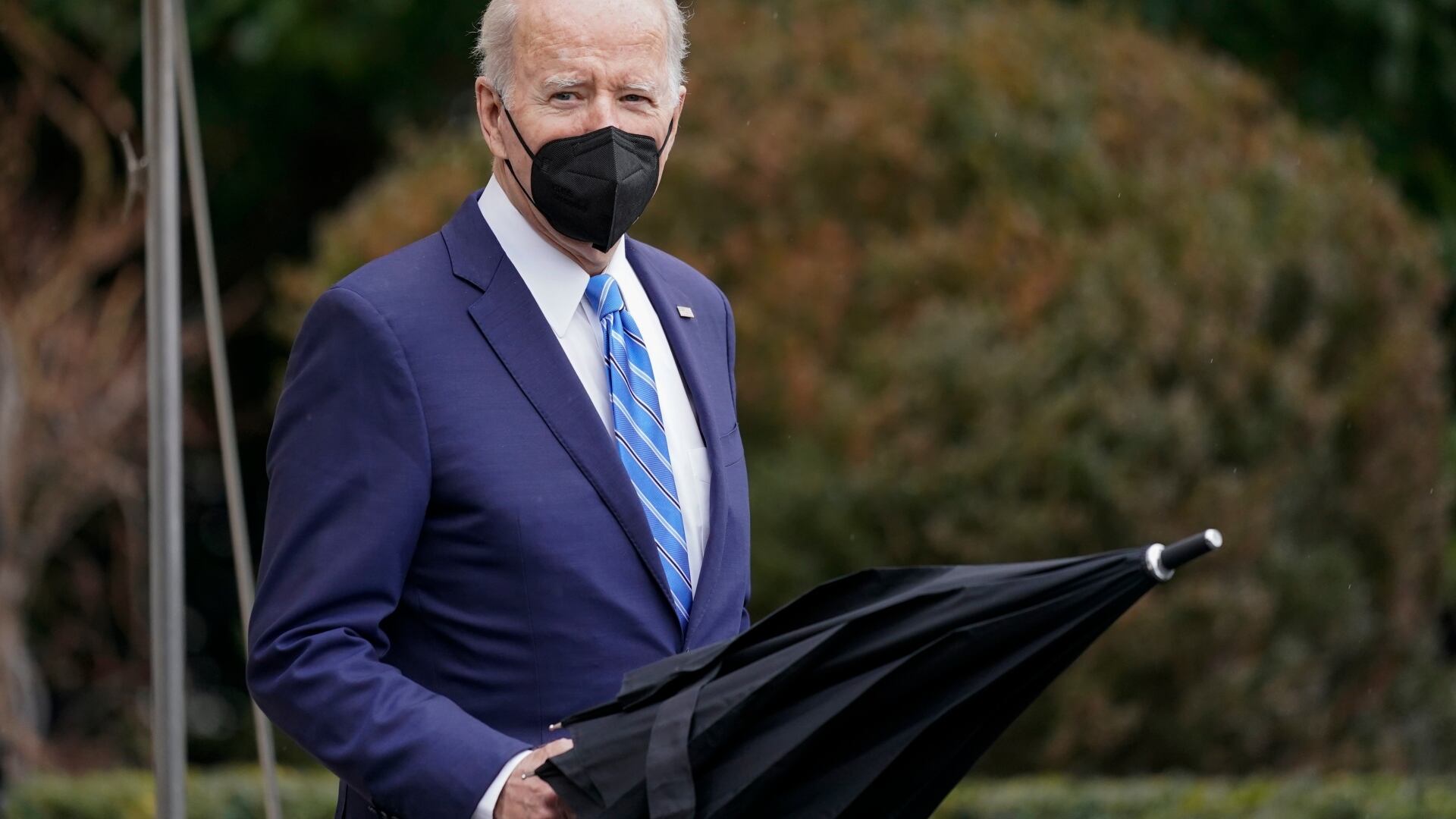
Biden, who is spending the week in his home state of Delaware, spoke to Putin from his home near Wilmington. The White House distributed a photo of the president speaking to the Russian leader from a desk lined with family photos.
Ahead of the call, Putin sent a telegram to Biden with New Year’s and Christmas wishes, which was posted on the Kremlin site on Thursday, along with other holiday messages to world leaders.
“I am convinced that in the development of our agreements reached during the June summit in Geneva and subsequent contacts that we can move forward and establish an effective Russian-American dialogue based on mutual respect and in consideration of each other’s national interests," Putin wrote.
___
Vladimir Isachenkov reported from Moscow. Associated Press writers Dasha Litvinova in Moscow, Robert Burns in Washington and Yuras Karmanau in Kyiv, Ukraine, contributed to this report.
Updated on December 30, 2021, at 5:55 p.m. ET with the latest details.