By Zeke Miller, Aamer Madhani, and Jonathan Lemire
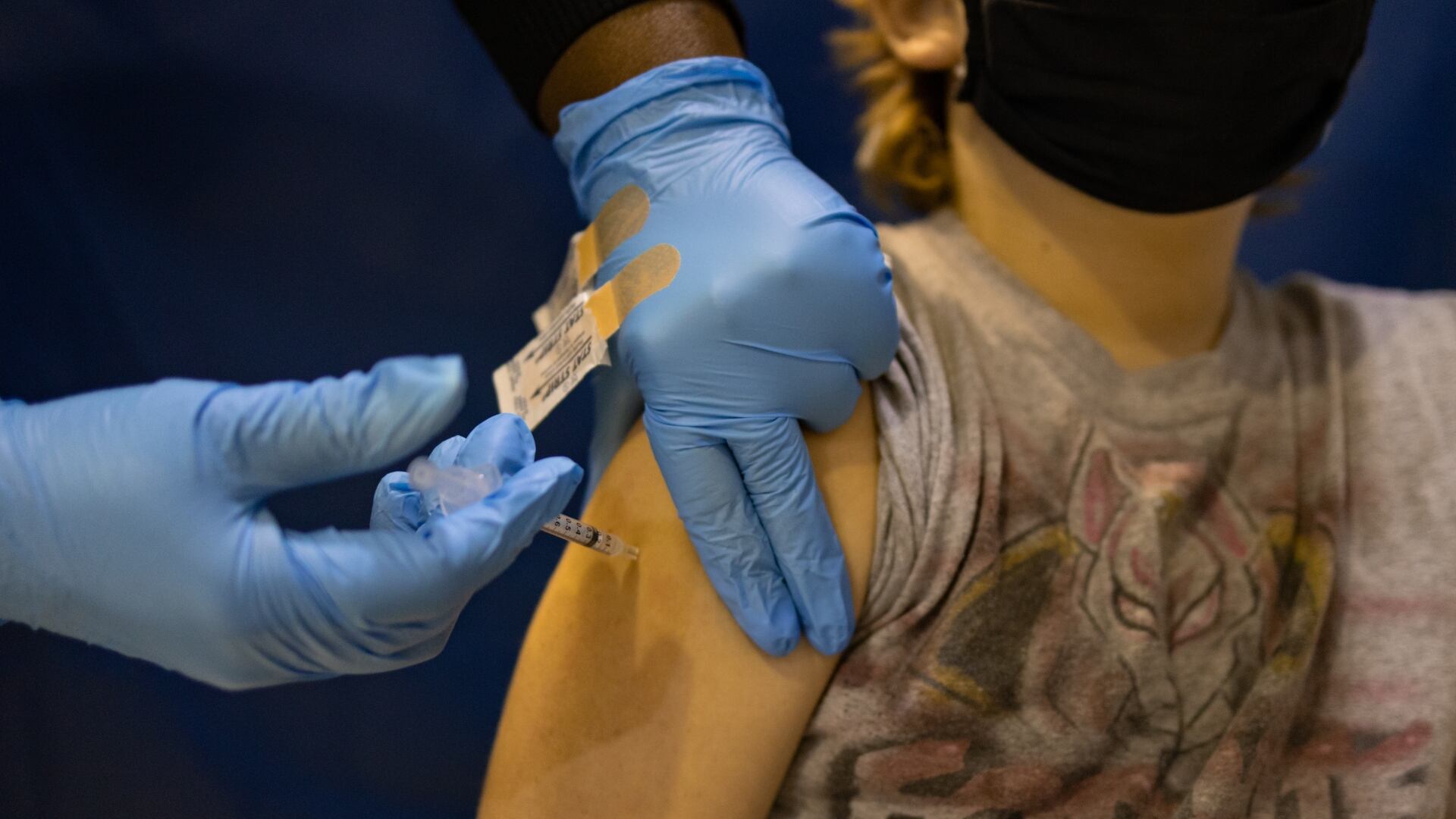
President Joe Biden urged global leaders Thursday to join him in sharing coronavirus vaccines with struggling nations around the world after he promised the U.S. would donate 500 million doses to help speed the pandemic’s end and bolster the strategic position of the world's wealthiest democracies.
Speaking in England before a summit of the Group of Seven world leaders, Biden announced the U.S. commitment to vaccine sharing, which comes on top of 80 million doses he has already pledged by the end of the month. He argued it was in both America's interests and the world's to make vaccination widely and speedily available everywhere.
“We’re going to help lead the world out of this pandemic working alongside our global partners," Biden said. He added that on Friday the G-7 nations would join the U.S. in outlining their vaccine donation commitments.
British Prime Minister Boris Johnson wrote in The Times of London newspaper that it was now time for wealthy countries to “shoulder their responsibilities” and “vaccinate the world.” His country has yet to send any doses abroad or announce a solid plan to share vaccines. Johnson indicated Britain had millions of doses in surplus stocks.
French President Emmanuel Macron welcomed the U.S. commitment and said Europe should do the same.
“I think the European Union needs to have at least the same level of ambition as the United States” and be able to make a similar announcement, he said at a news conference.
Biden said the U.S. was sharing its doses “with no strings attached” or “pressure for favors.”
“We’re doing this to save lives, to end this pandemic, and that’s it,” he said.
Biden had faced mounting pressure to outline his global vaccine sharing plan, especially as inequities in supply around the world have become more pronounced and the demand for shots in the U.S. has dropped precipitously in recent weeks.
“In times of trouble, Americans reach out to offer help,” Biden said, adding that the U.S. doses would “supercharge” the global vaccination campaign. "Our values call on us to do everything that we can to vaccinate the world against COVID-19.″
The U.S. commitment is to buy and donate 500 million Pfizer doses for distribution through the global COVAX alliance to 92 lower-income countries and the African Union, bringing the first steady supply of mRNA vaccine to the countries that need it most. A price tag for the 500 million doses was not released, but the U.S. is now set to be COVAX's largest vaccine donor in addition to its single largest funder with a $4 billion commitment.
The global alliance has thus far distributed just 81 million doses and parts of the world, particularly in Africa, remain vaccine deserts. White House officials hope the ramped-up distribution program can be the latest example of a theme Biden plans to hit frequently during his week in Europe: that Western democracies, and not rising authoritarian states, can deliver the most good for the world.
White House officials said the 500 million vaccines will be shipped starting in August, with the goal of distributing 200 million by the end of the year. The remaining 300 million doses would be shipped in the first half of 2022.
After leading the world in new cases and deaths over much of the last year, the rapid vaccination program in the U.S. now positions it among the leaders of the global recovery. Nearly 64% of adults in the U.S. have received at least one vaccine dose and the average numbers of new positive cases and deaths in the U.S. are lower now than at any point since the earliest days of the pandemic.
The Organization for Economic Cooperation and Development last week projected that the U.S. economy would grow at a rate of 6.9% this year, making it one of the few nations for which forecasts are rosier now than before the pandemic.
U.S. officials hope the summit will conclude with a communique showing a commitment from the G-7 countries and nations invited to participate to do more to help vaccinate the world and support public health globally.
National security adviser Jake Sullivan told reporters Wednesday that G-7 leaders are “converging” around the idea that vaccine supply can be increased in several ways, including by countries sharing more of their own doses, helping to increase global manufacturing capacity and doing more across the “chain of custody” from when the vaccine is produced to when it is injected into someone in the developing world.
Biden harked back to the Detroit-area workers who 80 years ago built tanks and planes “that helped defeat the threat of global fascism in World War II.”
“They built what became known as the arsenal of democracy,” Biden said. “Now a new generation of American men and women, working with today’s latest technology, is going to build a new arsenal to defeat the current enemy of world peace, health and stability: COVID-19.”
He noted that Pfizer's plant in Kalamazoo, Michigan, is not far from Detroit.
Last week, the White House unveiled plans to donate an initial allotment of 25 million doses of surplus vaccine overseas, mostly through the United Nations-backed COVAX program, promising infusions for South and Central America, Asia, Africa and others.
Officials say a quarter of that excess will be kept in reserve for emergencies and for the U.S. to share directly with allies and partners, including South Korea, Taiwan and Ukraine.
China and Russia have shared, with varying success, their domestically produced vaccines with some needy countries, often with hidden strings attached. Sullivan said Biden “does want to show — rallying the rest of the world’s democracies — that democracies are the countries that can best deliver solutions for people everywhere.”
The U.S.-produced mRNA vaccines have also proven to be more effective against both the original strain and more dangerous variants of COVID-19 than the more conventional vaccines produced by China and Russia. Some countries that have had success in deploying those conventional vaccines have nonetheless seen cases spike.
Biden’s decision to purchase the doses, officials said, was meant to keep them from getting locked up by richer nations that have the means to enter into purchasing agreements directly with manufacturers. Just last month, the European Commission signed an agreement to purchase as many as 1.8 billion Pfizer doses in the next two years, a significant share of the company’s upcoming production — though the bloc reserved the right to donate some of its doses to COVAX.
Global public health groups have been aiming to use the G-7 meetings to press wealthier democracies to do more to share vaccines with the world. Biden's plans drew immediate praise.
Tom Hart, acting CEO at The ONE Campaign, a nonprofit that seeks to end poverty, said Biden’s announcement was “the kind of bold leadership that is needed to end this global pandemic.”
“We urge other G-7 countries to follow the U.S.’ example and donate more doses to COVAX,” he added. “If there was ever a time for global ambition and action to end the pandemic, it’s now.”
Others have called on the U.S. to do even more.
“Charity is not going to win the war against the coronavirus,” said Niko Lusiani, Oxfam America’s vaccine lead. “At the current rate of vaccinations, it would take low-income countries 57 years to reach the same level of protection as those in G-7 countries. That’s not only morally wrong, it’s self-defeating given the risk posed by coronavirus mutations.”
Biden last month broke with European allies to endorse waiving intellectual property rules at the World Trade Organization to promote vaccine production and equity. But many in his own administration acknowledge that the restrictions were not the driving cause of the global vaccine shortage, which has more to do with limited manufacturing capacity and shortages of delicate raw materials.
___
Miller reported from Washington. Lemire reported from Plymouth, England. AP writer Sylvie Corbet contributed to this report from Paris.