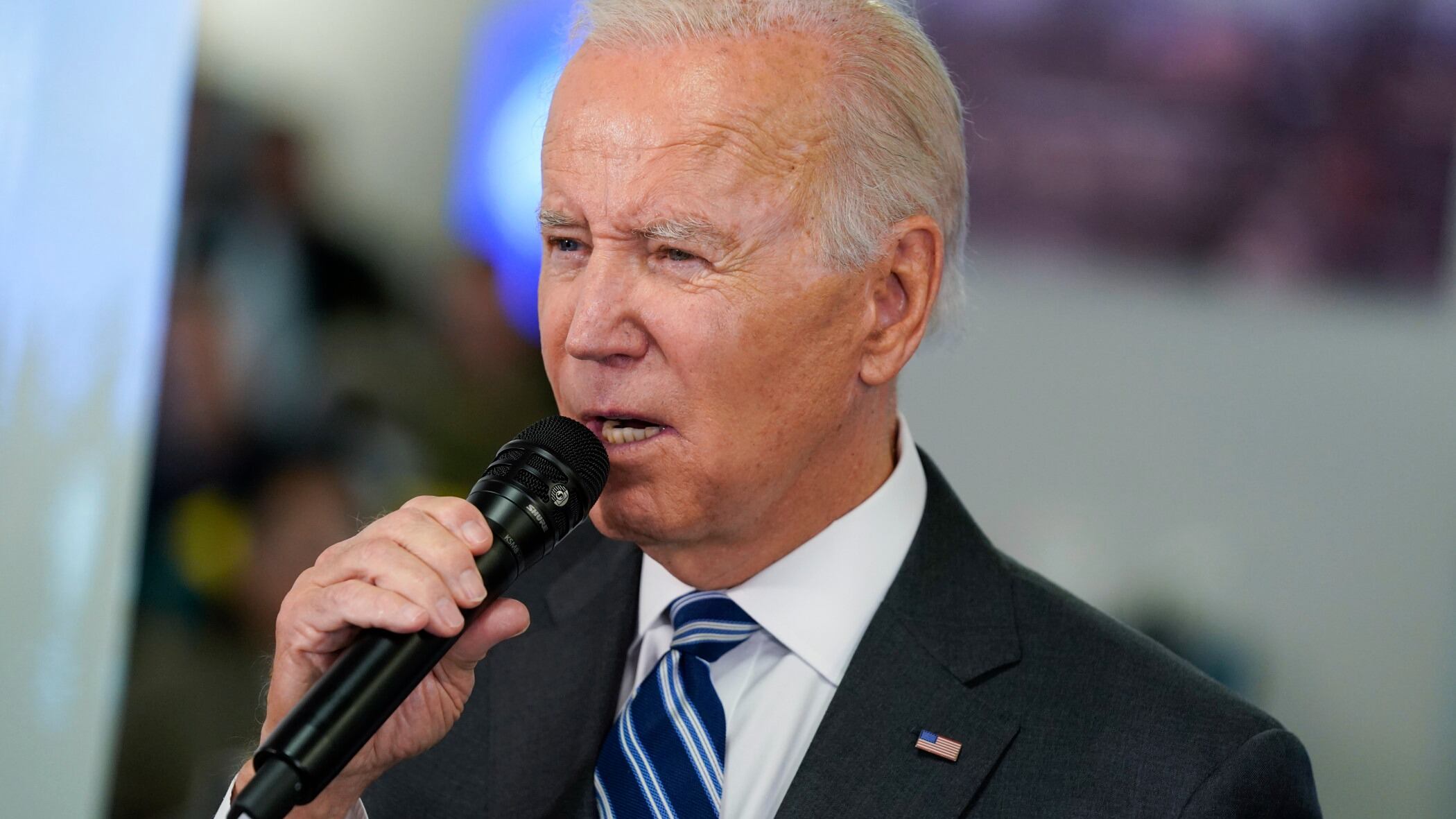
President Joe Biden has chosen a new leader for the National Security Agency and U.S. Cyber Command, a joint position that oversees much of America's cyber warfare and defense.
Air Force Lt. Gen. Timothy Haugh, the current deputy commander of Cyber Command, would replace Army Gen. Paul Nakasone, who has led both organizations since May 2018 and was expected to step down this year, according to a notice sent by the Air Force this week and confirmed by a person familiar with the announcement. The person spoke on condition of anonymity to discuss personnel matters not yet made public.
If confirmed, Haugh will take charge of highly influential U.S. efforts to bolster Ukraine's cybersecurity and share information with Ukrainian forces fighting Russia's invasion. He will also oversee programs to detect and stop foreign influence and interference in American elections, as well as those targeting criminals behind ransomware attacks that have shut down hospital systems and at one point a key U.S. fuel pipeline.
Politico first reported that Haugh was picked.
It's unclear whether Haugh will be affected by a Republican senator's blockade of all military nominations. Sen. Tommy Tuberville of Alabama has for months objected to the Pentagon's policy of providing travel money and support to troops seeking abortions but based in states with abortion bans.
Haugh's nomination to lead both the NSA and Cyber Command reflects the White House's intention to keep one person in charge of both organizations. That arrangement is known as a “dual-hat” posting.
Some key Republicans have long wanted to split the leadership, saying each organization is important enough to require a full-time leader. Nakasone has long advocated for keeping the dual hat, saying it gives him and future leaders access to more powers more efficiently.
The Biden administration established a small study group last year to review the leadership structure. The review signaled support for keeping the position as is.
An official familiar with the matter said the group’s review found that having a single head in charge of both agencies better mirrored how U.S. allies’ cyber and intelligence operations were structured and made it easier to act quickly on information — a critical aspect of countering cyberwarfare. The official spoke to The Associated Press on the condition of anonymity to be able to discuss sensitive matters.
The group also found that within the U.S., having a single head also streamlined decisions and enabled the U.S. to more quickly act on intelligence, rather than have the information move through the leadership of both structures before recommendations could be made on a response.
The group reviewed case studies of intelligence and cyber operations to determine whether the dual hat structure was necessary and briefed the defense secretary, the chairman of the Joint Chiefs of Staff, the Office of the Director of National Intelligence and relevant congressional committees on its findings, the official said.
According to a service biography, Haugh is a career signals intelligence officer and recipient of the Bronze Star, given to service members for heroism or outstanding achievement in a combat theater. He has been deputy commander at U.S. Cyber Command since August.