District of Columbia National Guard stand outside the Capitol, Wednesday night, Jan. 6, 2021, after a day of rioting protesters. It's been a stunning day as a number of lawmakers and then the mob of protesters tried to overturn America's presidential election, undercut the nation's democracy and keep Democrat Joe Biden from replacing Trump in the White House. (AP Photo/John Minchillo)
By Eric Tucker
President Joe Biden has directed law enforcement and intelligence officials in his administration to study the threat of domestic violent extremism in the United States, an undertaking being launched weeks after a mob of insurgents loyal to Donald Trump stormed the U.S. Capitol.
The disclosure Friday by White House press secretary Jen Psaki is a stark acknowledgment of the national security threat that officials see as posed by American extremists motivated to violence by radical ideology. The involvement of the director of national intelligence, an office created after the Sept. 11, 2001, attacks to prevent international terrorism, suggests that American authorities are examining how to pivot to a more concerted focus on violence from extremists at home.
The threat assessment, coordinated by the national intelligence office, the FBI, and the Department of Homeland Security, will be used as a foundation to develop policy, the White House said. In addition, the National Security Council will do its own policy review to see how information about the problem can be better shared across the government. And the administration will work on a more coordinated approach, with a focus on addressing social media and radicalization, she said.
“The Jan. 6 assault on the Capitol and the tragic deaths and destruction that occurred underscored what we all know: The rise of domestic violent extremism is a serious and growing national security threat,” Psaki said, adding that the administration will confront the problem with resources, policies and “respect for constitutionally protected free speech and political activities.”
The riot at the Capitol, which led last week to Trump's second impeachment, raised questions about whether a federal government national security apparatus that for years has moved aggressively to combat threats from foreign terror groups and their followers in America is adequately equipped to address the threat of domestic extremism. It's an issue that has flared periodically over the years, with different attacks — including a massacre at a Pittsburgh synagogue — renewing debate over whether a law specific to domestic terrorism is needed.
It is unclear when the threat assessment will conclude or whether it will precipitate law enforcement and intelligence getting new tools or authorities to address a problem that officials say has proved challenging to combat, partly because of First Amendment protections.
FBI Director Chris Wray said last fall that, over the past year, the most lethal violence has come from anti-government activists, such as anarchists and militia types.
Law enforcement agencies are under scrutiny for their preparations for Jan. 6, when a violent mob of Trump supporters overran the police and stormed into the Capitol. More than 150 people are facing charges so far, including a man who was photographed wearing a “Camp Auschwitz” shirt, as well as QAnon conspiracy theorists and members of militia groups.
Kyle Kondik, managing editor at Sabato's Crystal Ball at the University of Virginia Center for Politics, joins Cheddar News to discuss what to expect at the 2022 midterm elections.
Katie Barlow, media editor at SCOTUSblog, joins Cheddar Politics to reflect on what happened at the Supreme Court in 2021 and what may be in store for 2022.
Gerren Keith Gaynor, managing editor of politics and Washington correspondent at The Grio, joins Cheddar Politics to discuss the progress President Biden made on his policy agenda in 2021, and what remains to be done in 2022.
Ayman Mohyeldin, host of MSNBC Original Podcast 'American Radical,' joins Cheddar News to discuss how the podcast chronicles a woman's path to the insurrection.
Following the attack on the Capitol last year, several major corporations promised to no longer pour funds into the campaigns of Republican lawmakers who supported the January 6 insurrection. But not all have stood firm on their word. Among those that did keep to their promise were Nike, American Express, and Walgreens.
Rep. Annie Kuster (D-N.H. 2nd District) joined Cheddar's "Between Bells" to reflect on the January 6 insurrection and her personal experience in the Capitol when rioters attempted to overtake the House chamber. "What I now understand to be true is that the mob of rioters had reached the third floor and was literally in the hallway running toward us as we ducked into the elevator," she told Cheddar. Kuster recalled the fear she felt, wondering what might have happened if the insurrectionists crossed paths with her group. Kuster noted that she has since received therapy to help cope with the traumatic event. "A thousand acts of courage saved our life and saved our democracy," she said.
Andy Kroll, Washington bureau chief at Rolling Stone, joined Cheddar's Baker Machado to discuss the anniversary of the January 6 insurrection and how it could impact upcoming elections. Kroll talked about whether or not Trump's influence will aid Republicans in the midterms and how it could be a setup for the former president to run in the 2024 presidential election. "This day has become really almost a kind of cause for Republican base voters," he said. "And you're going to see that fueling some turnout, you're going to see that fueling, even, candidates running for office in these midterm elections."
According to a recent analysis from ProPublica and the Wall Street Journal an analysis of Facebook posts, internal company documents, and interviews reveal key evidence about the social media giant's role in January 6 insurrection. National Reporter at ProPublica Craig Silverman, joined Cheddar to discuss more.
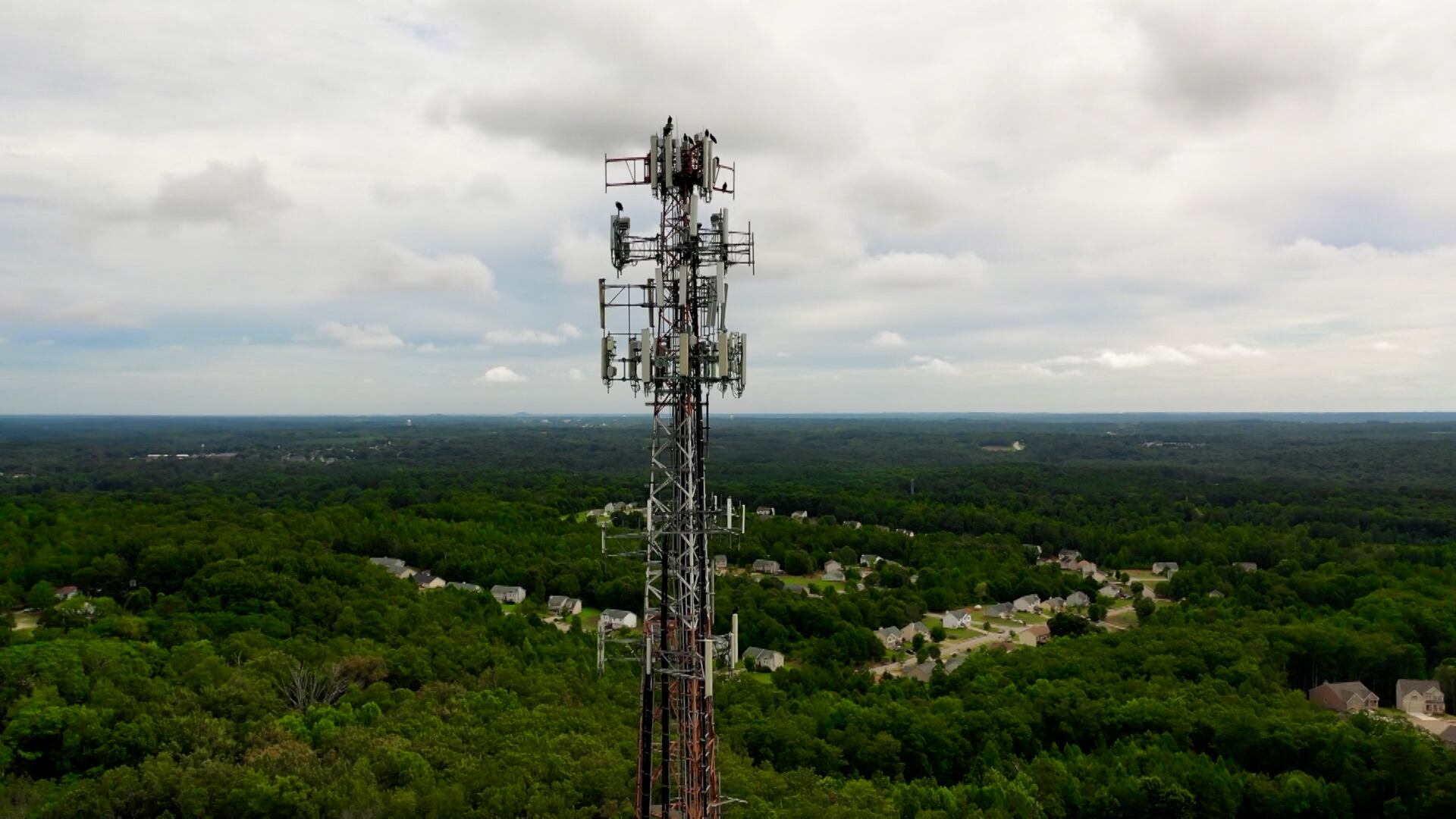
AT&T and Verizon have agreed to delay activating their 5G services for two weeks after Airlines for America, a lobbying group that represents American, Delta, and other airlines, filed a petition last week with the FCC to stop the deployment of 5G in the U.S. over concerns that the network can interfere with certain systems on airplanes. President Biden spoke out about it, saying it would avoid further delays and cancellations of flights. Light Reading 5G and Mobile Strategies Director Mike Dano joined Cheddar News' Closing Bell to discuss.
On a day where the Dow and Russell 2000 each closed more than 3% lower, Melissa Armo, founder and owner of The Stock Swoosh, says Wednesday's big sell-off could extend into after-hours trading. She joined Cheddar News' Closing Bell for more.