District of Columbia National Guard stand outside the Capitol, Wednesday night, Jan. 6, 2021, after a day of rioting protesters. It's been a stunning day as a number of lawmakers and then the mob of protesters tried to overturn America's presidential election, undercut the nation's democracy and keep Democrat Joe Biden from replacing Trump in the White House. (AP Photo/John Minchillo)
By Eric Tucker
President Joe Biden has directed law enforcement and intelligence officials in his administration to study the threat of domestic violent extremism in the United States, an undertaking being launched weeks after a mob of insurgents loyal to Donald Trump stormed the U.S. Capitol.
The disclosure Friday by White House press secretary Jen Psaki is a stark acknowledgment of the national security threat that officials see as posed by American extremists motivated to violence by radical ideology. The involvement of the director of national intelligence, an office created after the Sept. 11, 2001, attacks to prevent international terrorism, suggests that American authorities are examining how to pivot to a more concerted focus on violence from extremists at home.
The threat assessment, coordinated by the national intelligence office, the FBI, and the Department of Homeland Security, will be used as a foundation to develop policy, the White House said. In addition, the National Security Council will do its own policy review to see how information about the problem can be better shared across the government. And the administration will work on a more coordinated approach, with a focus on addressing social media and radicalization, she said.
“The Jan. 6 assault on the Capitol and the tragic deaths and destruction that occurred underscored what we all know: The rise of domestic violent extremism is a serious and growing national security threat,” Psaki said, adding that the administration will confront the problem with resources, policies and “respect for constitutionally protected free speech and political activities.”
The riot at the Capitol, which led last week to Trump's second impeachment, raised questions about whether a federal government national security apparatus that for years has moved aggressively to combat threats from foreign terror groups and their followers in America is adequately equipped to address the threat of domestic extremism. It's an issue that has flared periodically over the years, with different attacks — including a massacre at a Pittsburgh synagogue — renewing debate over whether a law specific to domestic terrorism is needed.
It is unclear when the threat assessment will conclude or whether it will precipitate law enforcement and intelligence getting new tools or authorities to address a problem that officials say has proved challenging to combat, partly because of First Amendment protections.
FBI Director Chris Wray said last fall that, over the past year, the most lethal violence has come from anti-government activists, such as anarchists and militia types.
Law enforcement agencies are under scrutiny for their preparations for Jan. 6, when a violent mob of Trump supporters overran the police and stormed into the Capitol. More than 150 people are facing charges so far, including a man who was photographed wearing a “Camp Auschwitz” shirt, as well as QAnon conspiracy theorists and members of militia groups.
The memoir, "COMPROMISED: Counterintelligence and the Threat of Donald J. Trump", tells a familiar story from a bit of a different source: Peter Strzok himself, former FBI Counterintelligence Agents and Agency Veteran who spent most of his very long career investigating some of the most controversial inquiries, most notably in recent American history. Those inquiries were Hillary Clinton's email to even Trump Russia investigations. Former FBI Agent and Author of "Compromised" Peter Strzok, joined Cheddar to discuss more.
President Biden's first year did not come to the close that he had hoped after last night's Senate vote blocked the voting rights bill, a priority that Biden has promoted since his inauguration. Joining us to discuss the voting rights bill, and many others passing through congress is congresswoman Lori Trahan, representing Massachusett's 3rd district.
Members of Congress have voted to advance a bill meant to address antitrust concerns related to tech giants including Amazon, Apple, Google, and Meta. The 'American Innovation and Choice Online Act' is largely seen as one of the best chances for the government to reign in Big Tech's dominance
Seth Schachner, Managing Director StratAmericas; Digital Business Executive joined Cheddar's Opening Bell to discuss.
American semiconductor company, Intel officially announcing plans to build a new $20 billion chip manufacturing complex outside Columbus, Ohio. This comes as the global chip shortage continues to hamper production of everything from smart phones, to cars. Jennifer Smith - Logistics and Supply Chain Reporter, WSJ joined Cheddar's Opening Bell to discuss.
The U.S. has put more than 8,000 American troops on high alert for possible deployment to Eastern Europe as the West prepares for a potential Russian invasion of Ukraine. With Russia building up more than 100,000 troops near the Ukrainian border, concerns over the country's behavior are mounting. Joel Rubin, Former Deputy Assistant Secretary of State and President of the Washington Strategy Group, joined Cheddar to discuss what this means for U.S.-Russia relations, and where the conflict might be heading next.
As the midterm election looms, things aren't looking too promising for President Joe Biden. One year into his term as president, Biden is facing one of the lowest approval ratings of any modern-day president, threatening his party's control of the House in 2022. Brian Bennett, Senior White House Correspondent for TIME, joined Cheddar's Opening Bell to discuss.
A full one year into his term as President of The United States, President Biden addressed the nation on Wednesday, facing questions on everything from inflation to chip shortages and covid-19. As Biden enters his second year in office, he is facing one of the lowest approval ratings of any modern-day president. Kate Davidson, Reporter, POLITICO joined Cheddar's Opening Bell to discuss.
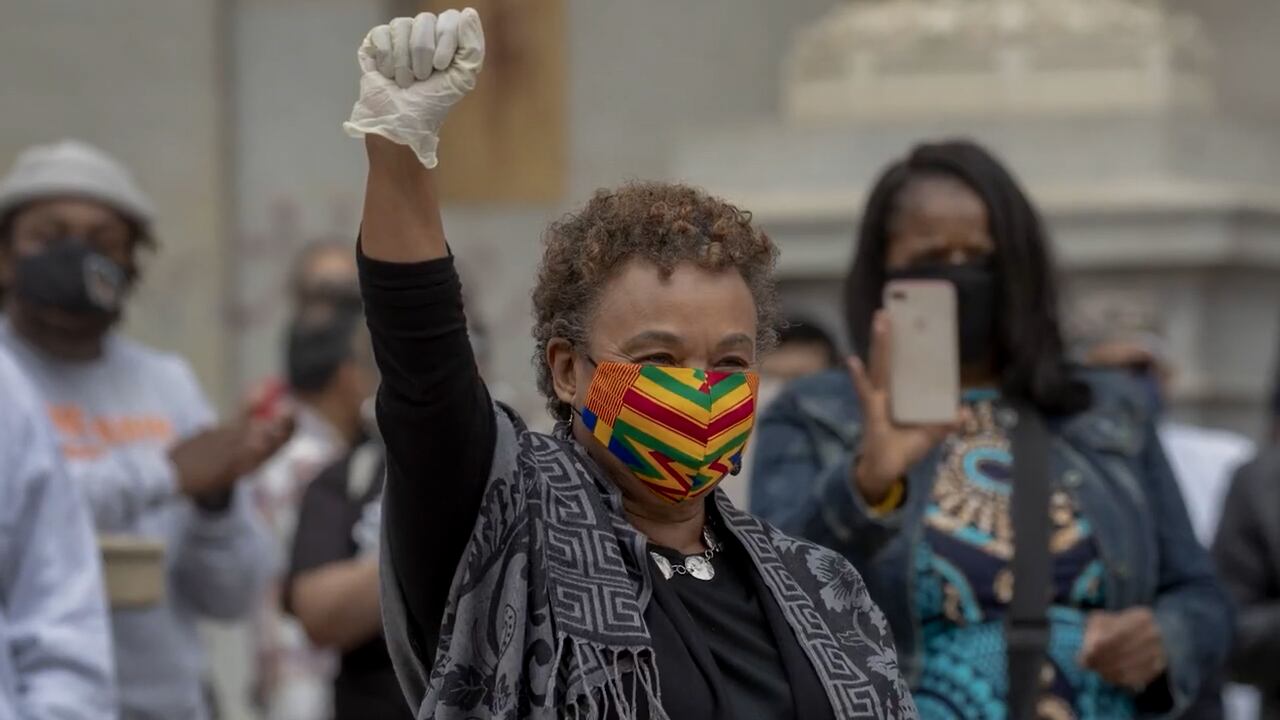
"Barbara Lee: Speaking Truth to Power" is the story of how the longtime House Democrat became, as she Is known to some, as "the Conscience of Congress." The film also
shows Representative Lee from her days working to fight community poverty to famously becoming the only member of Congress to vote "no" against the war in Afghanistan days after 9/11. The film is nominated for an NAACP Image Award, and Premieres on Starz on February 1. Film director Abby Ginzberg and Rep. Barbara Lee (D-Calif. 13th District), joined Cheddar to discuss more.
San Diego has just implemented a new law that could set the stage for how the country deals with food waste. This new law hopes to make a dent in that. Businesses and groceries stores out in San Diego will need to put a plan in place to *donate edible food rather than toss it straight to the trash. Food Rescue Manager at Feeding San Diego, Kate Garret