District of Columbia National Guard stand outside the Capitol, Wednesday night, Jan. 6, 2021, after a day of rioting protesters. It's been a stunning day as a number of lawmakers and then the mob of protesters tried to overturn America's presidential election, undercut the nation's democracy and keep Democrat Joe Biden from replacing Trump in the White House. (AP Photo/John Minchillo)
By Eric Tucker
President Joe Biden has directed law enforcement and intelligence officials in his administration to study the threat of domestic violent extremism in the United States, an undertaking being launched weeks after a mob of insurgents loyal to Donald Trump stormed the U.S. Capitol.
The disclosure Friday by White House press secretary Jen Psaki is a stark acknowledgment of the national security threat that officials see as posed by American extremists motivated to violence by radical ideology. The involvement of the director of national intelligence, an office created after the Sept. 11, 2001, attacks to prevent international terrorism, suggests that American authorities are examining how to pivot to a more concerted focus on violence from extremists at home.
The threat assessment, coordinated by the national intelligence office, the FBI, and the Department of Homeland Security, will be used as a foundation to develop policy, the White House said. In addition, the National Security Council will do its own policy review to see how information about the problem can be better shared across the government. And the administration will work on a more coordinated approach, with a focus on addressing social media and radicalization, she said.
“The Jan. 6 assault on the Capitol and the tragic deaths and destruction that occurred underscored what we all know: The rise of domestic violent extremism is a serious and growing national security threat,” Psaki said, adding that the administration will confront the problem with resources, policies and “respect for constitutionally protected free speech and political activities.”
The riot at the Capitol, which led last week to Trump's second impeachment, raised questions about whether a federal government national security apparatus that for years has moved aggressively to combat threats from foreign terror groups and their followers in America is adequately equipped to address the threat of domestic extremism. It's an issue that has flared periodically over the years, with different attacks — including a massacre at a Pittsburgh synagogue — renewing debate over whether a law specific to domestic terrorism is needed.
It is unclear when the threat assessment will conclude or whether it will precipitate law enforcement and intelligence getting new tools or authorities to address a problem that officials say has proved challenging to combat, partly because of First Amendment protections.
FBI Director Chris Wray said last fall that, over the past year, the most lethal violence has come from anti-government activists, such as anarchists and militia types.
Law enforcement agencies are under scrutiny for their preparations for Jan. 6, when a violent mob of Trump supporters overran the police and stormed into the Capitol. More than 150 people are facing charges so far, including a man who was photographed wearing a “Camp Auschwitz” shirt, as well as QAnon conspiracy theorists and members of militia groups.
The dating app Bumble has sponsored bills and pushed lawmakers to criminalize the online practice of sending unsolicited nudes or “cyberflashing." Payton Iheme, Bumble's head of public policy for the Americas, joined Cheddar News to discuss why the app was going after the harassing behavior beyond its own platform. "Now, while we went to work internally in the company, and we created something called private detector to automatically blur those images so the user can decide if they want to see them, there's nothing for the rest of the internet," she said. "And so that's why we went to work with these laws."
Constituent service platform Indigov recently raised $25 million in a Series B funding round. Indigov bills itself as a constituent relationship management tool that helps elected officials improve the way they organize, respond to, and engage those they serve. The startup's services are being used by federal, state, and local governments across the country, including the U.S. House of Representatives. Alex Kouts, founder & CEO of Indigov, joins Cheddar News' Closing Bell to discuss.
Cheddar Politics takes a deeper look at the takeaways from the Georgia primary elections on Tuesday. Georgia Public Broadcasting's local and state politics reporter, Stephen Fowler, joins us to discuss the limits of Trump endorsements and break down what the outcome in each race means.
After learning that the suspect in the Uvalde school shooting posted about his intentions on Facebook, activists are urging social networks to make changes. Lena Derhally, a licensed psychotherapist and author of "The Facebook Narcissist," joined Cheddar News to discuss the role social media plays in school shootings. "They're not really invested in taking down hateful content," she said about social platforms."In regards to the shooting, it was 15 minutes before that actual threat. It would be pretty hard for a social media company to trace that threat that quickly. But what they can do better is take down threats and hateful content much faster and more than they're doing now."
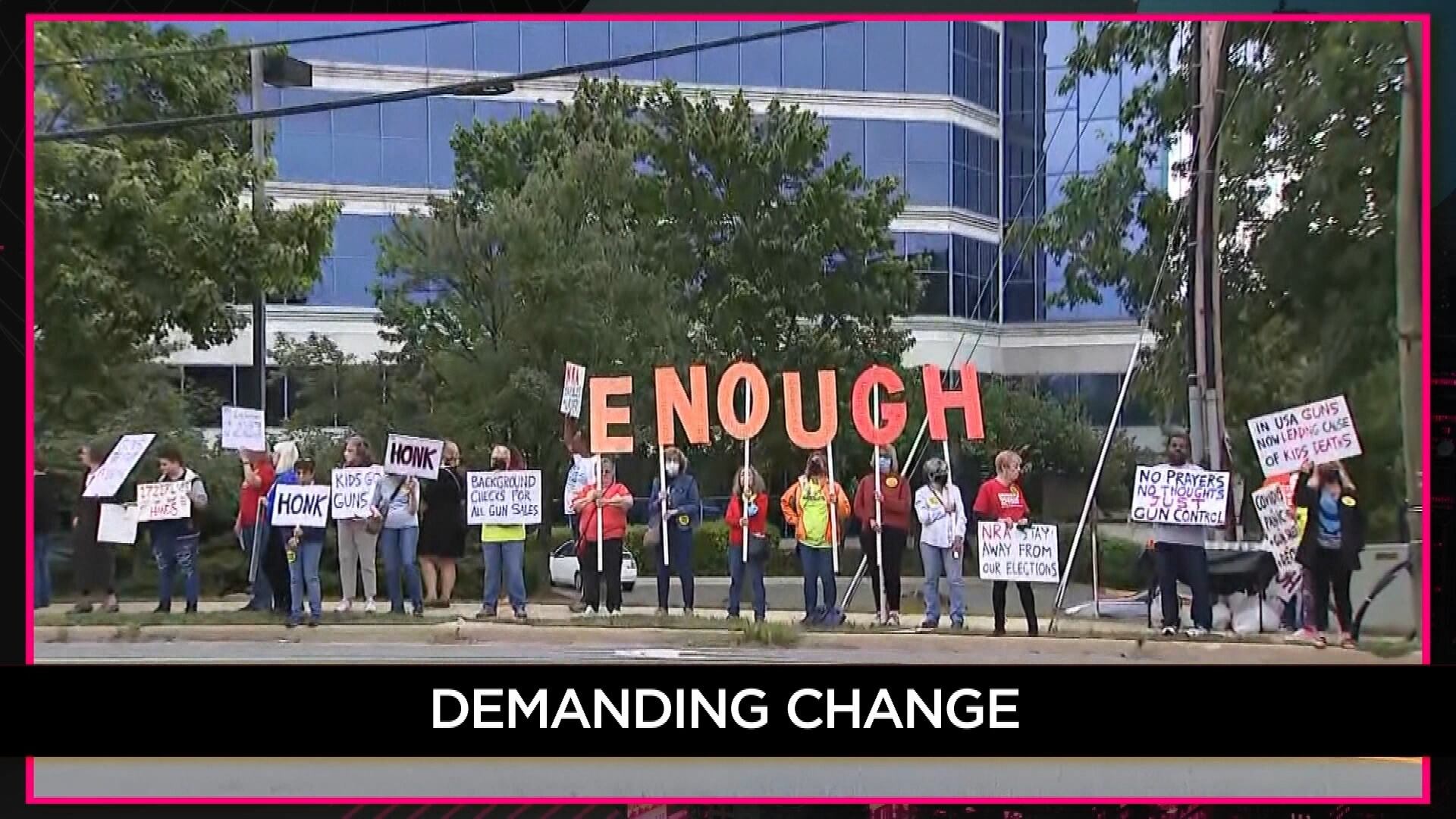
Following the mass shooting at the Robb Elementary School in Uvalde, Texas, that left 19 children and two adults dead, the debate over gun control has been reignited. While studies have shows most Americans agree on some additional regulations, there hasn't been much legislative traction even as gun violence worsens in the country. Brian Lemek, the executive director of Defend The Vote and the former executive director at Brady PAC for gun control, joined Cheddar to discuss reform efforts. "The lawmakers that we have aren't passing these at the federal level," he said. "That's the problem. We have the wrong people in charge."
The crypto industry is still reeling from Terra's recent crash. The company's blockchain was temporarily halted earlier this month after the collapse of its cryptocurrency Luna (LUNA) and its stablecoin TerraUSD (UST), which led to almost $45 billion being wiped from the tokens' market caps within a week. Now, many are left wondering what Terra's struggles mean for the broader crypto market. Reeve Collins, CEO of the NFT platform BLOCKv, joins Cheddar News' Closing Bell from Davos 2022 to discuss.