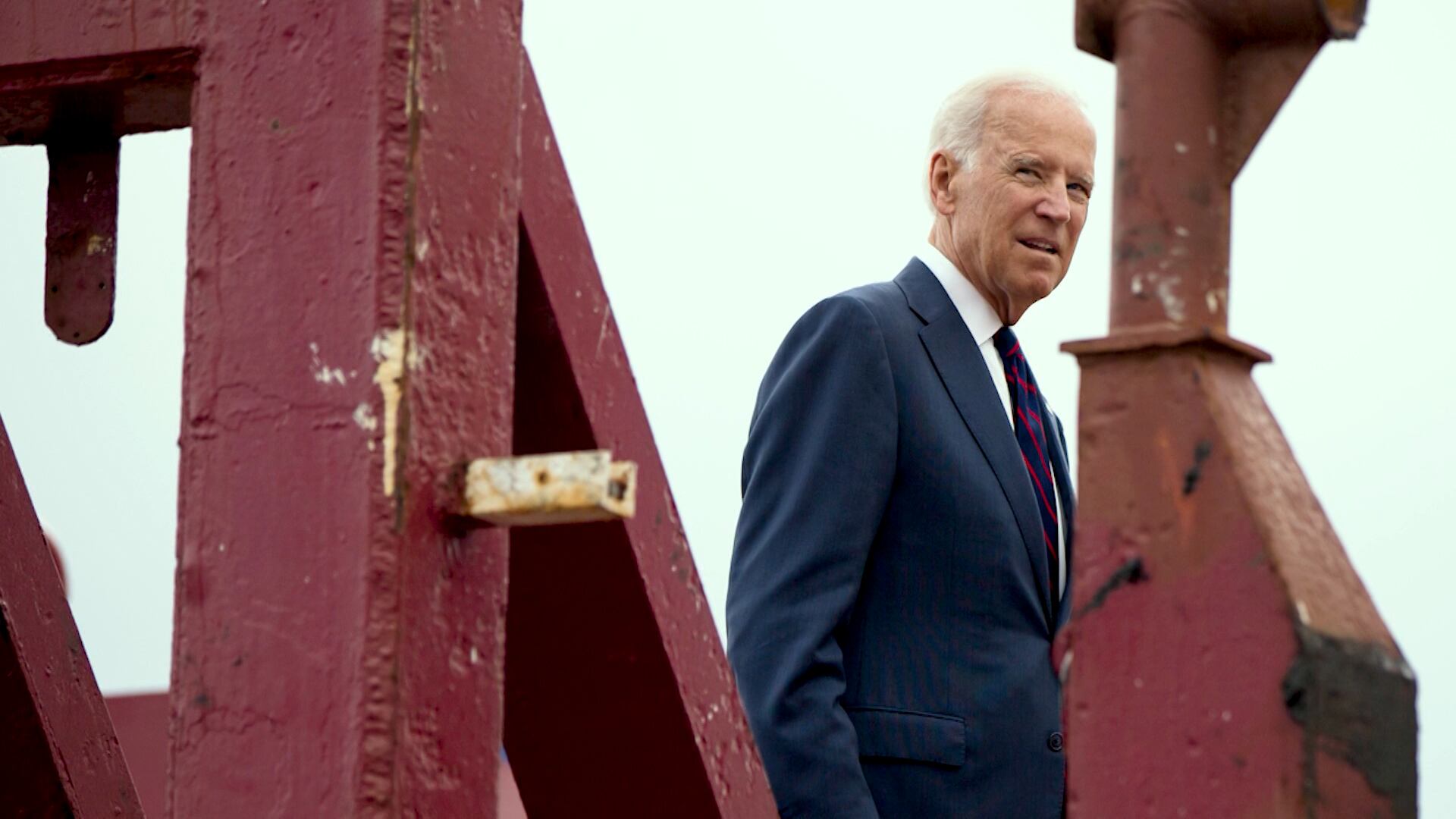
In this July 28, 2020 file photo, Democratic presidential candidate former Vice President Joe Biden speaks at a campaign event at the William "Hicks" Anderson Community Center in Wilmington, Del. Biden will not travel to Milwaukee to accept Democratic presidential nomination. (AP Photo/Andrew Harnik)
By Bill Barrow
Updated 1:55 pm ET
Joe Biden will not travel to Milwaukee to accept the Democratic presidential nomination because of concerns over the coronavirus, party officials said Wednesday, signaling a move to a convention that essentially has become entirely virtual.
It is the latest example of the pandemic's sweeping effects on the 2020 presidential election and the latest blow to traditional party nominating conventions that historically have marked the start of fall general election campaigns.
"From the very beginning of this pandemic, we put the health and safety of the American people first," said Democratic National Committee Chair Tom Perez. "We followed the science, listened to doctors and public health experts, and we continued making adjustments to our plans in order to protect lives. That's the kind of steady and responsible leadership America deserves. And that's the leadership Joe Biden will bring to the White House."
Neither the Biden campaign nor DNC officials offered details about how Biden might accept the nomination, which even in the pandemic could be a made-for-screen event that reaches tens of millions of voters via television and online.
A DNC official said all speakers and presenters for the Aug. 17-24 convention are now expected to speak from remote locations.
Wisconsin Gov. Tony Evers, a Democrat, praised Biden for leading by example.
"The upcoming Democratic convention is different than we'd imagined. A lot has changed since we set out on this journey more than a year ago now, but the one thing that hasn't is Democrats' commitment to putting health and safety first," Evers said in a statement. "It has never been more important for elected officials to lead by example — that's the kind of leader Joe is, and that's the kind of president we need. I know he will continue to have a presence in Wisconsin, virtually or otherwise, and I look forward to doing everything we can to win Wisconsin."
President Donald Trump has abandoned his own plans to accept the Republican nomination in person. On Wednesday, he mused about potentially making his acceptance speech from the White House.
Biden and Democrats for months have moved toward a virtual convention, first by delaying the convention from its original mid-July date to the week before Republicans' scheduled convention in Charlotte, North Carolina.
DNC officials later authorized organizers to plan for virtual proceedings, then added an explicit call for delegates not to travel to Milwaukee. More than 4,000 delegates already were casting mail ballots for Biden's nomination and a platform that had been written and approved in meetings conducted online. But until Wednesday, it was expected that Biden and his running mate would speak from Milwaukee.
Biden is in the final days of deciding on a vice president, who he has said will be a woman.
Trump was far more reluctant than Biden to alter his convention plans, as he sought to downplay the pandemic's significance and push the country to return to normal operations. Trump jousted with North Carolina Gov. Roy Cooper, a Democrat, because Cooper wouldn't guarantee the president that he'd lift restrictions on large public gatherings so that Trump could pack Charlotte's NBA arena.
Trump then said he'd travel to Jacksonville, Florida, to make his address, a decision welcomed at the time by Republican Gov. Ron DeSantis. Florida has since seen its COVID-19 cases spike, part of a national trend that led Trump to yield to public health experts and cancel the event.
The memoir, "COMPROMISED: Counterintelligence and the Threat of Donald J. Trump", tells a familiar story from a bit of a different source: Peter Strzok himself, former FBI Counterintelligence Agents and Agency Veteran who spent most of his very long career investigating some of the most controversial inquiries, most notably in recent American history. Those inquiries were Hillary Clinton's email to even Trump Russia investigations. Former FBI Agent and Author of "Compromised" Peter Strzok, joined Cheddar to discuss more.
President Biden's first year did not come to the close that he had hoped after last night's Senate vote blocked the voting rights bill, a priority that Biden has promoted since his inauguration. Joining us to discuss the voting rights bill, and many others passing through congress is congresswoman Lori Trahan, representing Massachusett's 3rd district.
Members of Congress have voted to advance a bill meant to address antitrust concerns related to tech giants including Amazon, Apple, Google, and Meta. The 'American Innovation and Choice Online Act' is largely seen as one of the best chances for the government to reign in Big Tech's dominance
Seth Schachner, Managing Director StratAmericas; Digital Business Executive joined Cheddar's Opening Bell to discuss.
American semiconductor company, Intel officially announcing plans to build a new $20 billion chip manufacturing complex outside Columbus, Ohio. This comes as the global chip shortage continues to hamper production of everything from smart phones, to cars. Jennifer Smith - Logistics and Supply Chain Reporter, WSJ joined Cheddar's Opening Bell to discuss.
The U.S. has put more than 8,000 American troops on high alert for possible deployment to Eastern Europe as the West prepares for a potential Russian invasion of Ukraine. With Russia building up more than 100,000 troops near the Ukrainian border, concerns over the country's behavior are mounting. Joel Rubin, Former Deputy Assistant Secretary of State and President of the Washington Strategy Group, joined Cheddar to discuss what this means for U.S.-Russia relations, and where the conflict might be heading next.
As the midterm election looms, things aren't looking too promising for President Joe Biden. One year into his term as president, Biden is facing one of the lowest approval ratings of any modern-day president, threatening his party's control of the House in 2022. Brian Bennett, Senior White House Correspondent for TIME, joined Cheddar's Opening Bell to discuss.
A full one year into his term as President of The United States, President Biden addressed the nation on Wednesday, facing questions on everything from inflation to chip shortages and covid-19. As Biden enters his second year in office, he is facing one of the lowest approval ratings of any modern-day president. Kate Davidson, Reporter, POLITICO joined Cheddar's Opening Bell to discuss.
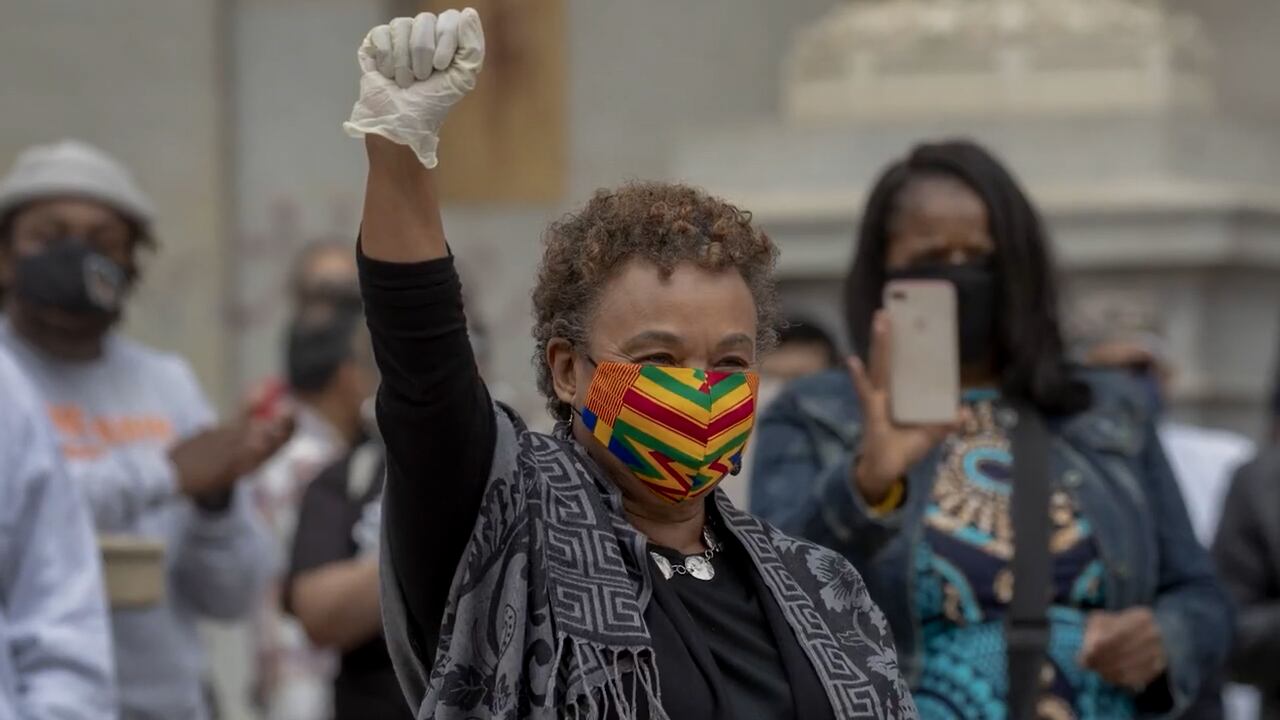
"Barbara Lee: Speaking Truth to Power" is the story of how the longtime House Democrat became, as she Is known to some, as "the Conscience of Congress." The film also
shows Representative Lee from her days working to fight community poverty to famously becoming the only member of Congress to vote "no" against the war in Afghanistan days after 9/11. The film is nominated for an NAACP Image Award, and Premieres on Starz on February 1. Film director Abby Ginzberg and Rep. Barbara Lee (D-Calif. 13th District), joined Cheddar to discuss more.
San Diego has just implemented a new law that could set the stage for how the country deals with food waste. This new law hopes to make a dent in that. Businesses and groceries stores out in San Diego will need to put a plan in place to *donate edible food rather than toss it straight to the trash. Food Rescue Manager at Feeding San Diego, Kate Garret