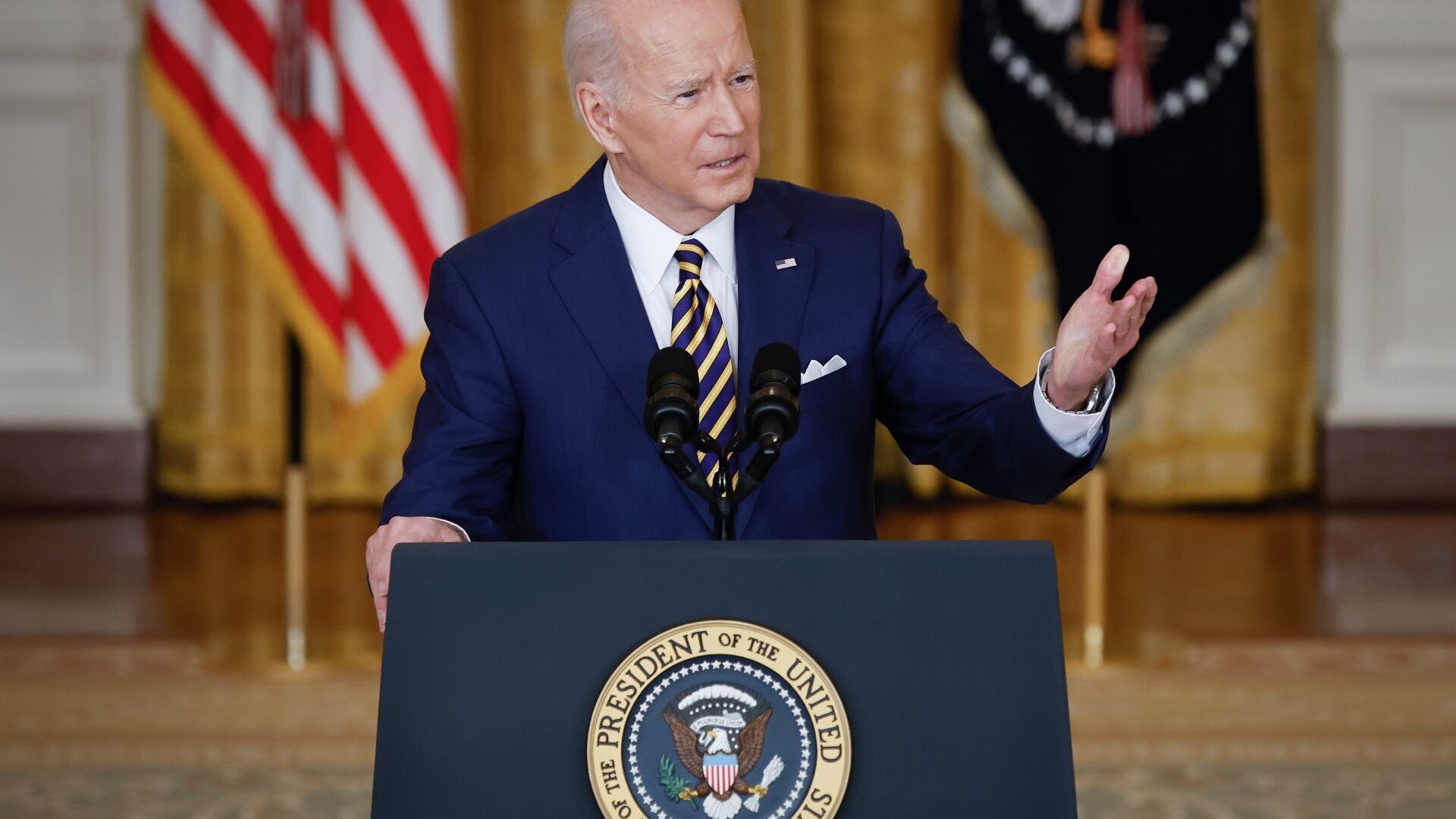
President Joe Biden on Wednesday announced his administration will extend the moratorium on federal student loan payments until August 31, easing the fears of millions of borrowers who would have to resume payments on May 1 after two years of pandemic relief.
"I know folks were hit hard by this pandemic," the president said in a Twitter video announcing the extension. "And though we've come a long way in the last year, we're still recovering from the economic crisis it caused. This continued pause will help Americans breathe a little easier as we recover and rebuild from the pandemic."
The past two years have been a boon for the more than 43 million Americans who hold a combined $1.6 trillion in federal student loan debt. At the onset of the COVID-19 pandemic in March 2020, the CARES Act instituted a moratorium on federal student loan payments and the accumulation of interest on those loans.
The original moratorium lasted through September 2020, which President Donald Trump extended through the end of December, and again through January 31, 2021.
President Joe Biden came into office and extended the payment pause through September 30, 2021, again through January, and for a third time, after much public pressure earlier this year, with the moratorium set to end on the first of May. Now it has been pushed back yet again.
Progressive lawmakers and student debt groups met the decision with praise but called on the president to cancel wide swathes of student debt through an executive order.
"We recognize that extending the payment pause is important to borrowers struggling to shoulder the harm caused by the pandemic, economic shocks, and inflation," Natalia Abrams, the president and founder of the Student Debt Crisis Center, said in a statement. "However, President Biden's piecemeal, short-term approach is not enough to meet these challenging times."
Supporters of cancellation argue the president's powers under the Higher Education Act of 1965 allow him to forgive student debt without an act of Congress. They say he's already used this authority to pause federal loan payments and the accumulation of interest.
The Departments of Justice and Education last year reviewed whether or not the president has the legal authority to cancel debt via executive order. The results of that review are contained in a heavily redacted memo, released by the Debt Collective in October after a Freedom of Information Act request, which did not offer any clarity to the public.
White House Press Secretary Jen Psaki has not provided a timeline for when the memo's contents would be made public, despite repeated questions over the past several months, saying the president continues to consider his options.
Biden has already canceled $15 billion of federal student debt for certain borrowers without any congressional input. The cancellation applies to borrowers with total and permanent disabilities, some borrowers who applied for the Public Service Loan Forgiveness program, students defrauded by the ITT Technical Institute, and students who did not complete degrees at institutions that have since shuttered.
Biden's decision and the larger conversation around debt cancellation have prompted backlash from some. Sen. Tom Cotton (R-Ark.) in a tweet called the continued extension of the moratorium "an insult" to borrowers who have paid off their debt.
Many have already noted that the extension only lasts for a little over four more months, at which time the administration is likely to face the same calls to extend the moratorium or cancel some amount of federal student debt outright.
The moratorium is also set to end just two months before the midterm elections, and the political calculation will loom large as the White House decides whether to extend again later this year.
"[T]oday's news should also be a reminder that the student debt crisis continues to loom over the financial futures of families across the country," Mike Pierce, executive director of the Student Borrower Protection Center, said in a statement.
"Come August, people with student debt will have no one to blame but Joe Biden if they still remain trapped in America's broken student loan system because he didn't keep his promise to cancel student debt," he said.