By Josh Boak and Aamer Madhani
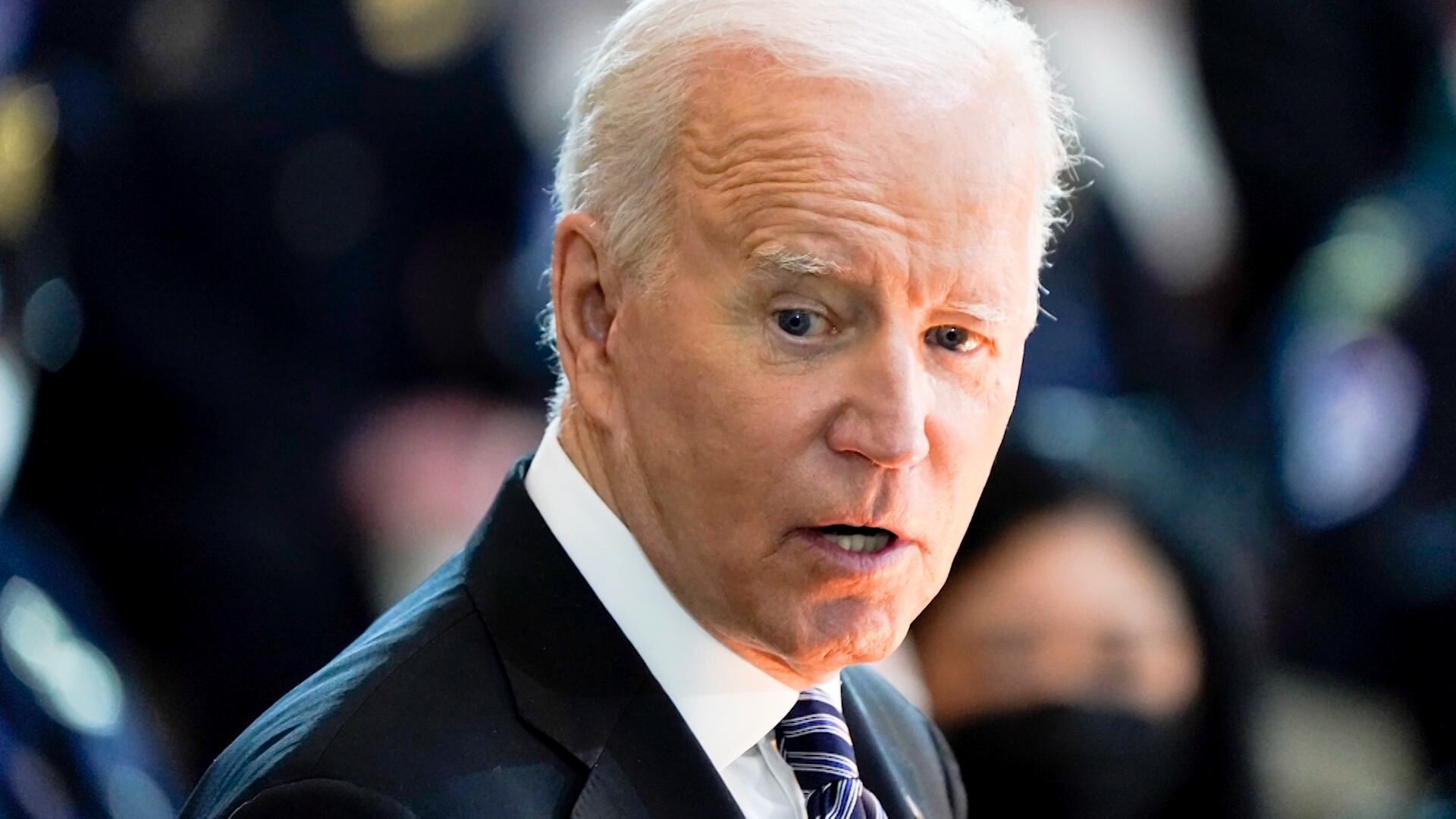
President Joe Biden summoned the world’s nations to forcefully address the festering global issues of the COVID-19 pandemic, climate change and human rights abuses in his first address before the U.N. General Assembly on Tuesday. He decried military conflict and insisted the U.S. is not seeking "a new Cold War” with China.
But while stressing to fellow world leaders the urgency of working together, Biden avoided addressing criticism from allies about the chaotic U.S. withdrawal from Afghanistan and a diplomatic tempest with France.
Instead, Biden used his address before the annual gathering of world leaders to make his case that the United States remains a reliable international partner following four years of President Donald Trump's “America first” foreign policy.
“We’re opening a new era of relentless diplomacy, of using the power of our development aid to invest in new ways of lifting people up around the world,” Biden said.
The president offered an impassioned plea for cooperation, to friends and adversaries, arguing that overcoming a daunting list of crises “will hinge on our ability to recognize our common humanity."
Biden said the U.S., under his watch, had reached a turning point with the end of military operations in Afghanistan last month, closing out America's longest war. That set the table, he said, for his administration to shift its attention to intensive diplomacy at a moment with no shortage of crises facing the globe.
“Today, many of our greatest concerns cannot be solved or even addressed by the force of arms,” he said. “Bombs and bullets cannot defend against COVID-19 or its future variants."
Biden offered a robust endorsement of the U.N.'s relevance and ambition at a difficult time in history, and sought to reassure wary allies of U.S. cooperation.
He pledged to double U.S. financial aid to poorer countries to help them switch to cleaner energy and cope with the “merciless” effects of climate change. That would mean increasing assistance to about $11.4 billion a year. This after five months ago doubling the amount to $5.7 billion a year.
As part of the fight against climate change, rich nations for many years have promised to spend $100 billion a year in climate help, but a new study shows that they’re $20 billion a year short. Biden said his new commitment would help rich nations reach their goal.
In climate negotiations there’s a dramatic rich-poor nation gap. Developing nations and others are reluctant to curb emissions further of heat-trapping gases without help from developed nations, which in the words of British Prime Minister Boris Johnson, are “the guys that created the problem.”
Biden seemed to look past the mounting skepticism he's faced from world leaders in the early going of his presidency, including criticism that Biden has given too little weight to allies' concerns on issues that have ramifications for America's friends on the world stage.
Eight months into his presidency, Biden has been out of sync with allies on the ending to the U.S. war in Afghanistan. He has faced differences over how to go about sharing coronavirus vaccines with the developing world and over pandemic travel restrictions. And there are questions about the best way to respond to military and economic moves by China.
His recent blow-up with France was born out of a three-way agreement between the U.S., Britain and Australia that undercut a more than $60 billion French submarine deal in favor of a plan to equip Australia with nuclear-powered submarines.
The move is expected to give Australia improved capabilities to patrol the Pacific amid growing concern about the Chinese military's increasingly aggressive tactics.
French Foreign Minister Jean-Yves Le Drian said Monday there was a “crisis of trust” with the U.S. as a result of the episode.
Biden wasn't so concerned. Asked by a reporter as he arrived at the U.N. on Tuesday how he planned to repair relations with the French, Biden responded with two words: “They're great.”
In an interview before meeting with Biden on Monday, U.N. Secretary General Antonio Guterres told The Associated Press that he was concerned about the “completely dysfunctional” U.S.-China relationship and the possibility it could lead to a new Cold War.
The secretary-general did not back off his concerns about the U.S.-China tensions as he addressed leaders at the opening of Tuesday's gathering. “It will be impossible to address dramatic economic and development challenges while the world’s two largest economies are at odds with each other," he said.
Biden sought to play down concerns about China tensions escalating into something more, saying: “We are not seeking a new Cold War or a world divided into rigid blocs.” Notably, Biden didn't utter the word “China” in his 34-minute address.
More broadly, he put a heavy emphasis on the need for world leaders to work together on the COVID-19 pandemic, to meet past obligations to address climate change, to head off emerging technology issues and to firm up trade rules.
“We will choose to build a better future. We, you and I, we have the will and capacity to make it better. Ladies and gentlemen, we cannot afford to waste any more time,” he said. "We can do this.”
Biden limited his time at the United Nations due to coronavirus concerns. He met with Australian Prime Minister Scott Morrison in New York following his speech, before heading back to the White House for a busy week of diplomacy in virtual and Washington settings.
Morrison and Biden did not comment on the flap with the French when they appeared briefly before the media at the start of their meeting. Morrison, however, praised Biden for understanding the complexities of the situation in the Indo-Pacific.
“There’s no doubt you get it," the prime minister told Biden.
The president was scheduled to meet with Johnson later Tuesday at the White House.
The president's advisers were still arranging on Tuesday for Biden to hold a call with French President Emmanuel Macron, White House press secretary Jen Psaki said. A French government spokesman Gabriel Attal said on Sunday that Macron, who was among many world leaders who did not attend the UNGA in person, expected to speak to Biden in the coming days.
___
Madhani reported from Washington. Associated Press writers Seth Borenstein and Darlene Superville in Washington, Jonathan Lemire in New York and Edith Lederer at the United Nations contributed to this report.
Updated on September 21, 2021, at 3:36 p.m. ET with the latest details.