President Joe Biden speaks about the economy, in the East Room of the White House, Monday, May 10, 2021, in Washington. (AP Photo/Evan Vucci)
By Zeke Miller
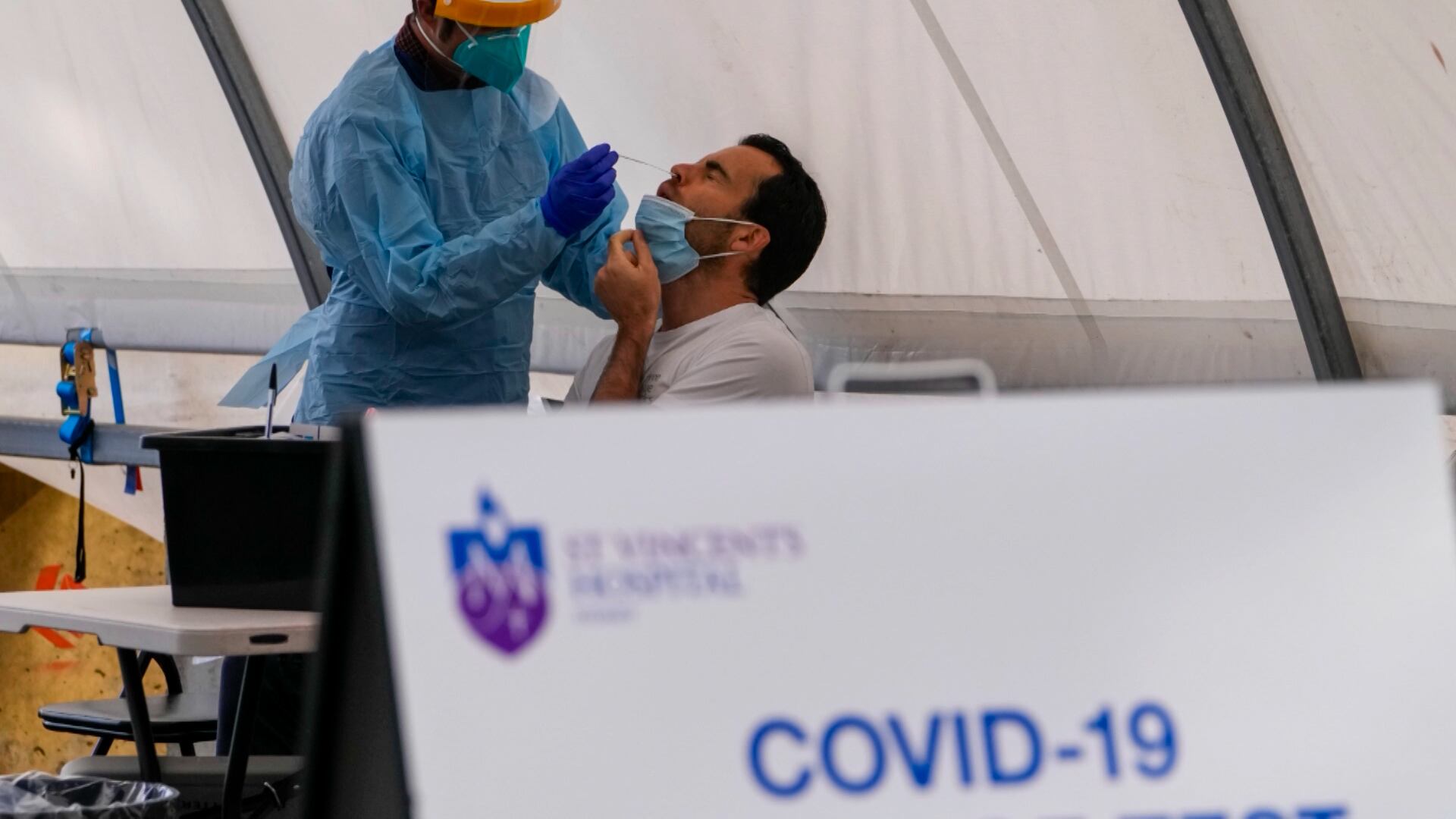
President Joe Biden is highlighting new programs from ride-sharing companies Uber and Lyft to provide free rides to and from vaccination sites, as the pace of shots nationally declines and he looks to meet his July Fourth inoculation targets.
The partnership with the ride-sharing companies marks the latest in a series of government-encouraged efforts to increase access to shots. It comes as Biden met virtually with a bipartisan group of governors Tuesday to share best practices for encouraging Americans to get vaccinated.
“I think that's really stepping up,” Biden said of the partnership with the ride-sharing companies.
“We have to make it easier and more convenient for all Americans to get vaccinated," Biden said, as he met with Utah Gov. Spencer Cox, Massachusetts Gov. Charlie Baker and Ohio Gov. Mike DeWine, all Republicans, as well as Democratic Govs. Michelle Lujan Grisham of New Mexico, Janet Mills of Maine and Tim Walz of Minnesota.
Biden also announced new funding through the Federal Emergency Management Agency for community outreach efforts to encourage Americans to get vaccinated, as well as a new initiative to host federally supported vaccination sites at community colleges.
Biden's meeting comes a week after he set a new goal of delivering at least one dose of vaccine to 70% of adult Americans by Independence Day and fully vaccinating at least 160 million by then.
The nation's vaccination rate has dramatically slowed in recent weeks. According to the Centers for Disease Control and Prevention, an average of about 730,000 Americans are getting their first dose of vaccine daily, down from a peak of more than 1.9 million per day a month ago.
Tatenda Musapatike, Founder of the Voter Formation Project and former Political Ad Specialist at Facebook, joined Cheddar to discuss the outsized role social media plays in politics.
Amazon founder Jeffrey Bezos took to the stage at the U.N.'s COP26 Climate Summit to unveil a new plan to combat climate change, but some say it might do more harm than good. Justine Calma, Science Reporter at The Verge, joined Cheddar to discuss.
Rep. Ritchie Torres of New York talks about the importance of the historical Build Back Better Act and how these bills could help millions of Americans across the country.
Pfizer has asked the FDA to expand authorization of COVID booster shots for all adults. The agency is expected to grant the request in the coming weeks, allowing vaccinated Americans as young as 18 to get boosted before the holidays. Dr. Bayo Curry-Winchell, Regional Clinical Director at Carbon Health, joined Cheddar to discuss.
The Justice Department has filed a lawsuit to block Penguin Random House from acquiring its rival Simon & Schuster. The DOJ hopes this will block the merger, which it says would ultimately hurt authors and consumers nationwide. Barry C. Lynn, executive director of the Open Markets Institute, joined Cheddar to explain what the lawsuit signals about the Biden administration's approach to cracking down on antitrust, and why Amazon might be next.
The major markets took a breather Tuesday, with the Dow, S&P, Nasdaq, and Russell 2000 all finishing lower after notching record closes on Monday. Rhys Williams, Chief Strategist at Spouting Rock Asset Management, joins Cheddar News' Closing Bell, where he provides his biggest takeaways from the day's activity.
The U.S. economy added 531,000 jobs in the month of October, painting a better picture of the economy that analysts had expected. Jared Bernstein, Council of Economic Advisers Member for President Biden joined Cheddar's Opening Bell to discuss.
Election Day 2021 is in the books, and it wasn't a pretty picture for Democrats. Governor Phil Murphy narrowly won re-election in New Jersey and Republican Glenn Youngkin upset Democrat Terry McAuliffe in Virginia, with many other disappointing losses for the left. Meridith McGraw, national correspondent for Politico, breaks down the key takeaways from this year as the nation looks ahead to the 2022 midterms.