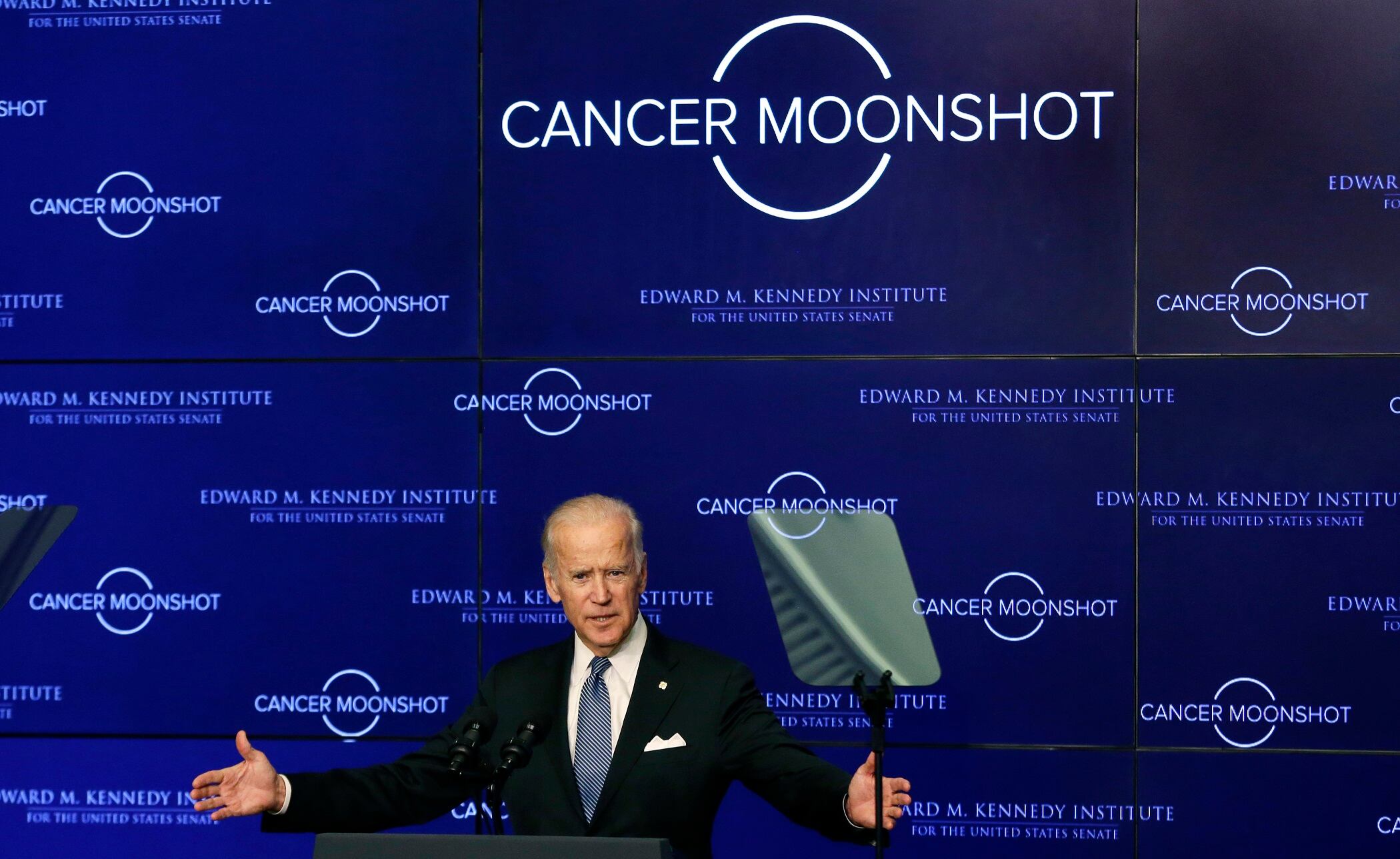
Vice President Joe Biden speaks at the Edward M. Kennedy Institute for the United States Senate, on Oct. 19, 2016 in Boston, about the White House's cancer "moonshot" initiative. (AP Photo/Elise Amendola, File)
Biden has set a 25-year timeline for achieving that goal, part of his broader effort to end cancer as we know it, according to senior administration officials who previewed Wednesday's announcement on the condition of anonymity.
The pain experienced by the president is shared by many Americans. The American Cancer Society estimates that there will be 1,918,030 new cancer cases and 609,360 cancer deaths this year. What Biden is aiming to do is essentially save more than 300,000 lives annually from the disease, something the administration believes is possible because the age-adjusted death rate has already fallen by roughly 25% over the past two decades. The cancer death rate is currently 146 per 100,000 people, down from nearly 200 in 2000.
The American Cancer Society said in a statement that it applauded Biden for “putting national focus on this critical issue” and that “it will be standing shoulder to shoulder” with the administration.
Dr. Barron Lerner, a professor of medicine and population health at New York University Langone Health, said that “hyperbolic goals" can be needed to attract public attention but achieving the 50% reduction is “extremely unlikely.”
“Similar past efforts like the ‘War on Cancer’ have made gains, but they have been more modest,” said Lerner, the author “The Breast Cancer Wars.” “Cancer is many diseases and requires very complicated research. Translating these advances to the clinical setting is never easy either.”
Biden was scheduled to give remarks Wednesday from the East Room of the White House, along with his wife, Jill, and Vice President Kamala Harris. Also scheduled to attend the speech: members of Congress and the administration and about 100 members of the cancer community including patients, survivors, caregivers, families, advocacy groups and research organizations.
As part of the effort, Biden will assemble a “cancer Cabinet” that includes 18 federal departments, agencies and offices, including leaders from the Departments of Health and Human Services, Veterans Affairs, Defense, Energy and Agriculture.
There were no plans to announce new funding commitments on Wednesday, though the administration will outline why it believes it can curb cancer through efforts such as increased screening and removing inequities in treatment. The coronavirus pandemic has consumed health care resources and caused people to miss more than 9.5 million cancer screenings.
The White House also will host a summit on the cancer initiative and continue a roundtable discussion series on the subject. The goal is to improve the quality of treatment and people’s lives, something with deep economic resonance as well. The National Cancer Institute reported in October that the economic burden of treatment was more than $21 billion in 2019, including $16.22 billion in patient out-of-pocket costs.
President Barack Obama announced the cancer program during his final full year in office and secured $1.8 billion over seven years to fund research. Obama designated Biden, then his vice president, as “mission control," a recognition of Biden's grief as a parent and desire to do something about it. Biden wrote in his memoir “Promise Me, Dad” that he chose not to run for president in 2016 primarily because of Beau's death.
When Biden announced he wasn't seeking the Democratic nomination in 2016, he said he regretted not being president because "I would have wanted to have been the president who ended cancer, because it’s possible.”
The effort fell somewhat out of the public focus when Donald Trump became president, though Trump, a Republican, proposed $500 million over 10 years for pediatric cancer research in his 2019 State of the Union address.
Biden continued the work as a private citizen by establishing the Biden Cancer Initiative to help organize resources to improve cancer care. When Biden did seek the presidency in 2020, he had tears in his eyes as he said in an interview on MSNBC's “Morning Joe" that “Beau should be running for president, not me.”
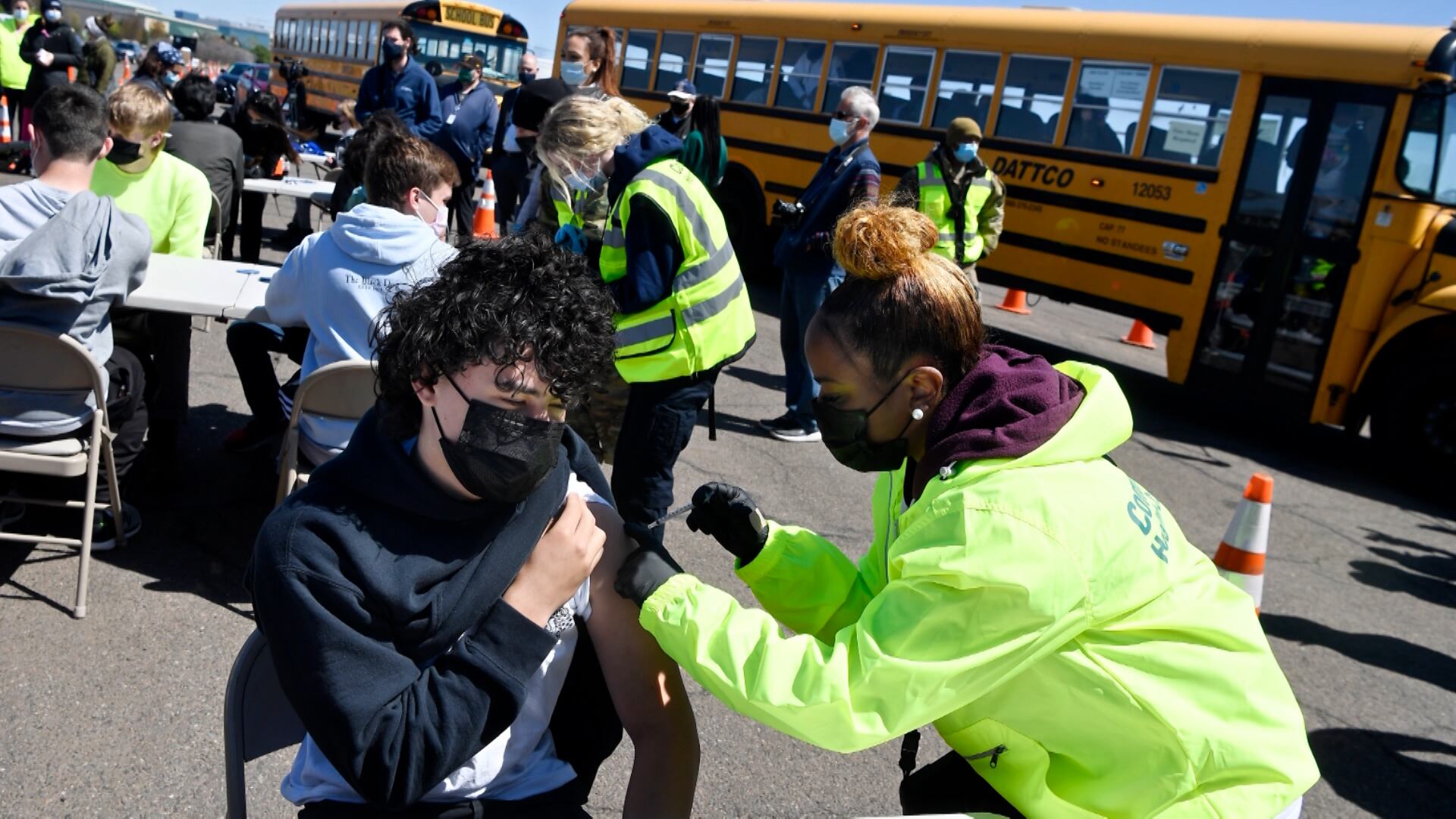
Dr. Nasia Safdar, Doctor at UW Madison, joined Wake Up With Cheddar to discuss the implications of Merck sharing its antiviral pill, which has been shown in early trials to cut hospitalizations and deaths by half, with poorer nations around the globe.
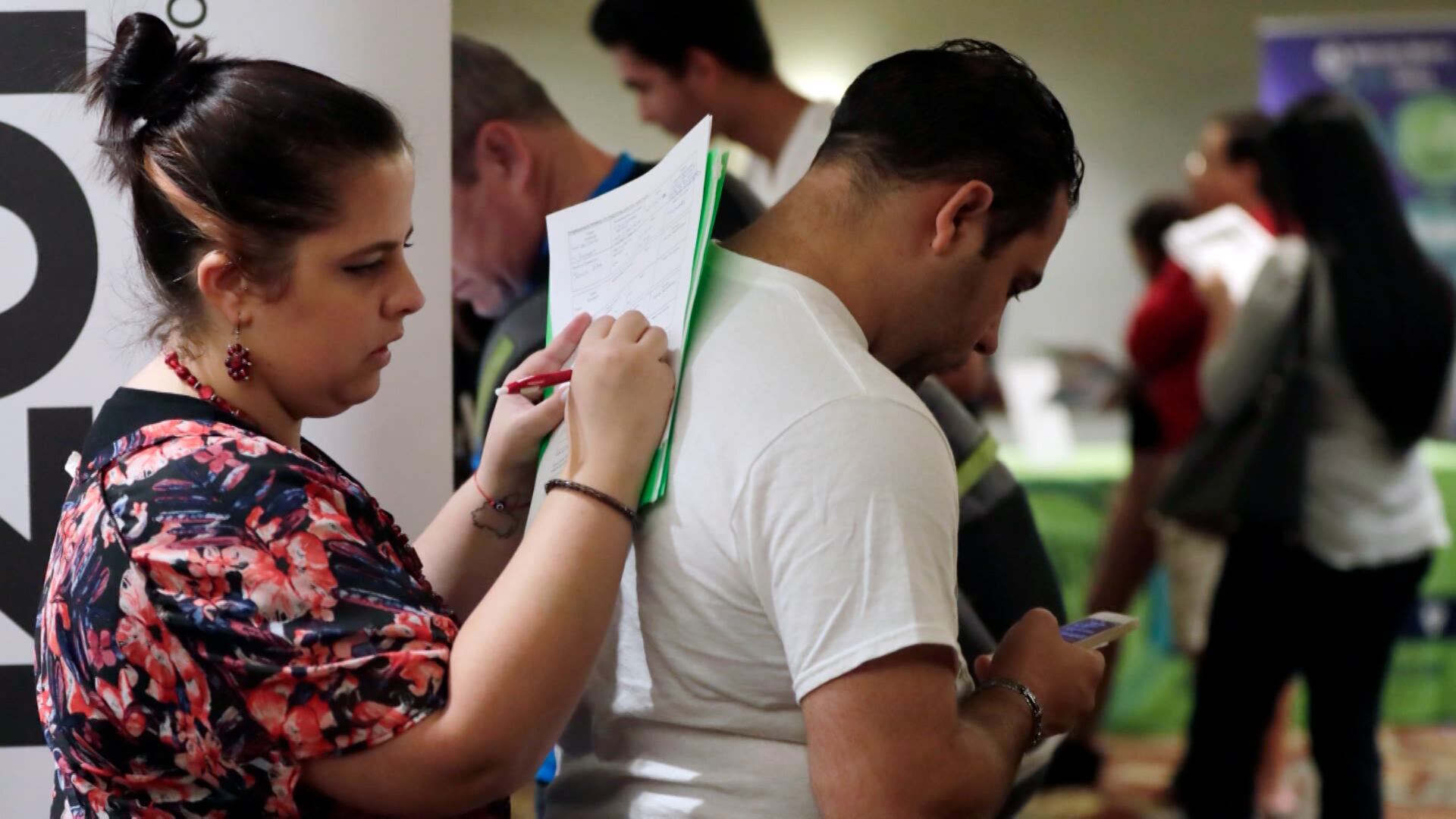
The Federal Reserve finally announced its taper plan on Wednesday saying that it planned to scale back on bond purchases as growth slows, and would not rush to raise interest rates. Ross Mayfield, Investment Strategy Analyst at Baird spoke on whether or not a decrease in inflation could be in the country’s future amidst comments made by Fed chairman Jerome Powell. Baird also broke down ADP jobs numbers ahead of the Labor Department's October jobs report.
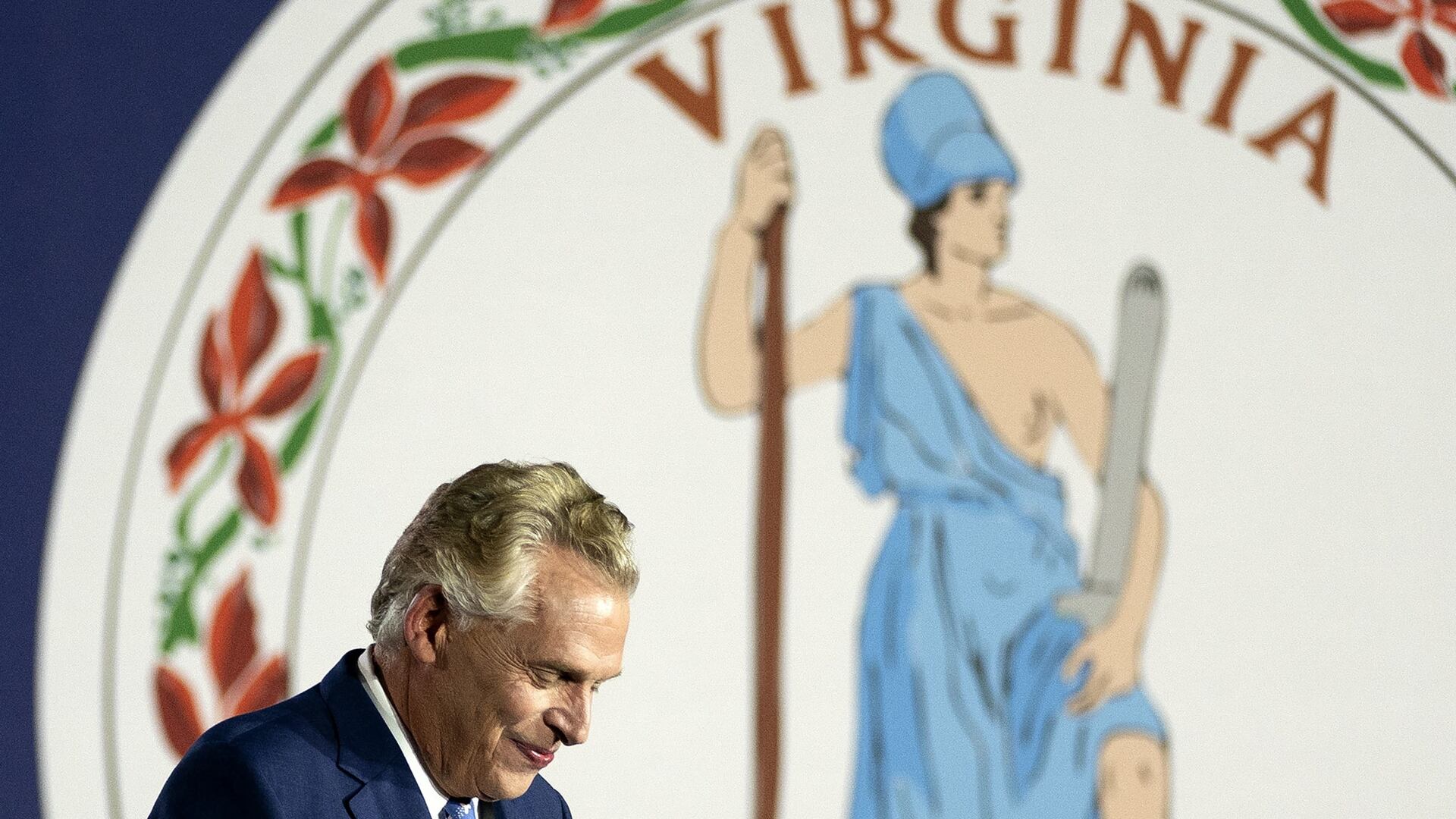
Going into election day on Tuesday, many of us had an inkling it might not be a great day for Democrats. History tells us the president's party tends to lose congressional seats, governorships and state legislature seats in off-year and midterm elections. Tuesday turned out to be a big wake-up call for democrats. Not only did Terry McAuliffe lose in the Virginia governor's race, Gov. Phil Murphy won re-election by an incredibly slim margin. Both races saw continued Democratic losses in rural areas and a shift of suburban voters back to the GOP. Liz Landers, chief political correspondent at Vice News, joins Cheddar Politics to discuss.
Week one of UN climate summit is coming to an end, world leaders made a number of promises to save the planet. President Biden attended the first two days of the meeting.
Alan Neuhauser, vice president of Silverline Communications, joined Cheddar Politics to talk more about the pledges that came out from the summit and their significance.
It's been a busy week for the Supreme Court. It heard arguments on three of the most watched cases in the docket for this term. The court heard arguments in two cases challenging the Texas abortion law on Monday - one filed by abortion providers and the other by the justice department. Instead of weighing in on the constitutionality of the matter itself, justices focused on the unusual structure of the law that enables citizens to enforce the law, not the state government.
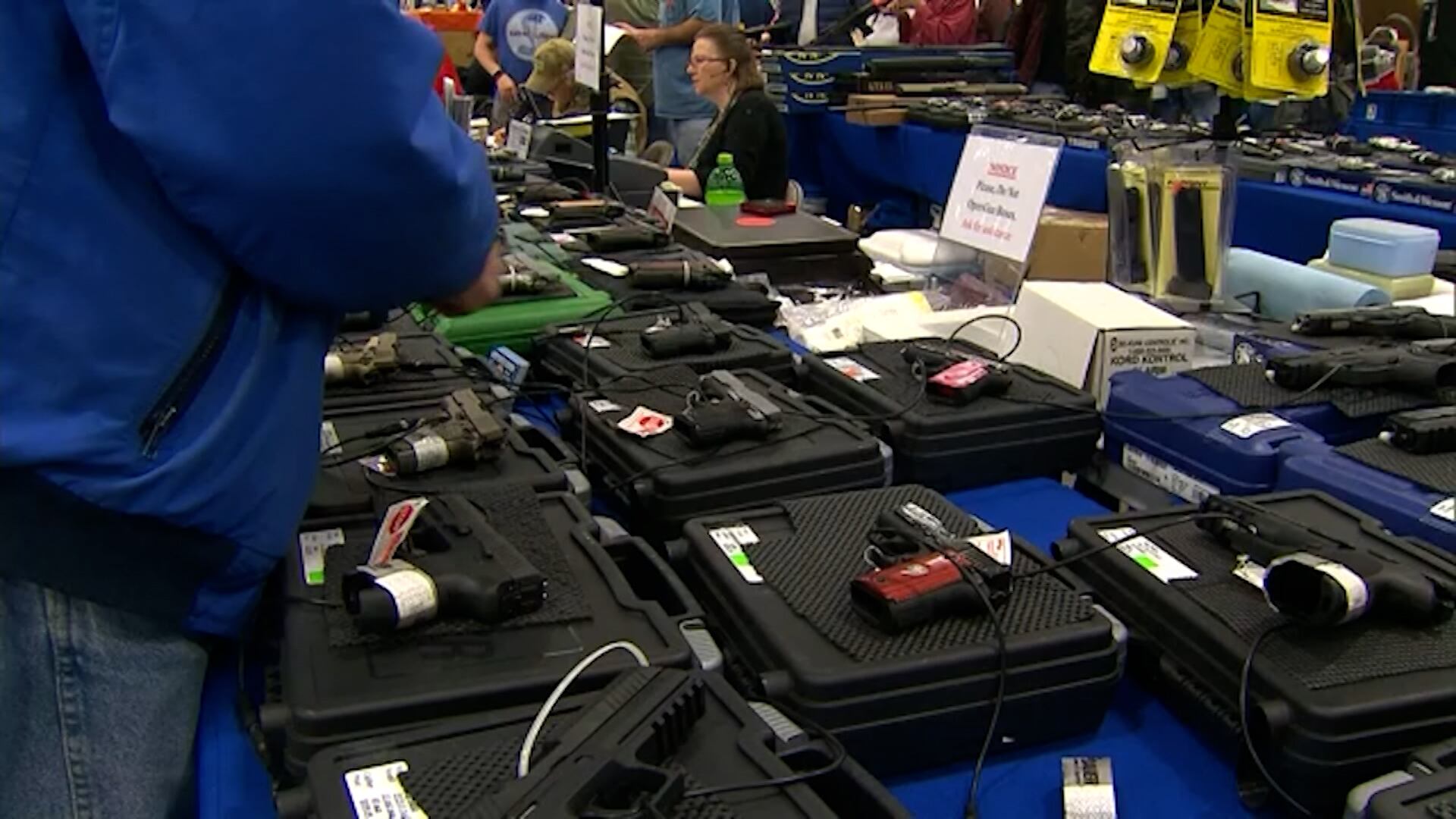
On Wednesday, the court heard arguments in the biggest Second Amendment case in more than a decade. The dispute is over a New York gun law that requires people seeking a license to carry a handgun in public to show a "proper cause." The challengers in this case claim the law inhibits their constitutional Second Amendment rights.
Amy Howe, co-founder of SCOTUSBlog, joined Cheddar Politics to break the cases down.
This is the first installment of Cheddar Changemakers, where we spotlight young activists making a difference in the world and speaking up on issues regarding mental health, voting, and climate change.
Republicans are considered, and often act like, the party opposed to action on climate change. They've made a point of fighting even modest regulations on businesses related to stemming the worst effects of climate change. But Republicans aren't a monolith on climate change, and our next guest reminds us that "conservation" and "conservative" have the same word root.
Quill Robinson, VP of government affairs at the American Conservation Coalition, joins Cheddar Politics to discuss.
The mayor of Portland, Oregon, Ted Wheeler joined Cheddar News Wrap to discuss his plans to get an increase in the city's police budget for more personnel, changes to public safety response, and more body cameras. The Democratic mayor addressed the growth in violent crimes amid the pandemic, but noted the need for officers who take their roles seriously. We want officers who understand that policing is an important responsibility, it's a high calling," he said. "We also want a police bureau that is accountable and responsible to the public it serves."
More American tech companies continue to pull their businesses out of China as the Communist Party cracks down on firms — both foreign and domestic. Yahoo and Fortnite have become the latest companies to withdraw from the country, and the withdrawals come just days after Microsoft announced it would take LinkedIn offline. Shehzad Qazi, managing director at China Beige Book International, joined Cheddar to provide some insight into how the crackdowns in China would also impact the tech companies at home in the United States.