By Josh Boak

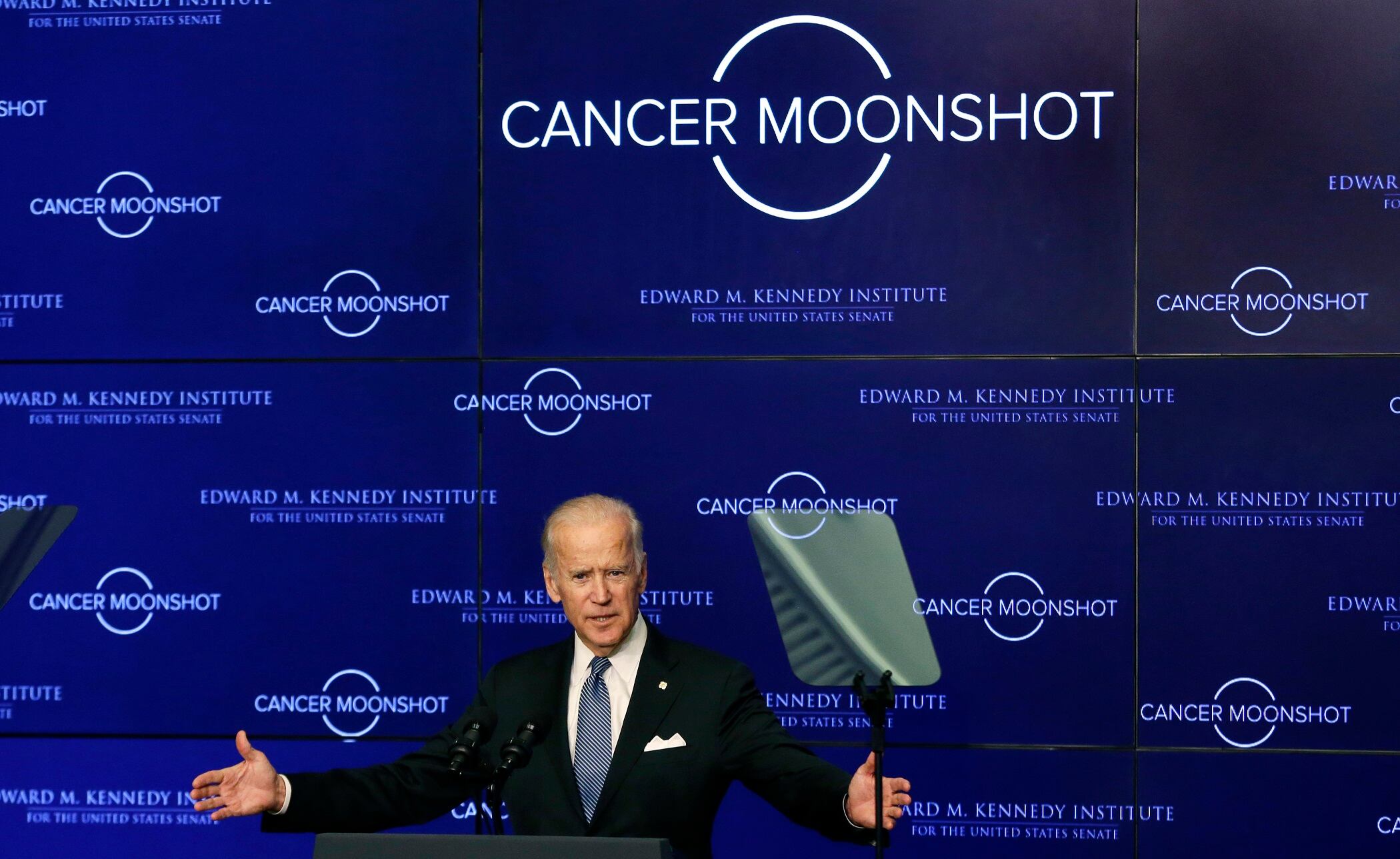
President Joe Biden is committing to reduce the cancer death rate by 50% — a new goal for the “moonshot” initiative against the disease that was announced in 2016 when he was vice president.

Biden has set a 25-year timeline for achieving that goal, part of his broader effort to end cancer as we know it, according to senior administration officials who previewed Wednesday's announcement on the condition of anonymity.

The issue is deeply personal for Biden: He lost his elder son, Beau, to brain cancer in 2015.

The pain experienced by the president is shared by many Americans. The American Cancer Society estimates that there will be 1,918,030 new cancer cases and 609,360 cancer deaths this year. What Biden is aiming to do is essentially save more than 300,000 lives annually from the disease, something the administration believes is possible because the age-adjusted death rate has already fallen by roughly 25% over the past two decades. The cancer death rate is currently 146 per 100,000 people, down from nearly 200 in 2000.

The American Cancer Society said in a statement that it applauded Biden for “putting national focus on this critical issue” and that “it will be standing shoulder to shoulder” with the administration.

Dr. Barron Lerner, a professor of medicine and population health at New York University Langone Health, said that “hyperbolic goals" can be needed to attract public attention but achieving the 50% reduction is “extremely unlikely.”

“Similar past efforts like the ‘War on Cancer’ have made gains, but they have been more modest,” said Lerner, the author “The Breast Cancer Wars.” “Cancer is many diseases and requires very complicated research. Translating these advances to the clinical setting is never easy either.”

Biden was scheduled to give remarks Wednesday from the East Room of the White House, along with his wife, Jill, and Vice President Kamala Harris. Also scheduled to attend the speech: members of Congress and the administration and about 100 members of the cancer community including patients, survivors, caregivers, families, advocacy groups and research organizations.

As part of the effort, Biden will assemble a “cancer Cabinet” that includes 18 federal departments, agencies and offices, including leaders from the Departments of Health and Human Services, Veterans Affairs, Defense, Energy and Agriculture.

There were no plans to announce new funding commitments on Wednesday, though the administration will outline why it believes it can curb cancer through efforts such as increased screening and removing inequities in treatment. The coronavirus pandemic has consumed health care resources and caused people to miss more than 9.5 million cancer screenings.

The White House also will host a summit on the cancer initiative and continue a roundtable discussion series on the subject. The goal is to improve the quality of treatment and people’s lives, something with deep economic resonance as well. The National Cancer Institute reported in October that the economic burden of treatment was more than $21 billion in 2019, including $16.22 billion in patient out-of-pocket costs.

President Barack Obama announced the cancer program during his final full year in office and secured $1.8 billion over seven years to fund research. Obama designated Biden, then his vice president, as “mission control," a recognition of Biden's grief as a parent and desire to do something about it. Biden wrote in his memoir “Promise Me, Dad” that he chose not to run for president in 2016 primarily because of Beau's death.

When Biden announced he wasn't seeking the Democratic nomination in 2016, he said he regretted not being president because "I would have wanted to have been the president who ended cancer, because it’s possible.”

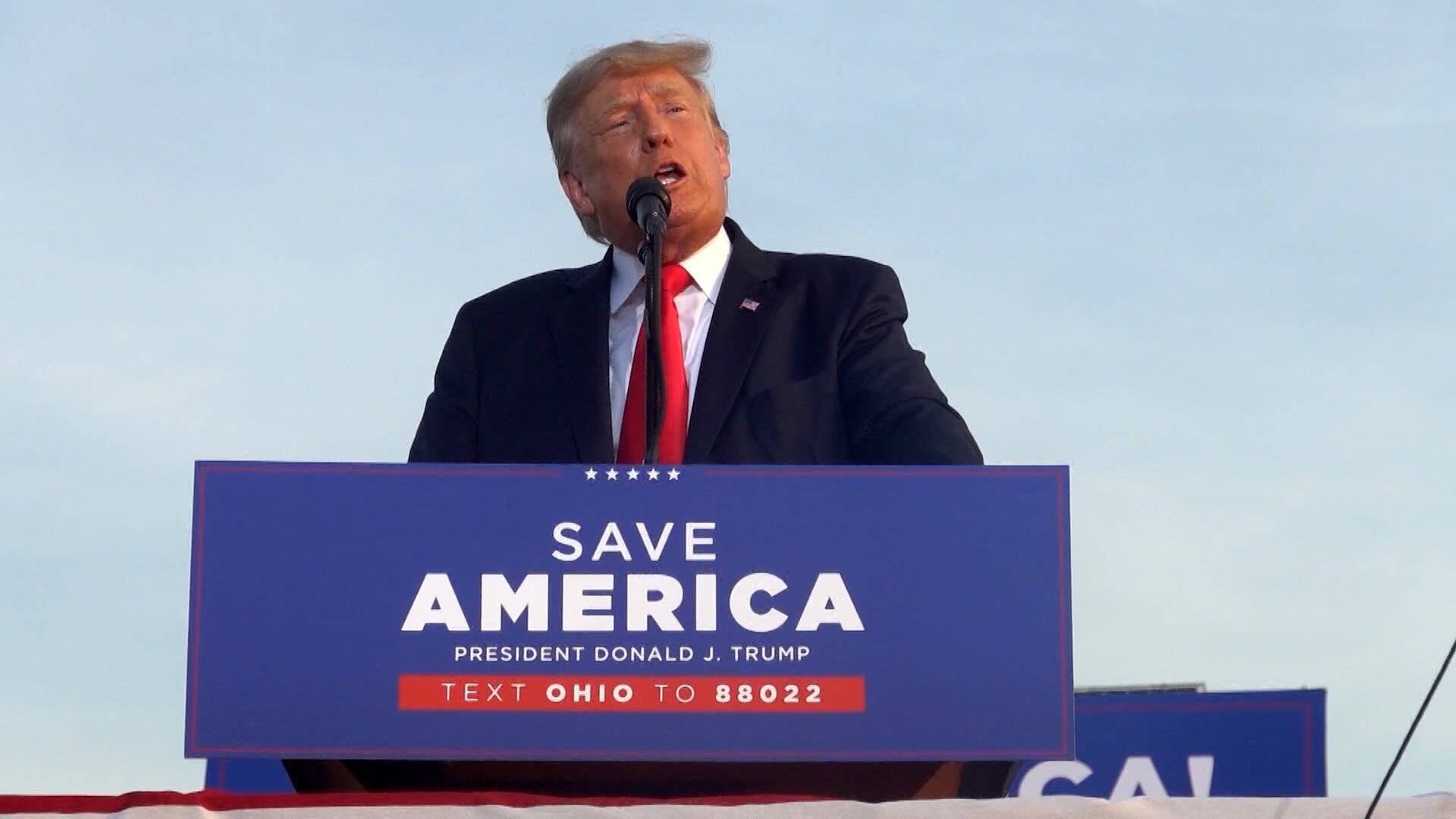
The effort fell somewhat out of the public focus when Donald Trump became president, though Trump, a Republican, proposed $500 million over 10 years for pediatric cancer research in his 2019 State of the Union address.

Biden continued the work as a private citizen by establishing the Biden Cancer Initiative to help organize resources to improve cancer care. When Biden did seek the presidency in 2020, he had tears in his eyes as he said in an interview on MSNBC's “Morning Joe" that “Beau should be running for president, not me.”

Share:
More In Politics
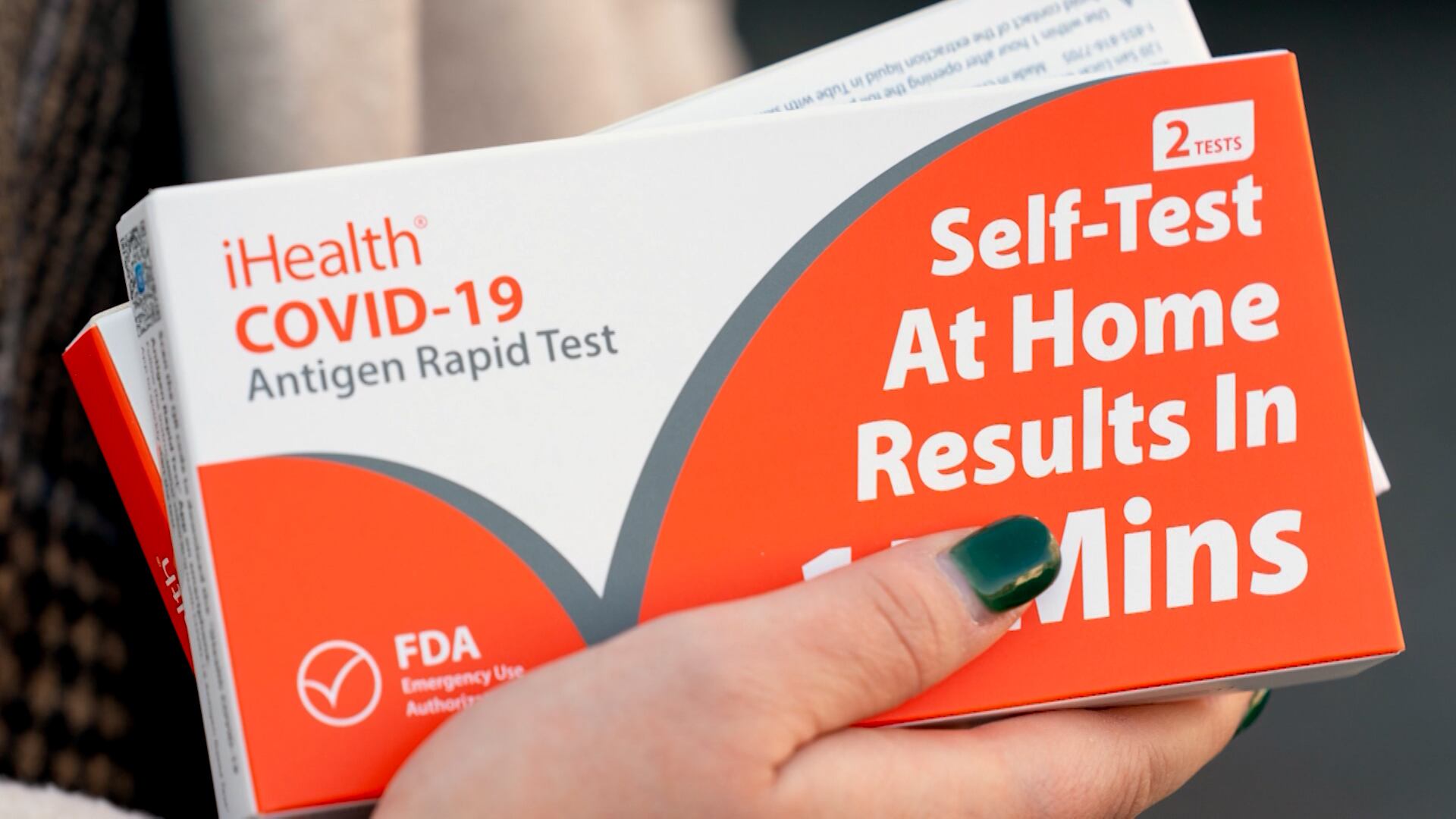
Walmart, Kroger Raise At-Home COVID-19 Test Prices
Americans looking to purchase at-home COVID-19 tests will now have to shell out a bit more money after an agreement expired between the White House and companies to sell the tests at cost. The price of Abbot's BinaxNow test kit from October to December was $14 apiece; on Tuesday, Walmart's website listed the test for $19.88, and Kroger listed the tests for $23.99. Carbon Health Regional Clinical Director Dr. Bayo Curry-Winchell joined Cheddar News' Closing Bell to discuss the impact higher prices will have as the nation experiences another surge in cases.
Chicago Cancels School After Teachers Vote to Go Remote Over Lack of COVID Safety
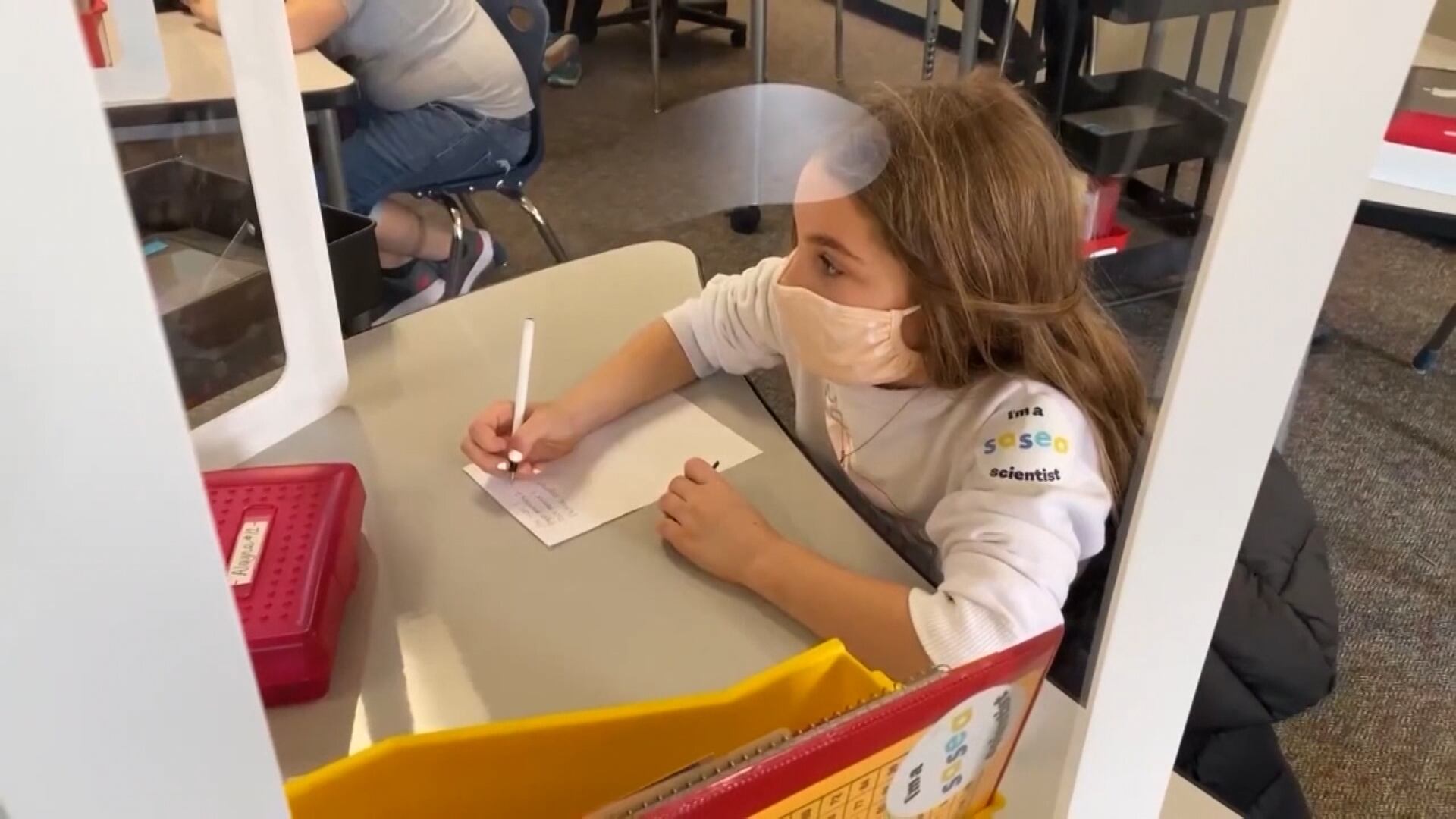
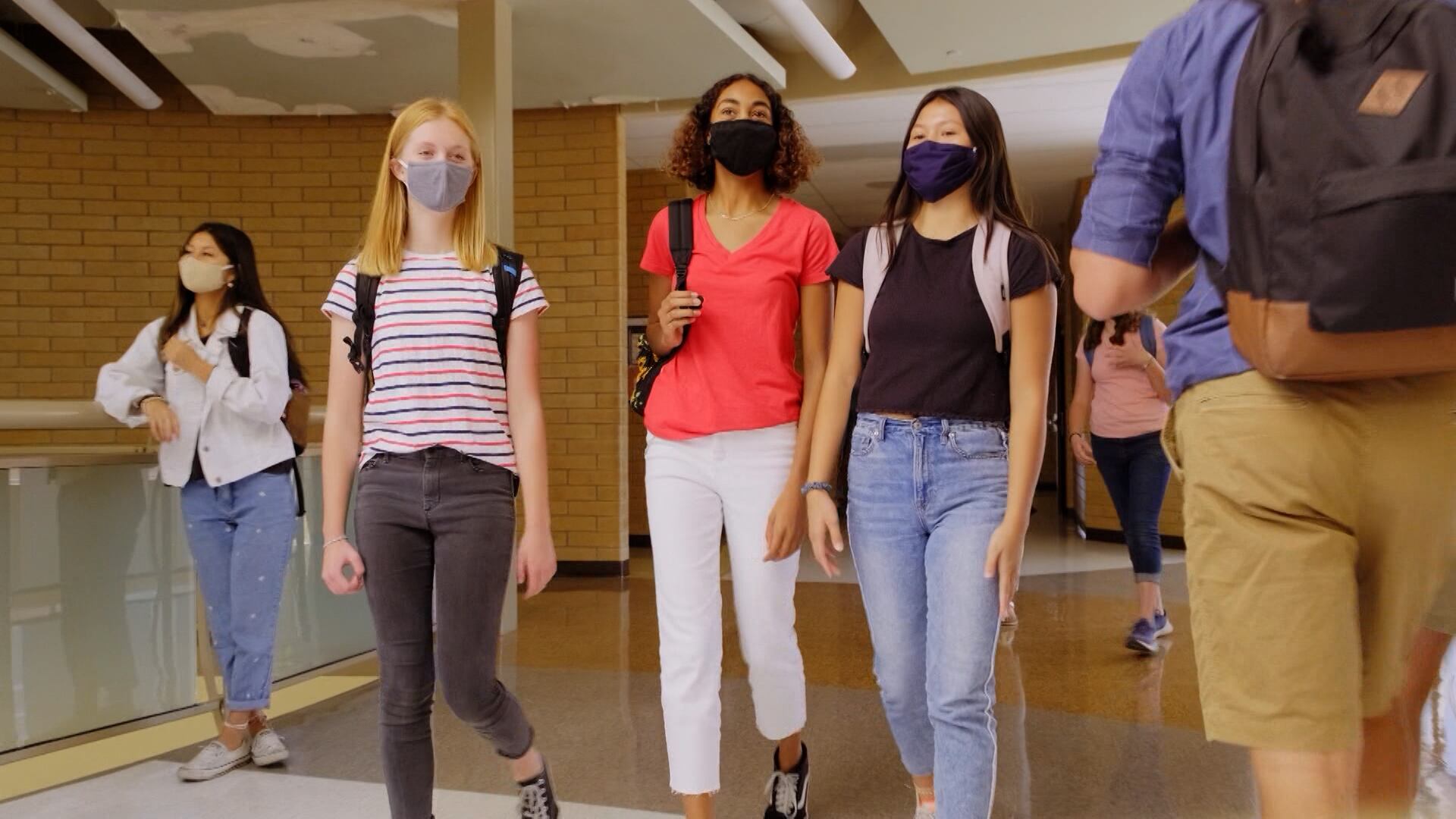
After the Chicago teachers union voted to work remotely due to what they say is a lack of safety protocols amid the COVID-19 surge, the school system canceled classes on Wednesday, citing harm that remote learning has done to the city's children. Randi Weingarten, president of the American Federation of Teachers, joined Cheddar to discuss the issues surrounding the latest dispute between educators and schools. She said that the return to in-person learning would likely be halted until more COVID tests could be provided for districts. "This is a terrible situation for everybody, and we need the testing, and we need the masks," she said. "It's the omicron surge that has created this disruption, and we are trying to do the best we can. And this is the only school district that has this kind of action right now." The teachers might not be returning to their schools for at least two weeks amid the ongoing tensions.
White House Devotes $1 Billion To Independent Meat and Poultry Producers
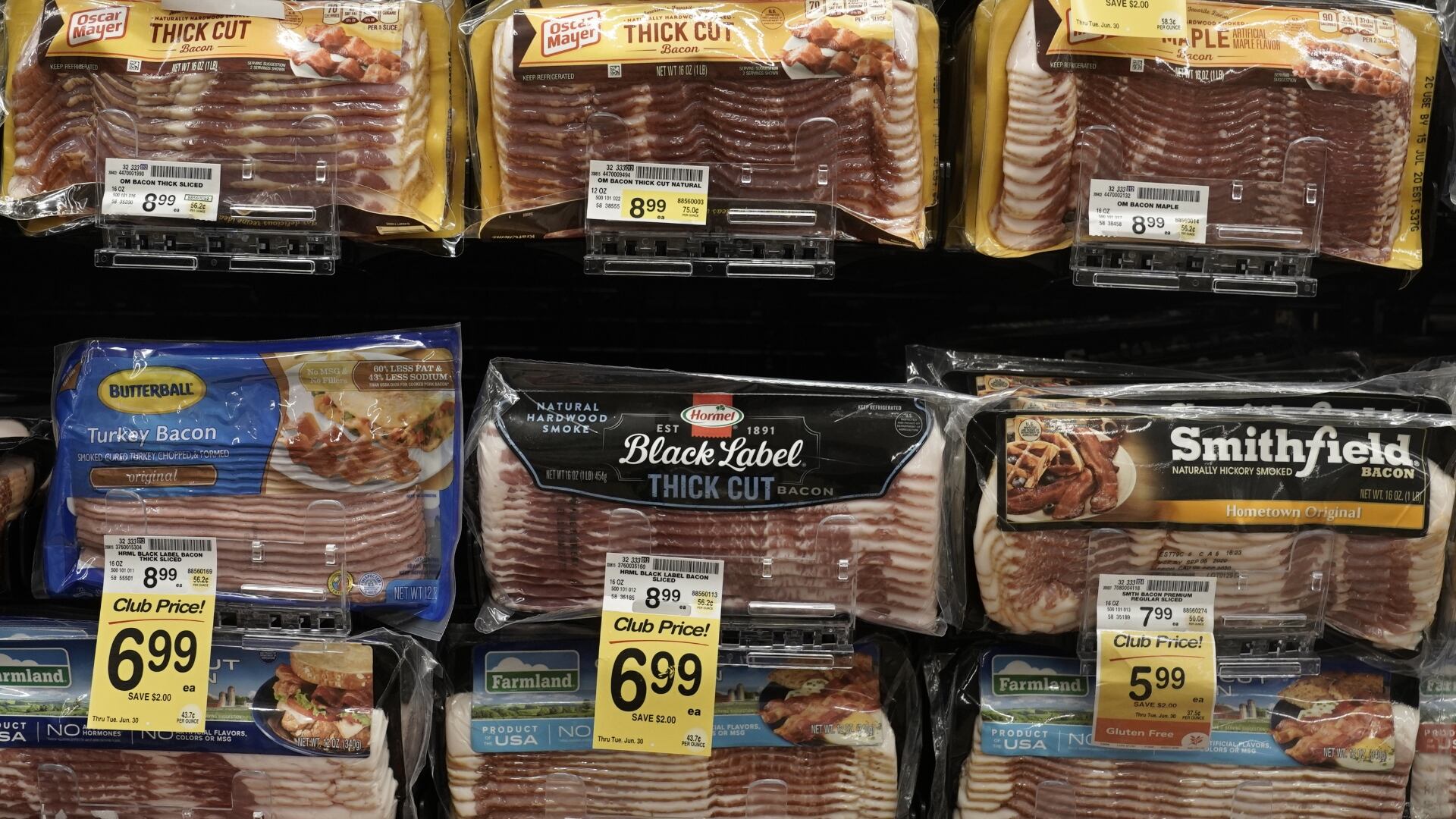
On Monday, President Biden announced his new plan to take on inflation by taking down the big meat monopolies - turning to the federal government's antitrust authorities to investigate the major meatpackers that control a significant share of the market. The White House plans to devote one billion dollars to aiding independent meat and poultry producers in an effort to undercut the few powerful meat producers that have control of the sector. Austin Frerick, deputy director of Thurman Arnold Project at Yale, joins Cheddar News to discuss.
430,000 New Businesses Launched in November
As the pandemic drags on, so does the widespread great resignation. In November alone, 4.5 million Americans quit their jobs, marking a new record high, and showing a 9 percent jump from the month prior. On the flip side, the number of people filing tax paperwork to start new businesses is surging, with over 430,000 new businesses launching in November. Rhett Buttle, the founder of Public Private Strategies and national business advisor to the Biden for President campaign, joined Wake Up with Cheddar to discuss.
New York Attorney General Issues Subpoenas to Trump Children
New York Attorney General Letitia James is ramping up a civil investigation into The Trump Organization. The AG's office has subpoenaed Ivanka Trump and Donald Trump Jr. They have refused to comply with the subpoenas. Bradley Moss, national security attorney, joins Cheddar News to discuss the next steps in this investigation.
Colorado Gov. Polis Reduces Truck Driver Sentence To 10 Years
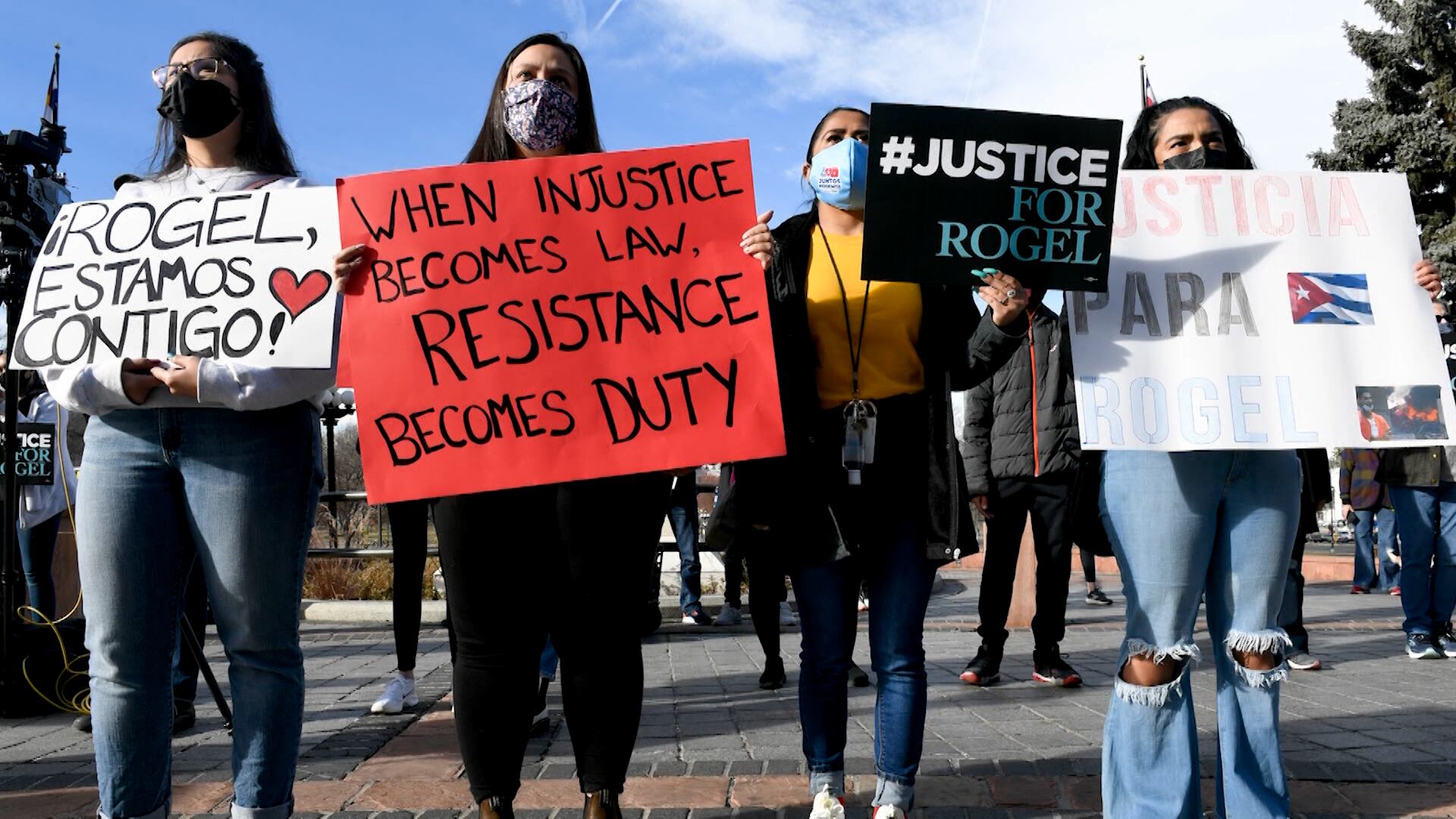
Colorado Gov. Jared Polis has officially reduced the 110-year prison sentence of truck driver Rogel Aguilera-Mederos to 10 years, calling the initial lengthy sentence “unjust.” Dan Gilleon, constitutional attorney at Gilleon Law Firm APC, joined Cheddar to discuss more.
Eric Adams Becomes 110th Mayor Of New York City
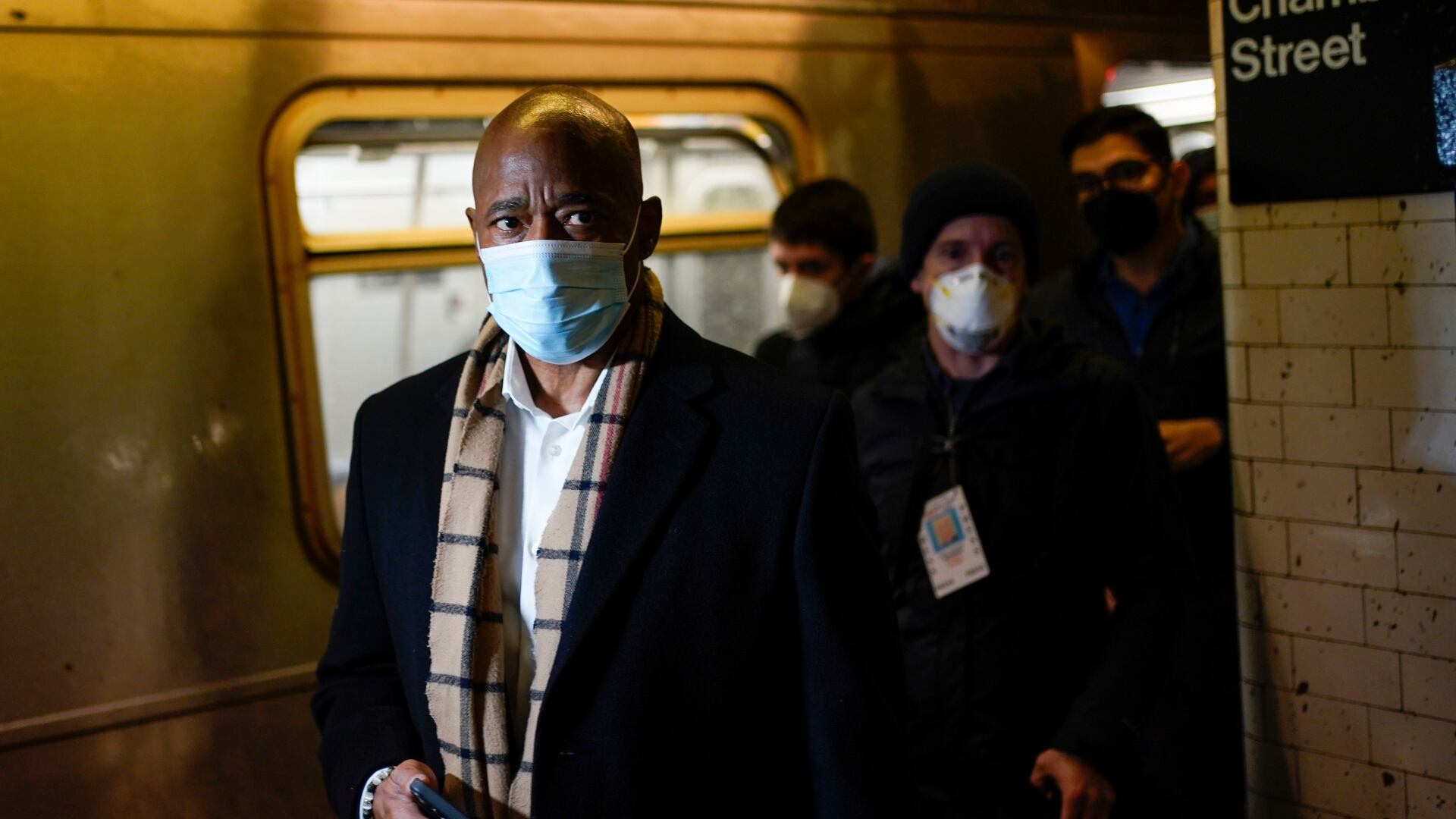
Former Brooklyn Borough President Eric Adams was sworn in as the newest Mayor of New York City. Adams is now expected to work on a number of issues such as crime and coronavirus. Erin Durkin,, reporter at PoliticoNY, joins Cheddar News to discuss more.
California Starts Largest U.S. Food Waste Recycling Program
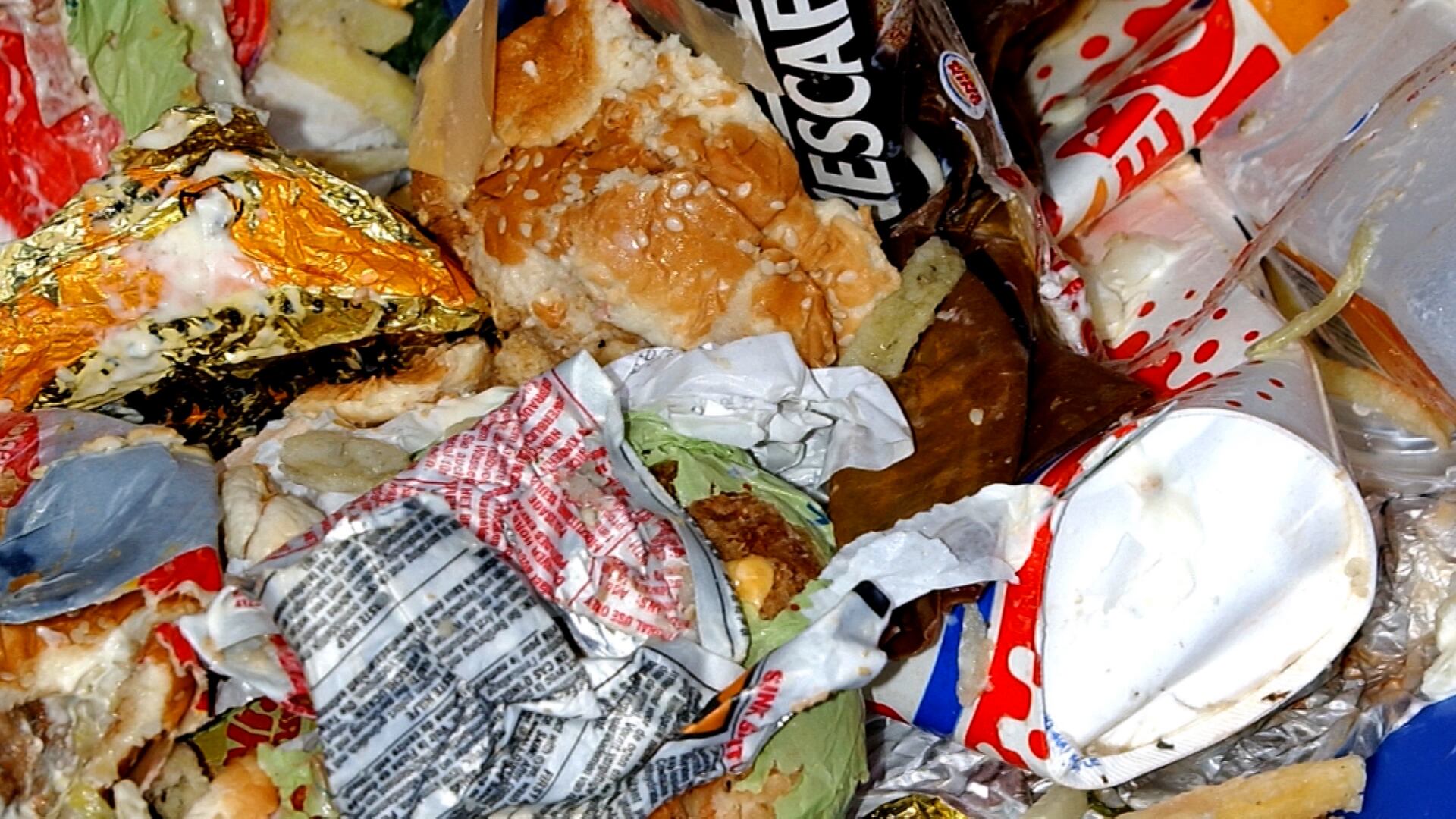
California's new composting law will affect what residents do in their kitchens. As of this week, Californians will have to recycle excess food in an effort to reduce emissions caused by food waste. Cities and counties will turn recycled food into compost or use it as a renewable energy source. California's new law is the largest mandatory residential food waste recycling program in the country. Rachel Wagoner, Director of the California Department of Resources, Recycling and Recovery called the law 'the biggest change to trash' since recycling started in the 1980s. She joined Cheddar Climate to discuss.
Load More