By Josh Boak

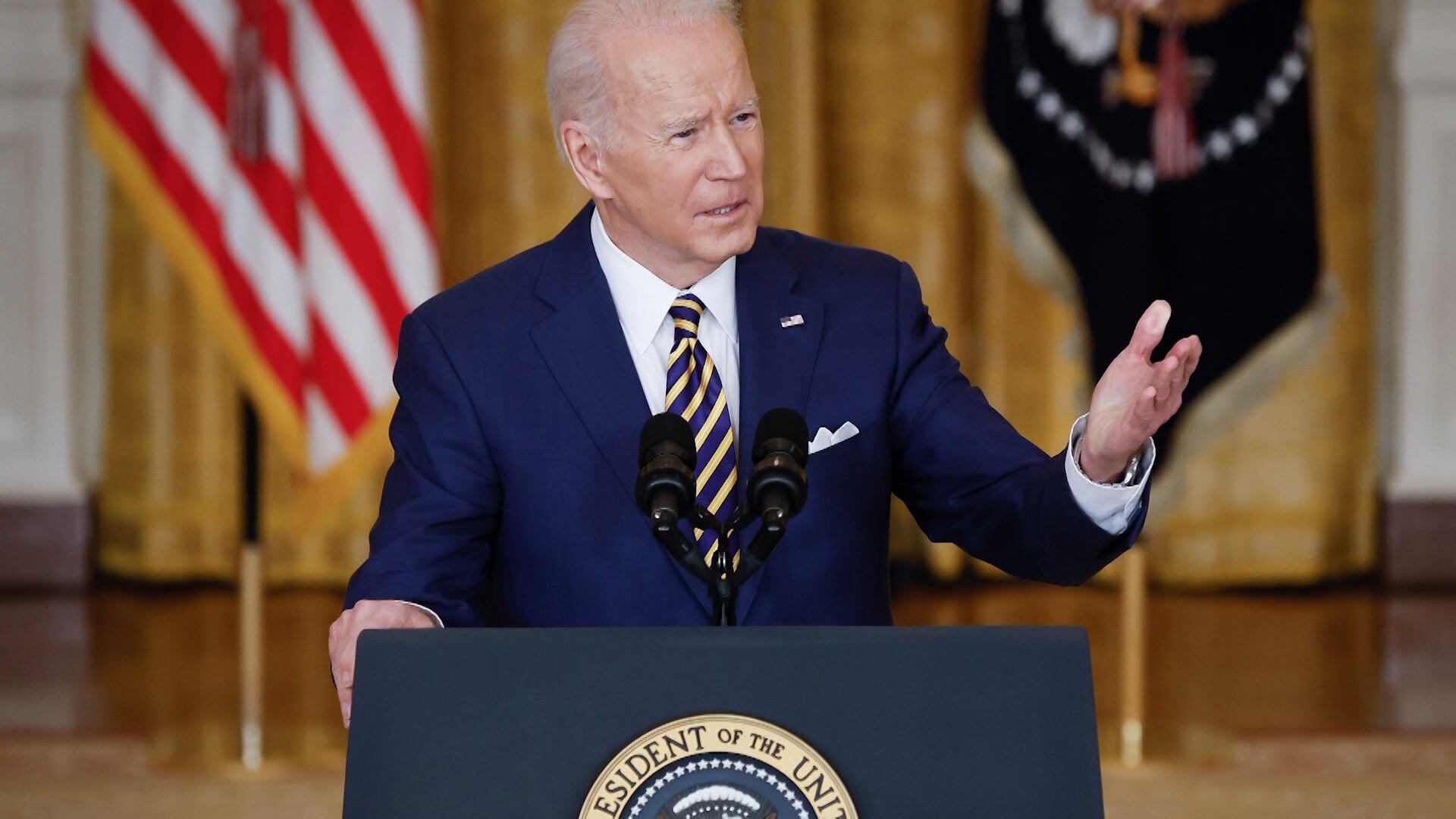
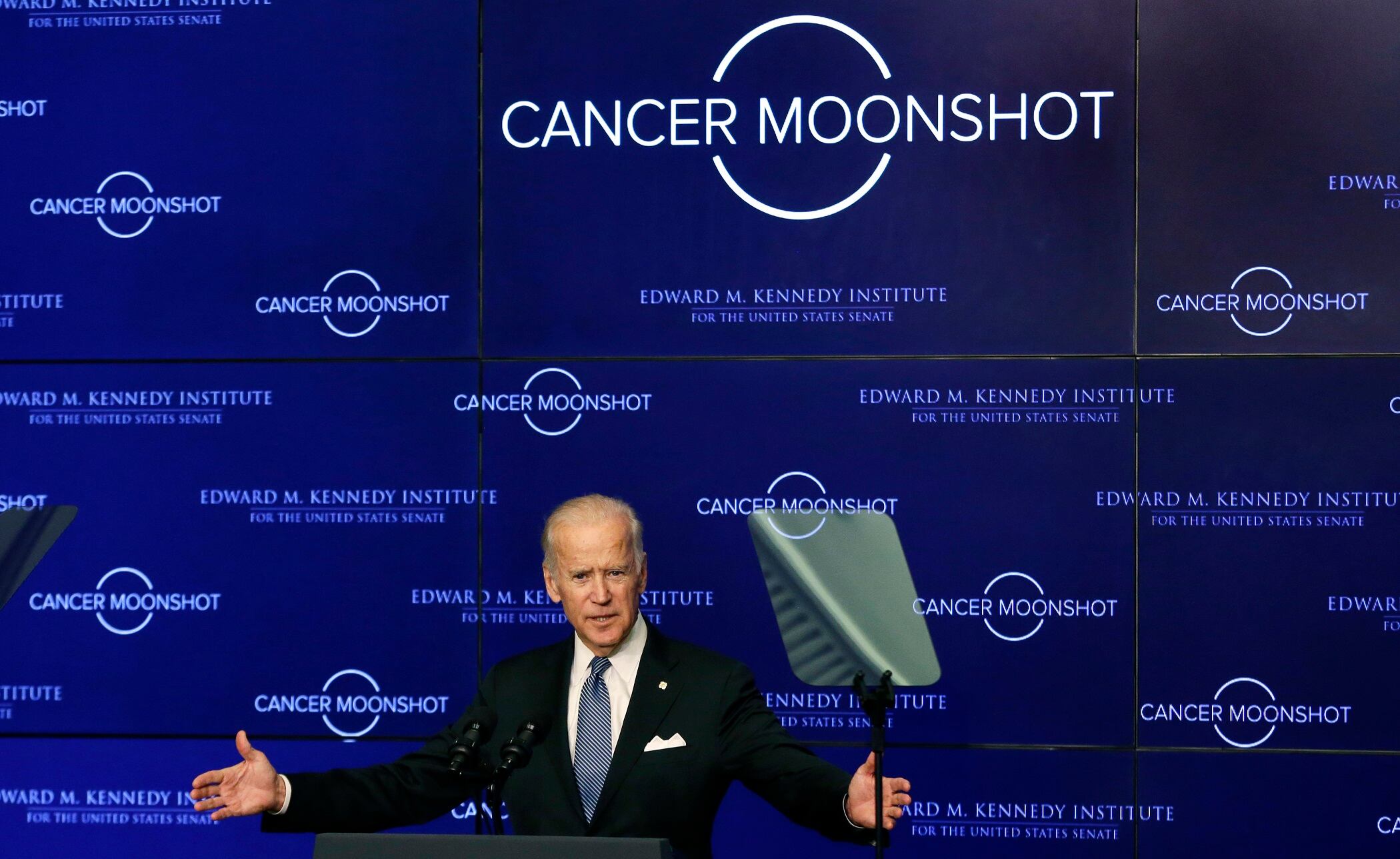
President Joe Biden is committing to reduce the cancer death rate by 50% — a new goal for the “moonshot” initiative against the disease that was announced in 2016 when he was vice president.

Biden has set a 25-year timeline for achieving that goal, part of his broader effort to end cancer as we know it, according to senior administration officials who previewed Wednesday's announcement on the condition of anonymity.

The issue is deeply personal for Biden: He lost his elder son, Beau, to brain cancer in 2015.

The pain experienced by the president is shared by many Americans. The American Cancer Society estimates that there will be 1,918,030 new cancer cases and 609,360 cancer deaths this year. What Biden is aiming to do is essentially save more than 300,000 lives annually from the disease, something the administration believes is possible because the age-adjusted death rate has already fallen by roughly 25% over the past two decades. The cancer death rate is currently 146 per 100,000 people, down from nearly 200 in 2000.

The American Cancer Society said in a statement that it applauded Biden for “putting national focus on this critical issue” and that “it will be standing shoulder to shoulder” with the administration.

Dr. Barron Lerner, a professor of medicine and population health at New York University Langone Health, said that “hyperbolic goals" can be needed to attract public attention but achieving the 50% reduction is “extremely unlikely.”

“Similar past efforts like the ‘War on Cancer’ have made gains, but they have been more modest,” said Lerner, the author “The Breast Cancer Wars.” “Cancer is many diseases and requires very complicated research. Translating these advances to the clinical setting is never easy either.”

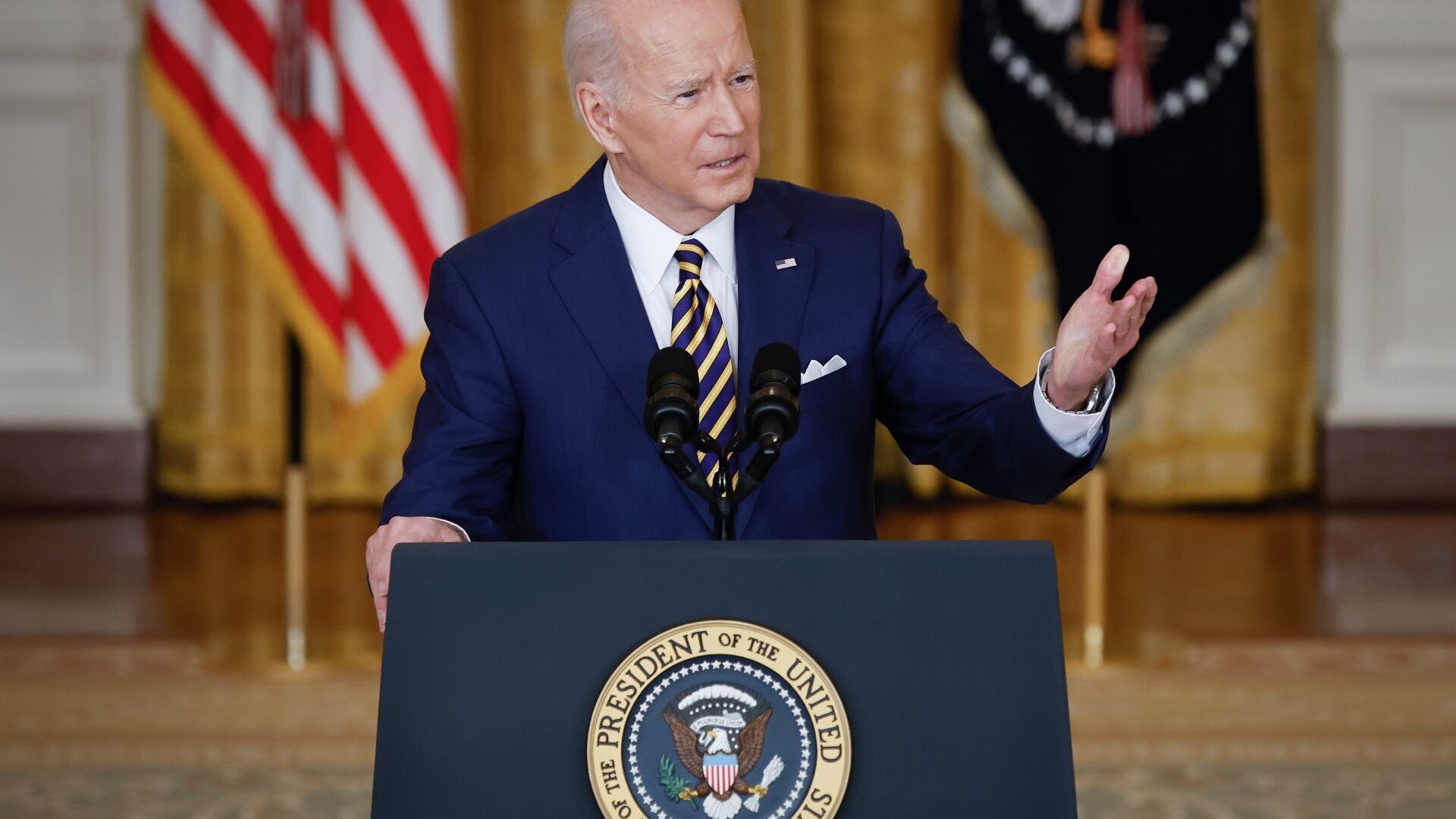
Biden was scheduled to give remarks Wednesday from the East Room of the White House, along with his wife, Jill, and Vice President Kamala Harris. Also scheduled to attend the speech: members of Congress and the administration and about 100 members of the cancer community including patients, survivors, caregivers, families, advocacy groups and research organizations.

As part of the effort, Biden will assemble a “cancer Cabinet” that includes 18 federal departments, agencies and offices, including leaders from the Departments of Health and Human Services, Veterans Affairs, Defense, Energy and Agriculture.

There were no plans to announce new funding commitments on Wednesday, though the administration will outline why it believes it can curb cancer through efforts such as increased screening and removing inequities in treatment. The coronavirus pandemic has consumed health care resources and caused people to miss more than 9.5 million cancer screenings.

The White House also will host a summit on the cancer initiative and continue a roundtable discussion series on the subject. The goal is to improve the quality of treatment and people’s lives, something with deep economic resonance as well. The National Cancer Institute reported in October that the economic burden of treatment was more than $21 billion in 2019, including $16.22 billion in patient out-of-pocket costs.

President Barack Obama announced the cancer program during his final full year in office and secured $1.8 billion over seven years to fund research. Obama designated Biden, then his vice president, as “mission control," a recognition of Biden's grief as a parent and desire to do something about it. Biden wrote in his memoir “Promise Me, Dad” that he chose not to run for president in 2016 primarily because of Beau's death.

When Biden announced he wasn't seeking the Democratic nomination in 2016, he said he regretted not being president because "I would have wanted to have been the president who ended cancer, because it’s possible.”

The effort fell somewhat out of the public focus when Donald Trump became president, though Trump, a Republican, proposed $500 million over 10 years for pediatric cancer research in his 2019 State of the Union address.

Biden continued the work as a private citizen by establishing the Biden Cancer Initiative to help organize resources to improve cancer care. When Biden did seek the presidency in 2020, he had tears in his eyes as he said in an interview on MSNBC's “Morning Joe" that “Beau should be running for president, not me.”

Share:
More In Politics
Looking Back at Biden's First Year in Office And The Road Ahead
President Biden's first year did not come to the close that he had hoped after last night's Senate vote blocked the voting rights bill, a priority that Biden has promoted since his inauguration. Joining us to discuss the voting rights bill, and many others passing through congress is congresswoman Lori Trahan, representing Massachusett's 3rd district.
Senate Committee Votes to Advance Big Tech Antitrust Bill
Members of Congress have voted to advance a bill meant to address antitrust concerns related to tech giants including Amazon, Apple, Google, and Meta. The 'American Innovation and Choice Online Act' is largely seen as one of the best chances for the government to reign in Big Tech's dominance Seth Schachner, Managing Director StratAmericas; Digital Business Executive joined Cheddar's Opening Bell to discuss.
Biden Touts Intel's Chip Factory Plans Amid Shortages
American semiconductor company, Intel officially announcing plans to build a new $20 billion chip manufacturing complex outside Columbus, Ohio. This comes as the global chip shortage continues to hamper production of everything from smart phones, to cars. Jennifer Smith - Logistics and Supply Chain Reporter, WSJ joined Cheddar's Opening Bell to discuss.
U.S. Puts Troops On High Alert As Russia Increases Presence Near Ukraine Border
The U.S. has put more than 8,000 American troops on high alert for possible deployment to Eastern Europe as the West prepares for a potential Russian invasion of Ukraine. With Russia building up more than 100,000 troops near the Ukrainian border, concerns over the country's behavior are mounting. Joel Rubin, Former Deputy Assistant Secretary of State and President of the Washington Strategy Group, joined Cheddar to discuss what this means for U.S.-Russia relations, and where the conflict might be heading next.
As Midterm Elections Loom, Biden's Approval Rating Continues Decline
As the midterm election looms, things aren't looking too promising for President Joe Biden. One year into his term as president, Biden is facing one of the lowest approval ratings of any modern-day president, threatening his party's control of the House in 2022. Brian Bennett, Senior White House Correspondent for TIME, joined Cheddar's Opening Bell to discuss.
The Biden Administration: One Year Down, Three to Go
A full one year into his term as President of The United States, President Biden addressed the nation on Wednesday, facing questions on everything from inflation to chip shortages and covid-19. As Biden enters his second year in office, he is facing one of the lowest approval ratings of any modern-day president. Kate Davidson, Reporter, POLITICO joined Cheddar's Opening Bell to discuss.
New Documentary Highlights the Life and Role of Congresswoman Barbara Lee
"Barbara Lee: Speaking Truth to Power" is the story of how the longtime House Democrat became, as she Is known to some, as "the Conscience of Congress." The film also shows Representative Lee from her days working to fight community poverty to famously becoming the only member of Congress to vote "no" against the war in Afghanistan days after 9/11. The film is nominated for an NAACP Image Award, and Premieres on Starz on February 1. Film director Abby Ginzberg and Rep. Barbara Lee (D-Calif. 13th District), joined Cheddar to discuss more.
New San Diego Law Funnels Grocery Waste To Food Banks
San Diego has just implemented a new law that could set the stage for how the country deals with food waste. This new law hopes to make a dent in that. Businesses and groceries stores out in San Diego will need to put a plan in place to *donate edible food rather than toss it straight to the trash. Food Rescue Manager at Feeding San Diego, Kate Garret
Bronx Twin Parks Apartment Fire Leaves 17 People Dead
Earlier this month, New York City experienced one of the deadliest fires it has seen in decades. 17 people lost their lives in the Fordham section of the Bronx. This was due to a faulty space heater which reportedly began on the lower floor of the 120 unit building. Thanks to the F. D. N. Y. And heroic neighbors, many were able to get out in time. Unfortunately, the toxic smoke surged upwards through a safety door. Now, many advocates say negligence by policymakers and landlords has led to the deaths in black and brown communities from fires that honestly could have been preventable. Legislative Director of Citizen Action of New York, Rebecca Garrard, and the Chair of Journalism and New Media Studies at St. Joseph's College Theodore Hamm, joined Cheddar to discuss more.
Load More