By Jonathan Drew and Zeke Miller
The Biden administration is boosting purchases of coronavirus vaccines to deliver enough to protect 300 million Americans by the end of the summer, as it surges deliveries to states for the next three weeks following complaints of shortages and inconsistent supplies.
President Joe Biden announced the surge in deliveries to states Tuesday, along with the news that the federal government is purchasing an additional 100 million doses each of the two approved coronavirus vaccines. With existing purchases, the White House expects to be able to deliver enough of the two-dose regimens to states to vaccinate 300 million people.
“This is enough vaccine to vaccinate 300 million Americans by end of summer, early fall,” Biden said, calling the push to increase supply a “wartime effort."
The purchases from drugmakers Pfizer and Moderna come as the Biden administration is trying to ramp up vaccine production and states’ capacities to inject them into arms. Even more vaccine could be available if federal scientists approve a single-dose shot from Johnson & Johnson, which is expected to seek emergency authorization in the coming weeks.
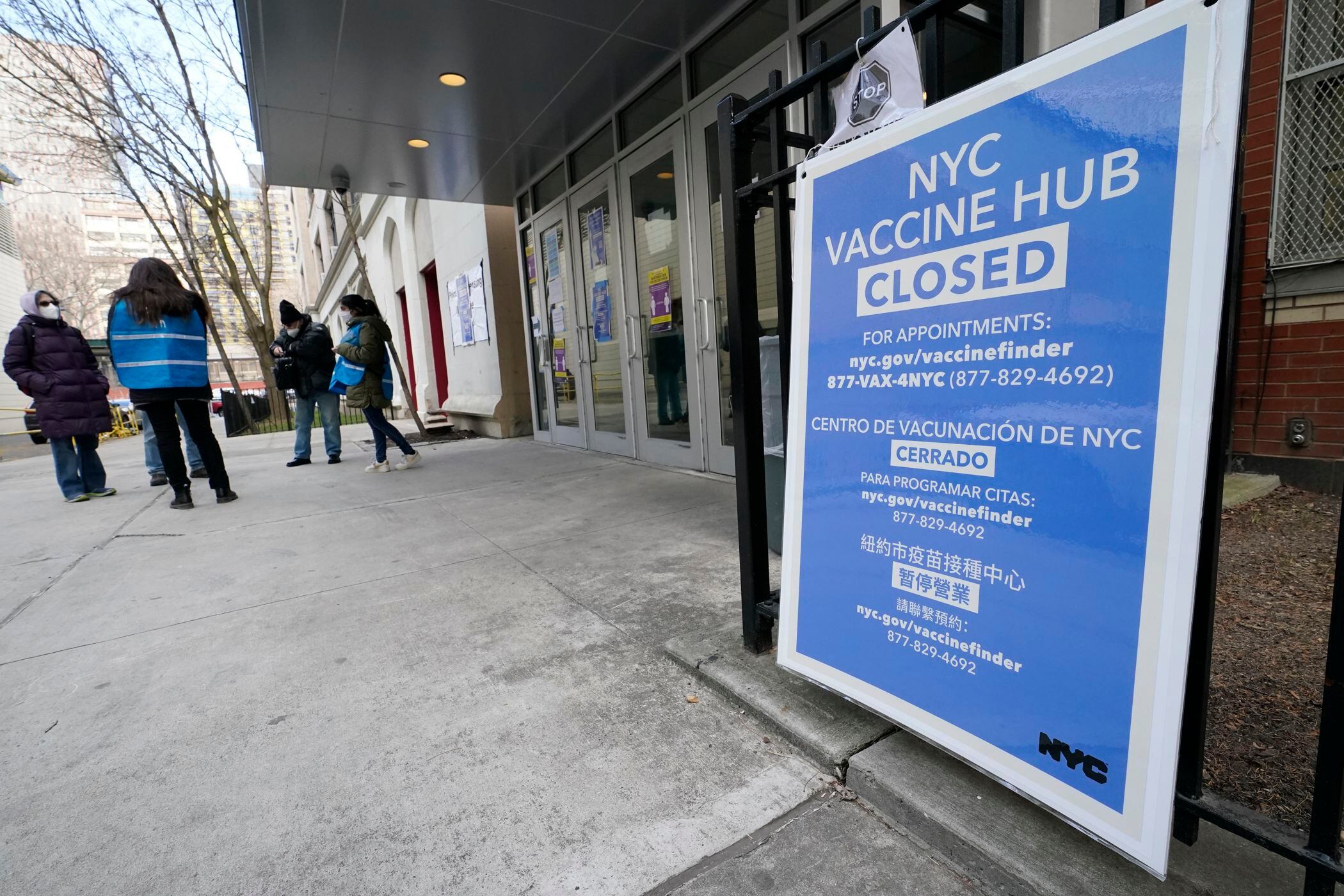
Biden also announced a roughly 16% boost in deliveries to states over the coming weeks, amid complaints of shortages so severe that some vaccination sites around the U.S. had to cancel tens of thousands of appointments with people seeking their first shot.
Detailed figures posted on the Centers for Disease Control and Prevention website Tuesday showed that the government plans to make about 10.1 million first and second doses available next week, up from this week’s allotment of 8.6 million. The figures represent doses of both the Pfizer and Moderna vaccines. It was not immediately clear how long the surge of doses could be sustained.
The increase comes amid complaints from governors and top health officials about inadequate supplies and the need for earlier and more reliable estimates of how much vaccine is on the way so that they can plan accordingly.
Seeking to those concerns, Biden's team pledged to provide states with firm vaccine allocations three weeks ahead of delivery to allow for accurate planning for injections during their first virus-related call with the nation’s governors Tuesday.
“Until now, we’ve had to guess how much vaccine” each week," Biden said. “This is unacceptable. Lives are at stake.”
Biden's announcement came a day after he grew more bullish about exceeding his vaccine pledge to deliver 100 million injections in his first 100 days in office, suggesting that a rate of 1.5 million doses per day could soon be achieved.
The administration has also promised more openness and said it will hold news briefings three times a week, beginning Wednesday, about the outbreak that has killed over 420,000 Americans.
The setup inherited from the Trump administration has been marked by miscommunication and unexplained bottlenecks, with shortages reported in some places even as vaccine doses remain on the shelf.
Officials in West Virginia, which has had one of the best rates of administering vaccine, said they have fewer than 11,000 first doses on hand even after this week’s shipment.
“I’m screaming my head off” for more, Republican Gov. Jim Justice said.
California, which has faced criticism over a slow vaccine rollout, announced Tuesday that it is centralizing its hodgepodge of county systems and streamlining appointment sign-up, notification and eligibility. Residents have been baffled by the varying rules in different counties.
And in Colorado, Democratic Gov. Jared Polis said that the limited supply of vaccine from the federal government is prompting the state to repurpose second doses as first doses, though he expects that people scheduled for their second shot will still be able to keep their appointments.
The weekly allocation cycle for first doses begins on Monday nights, when federal officials review data on vaccine availability from manufacturers to determine how much each state can have. Allocations are based on each jurisdiction’s population of people 18 and older.
States are notified on Tuesdays of their allocations through a computer network called Tiberius and other channels, after which they can specify where they want doses shipped. Deliveries start the following Monday.
A similar but separate process for ordering second doses, which must be given three to four weeks after the first, begins each week on Sunday night.
As of Tuesday afternoon, the CDC reported that just over half of the 44 million doses distributed to states have been put in people’s arms. That is well short of the hundreds of millions of doses that experts say will need to be administered to achieve herd immunity and conquer the outbreak.
The U.S. ranks fifth in the world in the number of doses administered relative to the country’s population, behind No. 1 Israel, United Arab Emirates, Britain and Bahrain, according to the University of Oxford.
The reason more of the available shots in the U.S. haven’t been dispensed isn’t entirely clear. But many vaccination sites are apparently holding large quantities of vaccine in reserve to make sure people who have already gotten their first shot receive the required second one on schedule.
Also, some state officials have complained of a lag between when they report their vaccination numbers to the government and when the figures are posted on the CDC website.
In the New Orleans area, Ochsner Health said Monday that inadequate supply forced the cancellation last week of 21,400 first-dose appointments but that second-dose appointments aren’t affected.
In North Carolina, Greensboro-based Cone Health announced it is canceling first-dose appointments for 10,000 people and moving them to a waiting list because of supply problems.
Jesse Williams, 81, of Reidsville, North Carolina, said his appointment Thursday with Cone Health was scratched, and he is waiting to hear when it might be rescheduled. The former volunteer firefighter had hoped the vaccine would enable him to resume attending church, playing golf and seeing friends.
“It’s just a frustration that we were expecting to be having our shots and being a little more resilient to COVID-19,” he said.
The vaccine rollout across the 27-nation European Union has also run into roadblocks and has likewise been criticized as too slow. Pfizer is delaying deliveries while it upgrades its plant in Belgium to increase capacity. And AstraZeneca disclosed that its initial shipment will be smaller than expected.
The EU, with 450 million citizens, is demanding that the pharmaceutical companies meet their commitments on schedule.
___
Associated Press writers around the U.S. contributed to this report.
Updated on January 26, 2021, at 5:14 p.m. ET with the latest information.