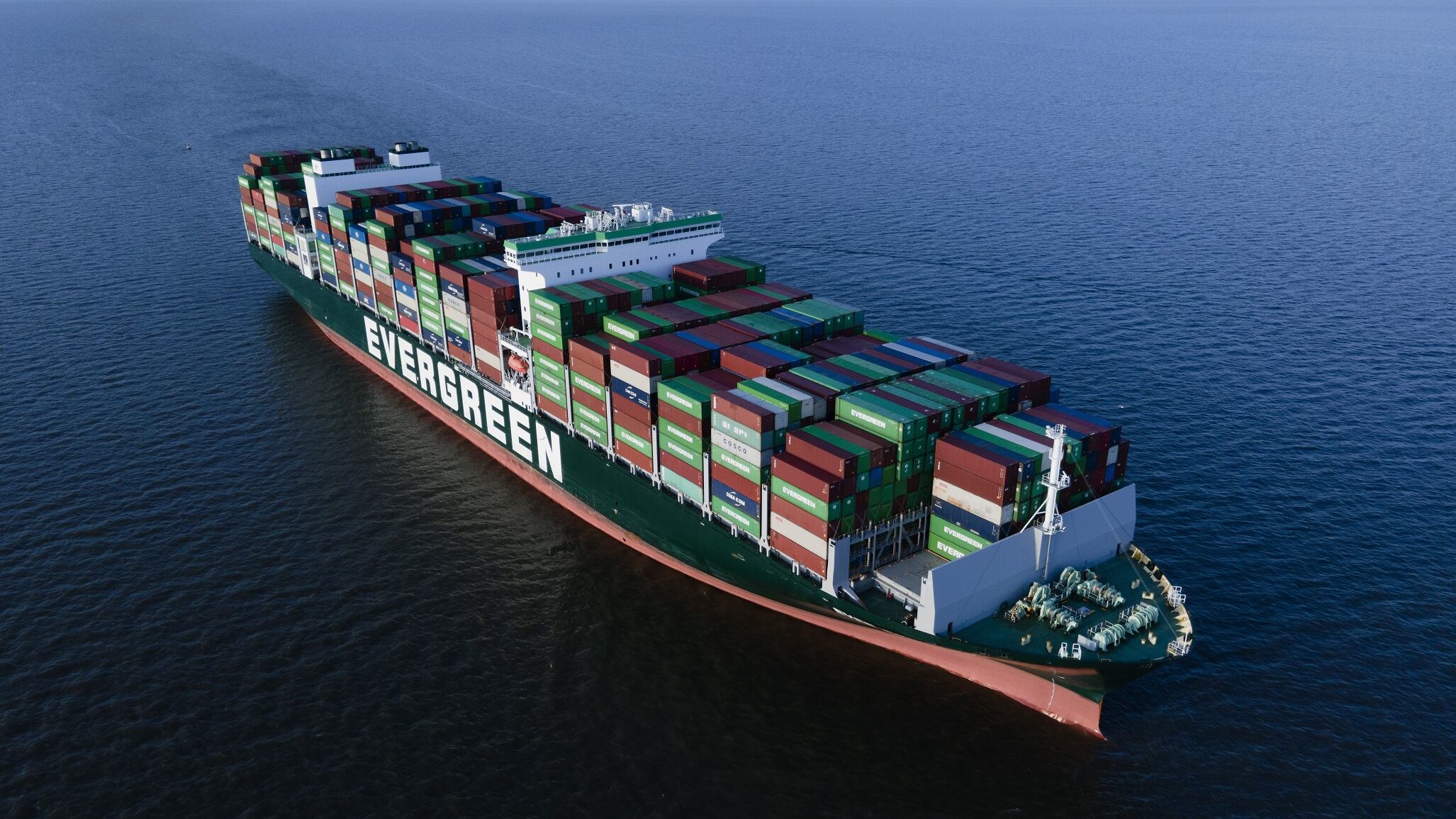
Efforts were underway Monday to refloat a container vessel that ran aground in the Maryland portion of the Chesapeake Bay, the U.S. Coast Guard said.
There were no reports of injuries, pollution or damage to the 1,000-foot ship, which grounded Sunday evening, the agency said.
The ship, called the Ever Forward, also isn't obstructing traffic in a nearby navigational channel. But nearby ships are reducing their speed and taking other precautions.
The container ship Ever Forward, which ran aground in the Chesapeake Bay off the coast near Pasadena, Md., the night before, is seen Monday, March 14, 2022. (AP Photo/Julio Cortez)
The Baltimore Sun reported that the ship had left the Port of Baltimore on Sunday and was headed for Norfolk, Virginia, where port terminals serve the Port of Virginia.
The vessel is part of a fleet of cargo ships owned by Taiwan-based Evergreen Marine Corp. The newspaper reported that Evergreen Marine also owns the Ever Given, which became stuck in the Suez Canal in 2021 and caused problems for global shipping.
Lab-created diamonds come with sparkling claims: that they are ethically made by machines running on renewable energy. But many don't live up to these claims or don't respond to questions about their electricity sources, and lab diamonds require a lot of electricity.
Geoff Freeman, president and CEO of the U.S. Travel association, explains why other nations are outcompeting the U.S., and the innovations that would put American back on top.
Tony Drake, founder of Drake & Associates, breaks down the latest CPI report, why ‘inflation is still trending down,’ and why the Fed doesn’t want to cut rates too soon.
Make sure your love don't cost a thing this Valentine's Day to any scammers. Note: we're not talking about your partner that didn't do the dishes after saying they would.
Landing founder and CEO Bill Smith shares how the company’s new Nomad pass and partnership with Frontier Airlines allows subscribers unlimited airfare and accommodations.
The pandemic yielded government financial support and (eventually) a surprisingly strong job market — but racial wealth disparities grew. Why is it so difficult to close the wealth gap?
Plenty of retailers and suppliers are reducing the variety of their offerings to focus instead on what they think will sell best. Many businesses have decided less is better, justifying their limited selection by asserting shoppers don’t want so much choice.