Beyond Meat is going mainstream and that is doing wonders for its investors. The California-based purveyor of plant-based protein products has seen its stock rise nearly 65 percent since the beginning of the year, closing Tuesday at $117.05 after topping $130 in an intraday high. The rise in stock value lines up with a series of high-profile deals announced with fast-food chains McDonald’s and Dunkin’, which will use Beyond products in their meals.
Monday’s market bump coincided with Dunkin’s release of the Beyond D-O-Double G sandwich, repped by rapper Snoop Dogg -- a decadent twist on the Beyond Sausage Sandwich featuring vegan sausage, egg, cheese, and a glazed donut for a bun.
That came hot on the tail of another announcement last week that McDonald’s is expanding its test run of the “P.L.T.,” or plant-based patty, lettuce, and tomato sandwich, which uses a Beyond patty, to 52 locations in southwestern Ontario, Canada for three months.
Also last week, Beyond’s main competitor, Impossible Foods, bailed out of talks with McDonald’s due to concerns over its ability to meet demand.
The recent spike is only the latest ripple in a turbulent run for Beyond Meat shares. Since the company priced its IPO at $25 a share back in May, the stock has surged, then plunged, more than once. Most dramatically, it skyrocketed to $234.9 a share in July before ticking back down to around $80 per share in the last few months. Many analysts still advise holding on the stock.
Brian Holland, a senior research analyst for the wealth management firm D.A. Davidson, told Cheddar that the stock price will likely even out and that in the long-run ,full market penetration for Beyond is going to take time.
“I don’t think there’s much new,” he said. “We generally believe that Beyond Meat was the most likely partner for McDonald’s in some form or fashion.”
He added that McDonald’s has taken a measured approach by rolling out its Beyond products on a temporary basis, and that larger companies such as Nestlé and Tyson still present a threat.
These high-profile product crossovers, however, may only account for some of Beyond’s rising fortunes on the stock exchange.
Speaking at a retail conference in New York City on Tuesday, Beyond’s Executive Chairman Seth Goldman noted that the company hopes to expand into China over the next year and eventually bring its supply chain to every continent.
“We haven't announced anything, but we are expected to do something this year," Goldman said, according to a report from China’s Xinhua news agency.
China, which is currently experiencing a surge in pork prices due to an outbreak of swine fever, has seen its own share of companies enter the growing market for vegan and vegetarian alternatives to popular meat products. Food producers such as Zhenmeat and Whole Perfect Food now offer their own substitutes for meatballs and dumplings that cater to local tastes.
While competition is growing, the market for these products is sizing up as well. Total retail sales of plant-based foods have grown 31 percent since April 2017, according to data from the Plant Based Foods Association and The Good Food Institute, and 11 percent in the past year.
But grocery shoppers are clearly only one piece of the plant-based pie for Beyond. The company has gone all-in on working with fast-food chains to reach consumers who still equate meatless with stodgy tofu or seitan options rather than picture-perfect recreations of ground beef.
National brands aren’t the only game in town either. Beyond also partners with regional chains, like Carl’s Jr. and Hardee’s, which are common in the U.S. south, Canadian chains such as Tim Hortons and A&W Canada, and a number of one-off local restaurants throughout the country.
While there’s no precise data on how much 0f the plant-based market is comprised of fast-food restaurants, promoters of the industry see them as an important signifier of customer demand.
“What it shows is that consumers are looking for, and in some cases demanding, plant-based food options across the spectrum, whether that’s at their favorite fast-food restaurant or in a sports stadium or on a college campus or in a grocery store,” said Michael Robbins, a spokesperson for the Plant Based Foods Association.
Following sales tech startup Scratchpad raising $33 million in Series B Funding, CEO and co-founder Pouyan Salehi joined Cheddar to discuss how his company's software works to help salespeople with an all-in-one workspace, integrating with Salesforce to optimize notes, spreadsheets, and other relevant information so businesses can forecast and make the best decisions. "If you look at other crafts like artists, they'll have studios; chefs, they'll have kitchens; scientists will have labs, and we just asked, well, if you look at sales as a craft, why doesn't something exist that is designed solely for a salesperson?" Salehi said about his workspace app.
As the 2022 Beijing Winter Olympics inches closer, sponsors are facing mounting pressure to pull out of the games with China is under fire for controversies like the alleged human rights abuses against its Muslim minority population and the disappearance of tennis player Peng Shuai. Rick Burton, professor of sport management at Syracuse University, joined Cheddar to discuss what he expects to happen once the games begin. Burton said China is too large of a market for American advertisers to ignore, and he doesn't expect any of them to pull out of the games. "Olympic sponsors right now I think are really just trying to hang on and get through these 17 days, come out the other end," he said.
Google could be gearing up to release its own wearable device as rumors swirl about a potential smartwatch with the Pixel brand. Jon Prosser, the creator of Front Page Tech, who tweeted a possible leak about the product, joined Cheddar's "Closing Bell" to discuss potential the benefits of it entering the same space as the Apple Watch. Prosser said, while he doesn't expect it to launch until at least 2023, the Pixel Watch will be "one of the most vital, most important wearables that we can have on the market," noting that it won't likely challenge Apple for much market share but will set the standard for other Android wearables to come.
The Federal Reserve released its highly-anticipated research weighing the pros and cons of a digital dollar in the U.S. The report comes as economic rivals like china have already piloted their own central bank digital currencies. Edward Moya, Senior Market Analyst, The Americas, Oanda, joined Cheddar's Opening Bell to discuss.
Tax season is now underway, and it's going to be a bit different than in years past. For starters, the deadline is April 18, instead of the typical April 15th, and many Americans will need to account for advance child tax credit payments, the return of the recovery rebate credit, and a special break for charitable contributions, among other things. Brent Weiss, Co-Founder and certified financial planner at Facet Wealth, tells us what we need to know about filing our taxes this year, and when we can expect to receive our returns.
American semiconductor company, Intel officially announcing plans to build a new $20 billion chip manufacturing complex outside Columbus, Ohio. This comes as the global chip shortage continues to hamper production of everything from smart phones, to cars. Jennifer Smith - Logistics and Supply Chain Reporter, WSJ joined Cheddar's Opening Bell to discuss.
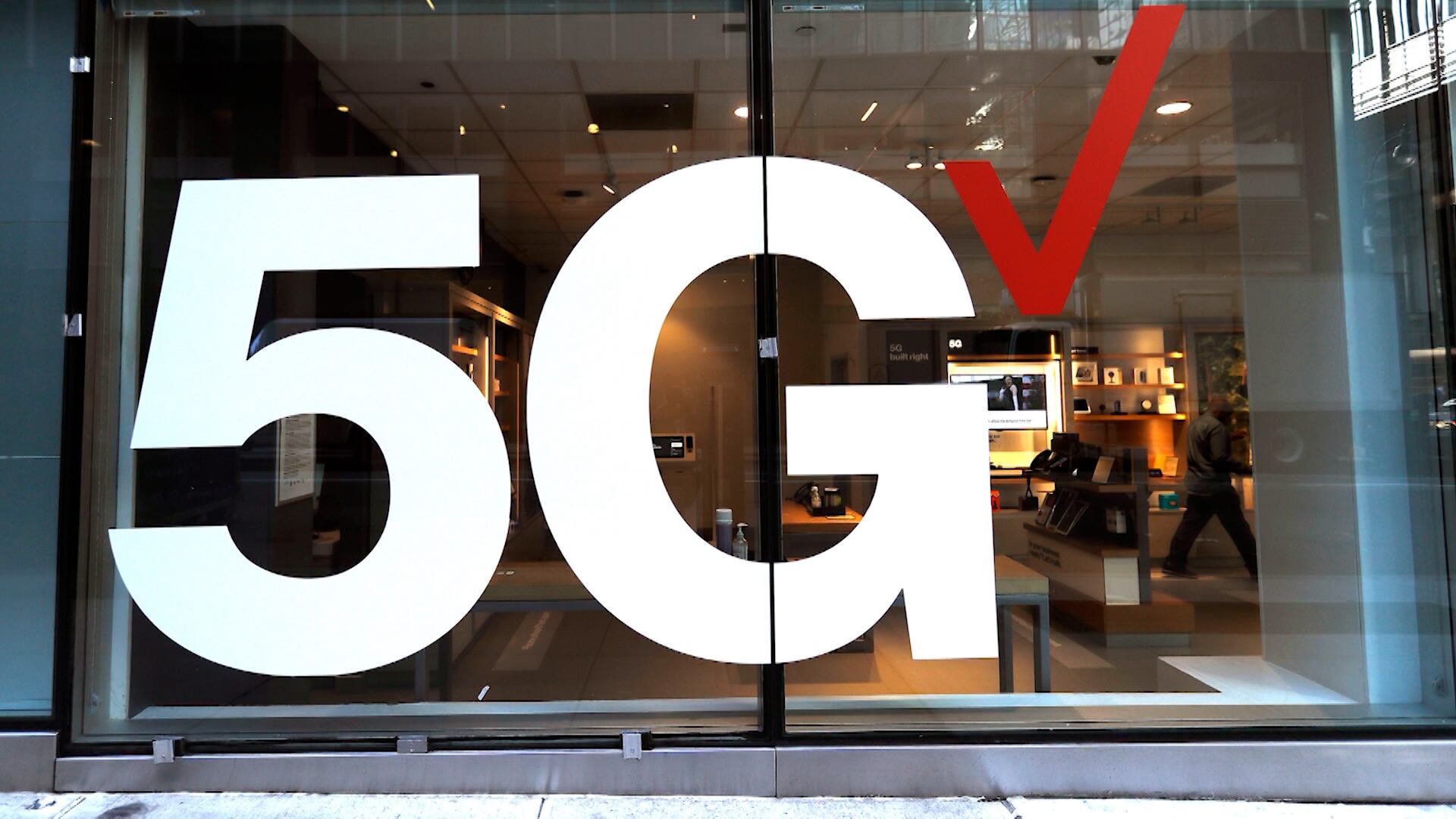
Verizon and AT&T officially launched their 5G wireless services Wednesday across the U.S. Despite pushback from U.S. airlines and the FAA over safety concerns, the telecom giants rolled out the next generation of wireless cellular technology, with speeds up to 20 times faster than 4G LTE. John Biggs, Editor, Tech Crunch joined Cheddar's Opening Bell to discuss.
Earnings season kicks into high gear this week as big players are on tap to report their Q4 numbers, including Microsoft, Apple, and Tesla. Investors will be watching for key indicators on how the companies are dealing with inflation, Omicron and interest rates. Christine Short, VP of Research, Wall Street Horizon joined Cheddar's Opening Bell to discuss.
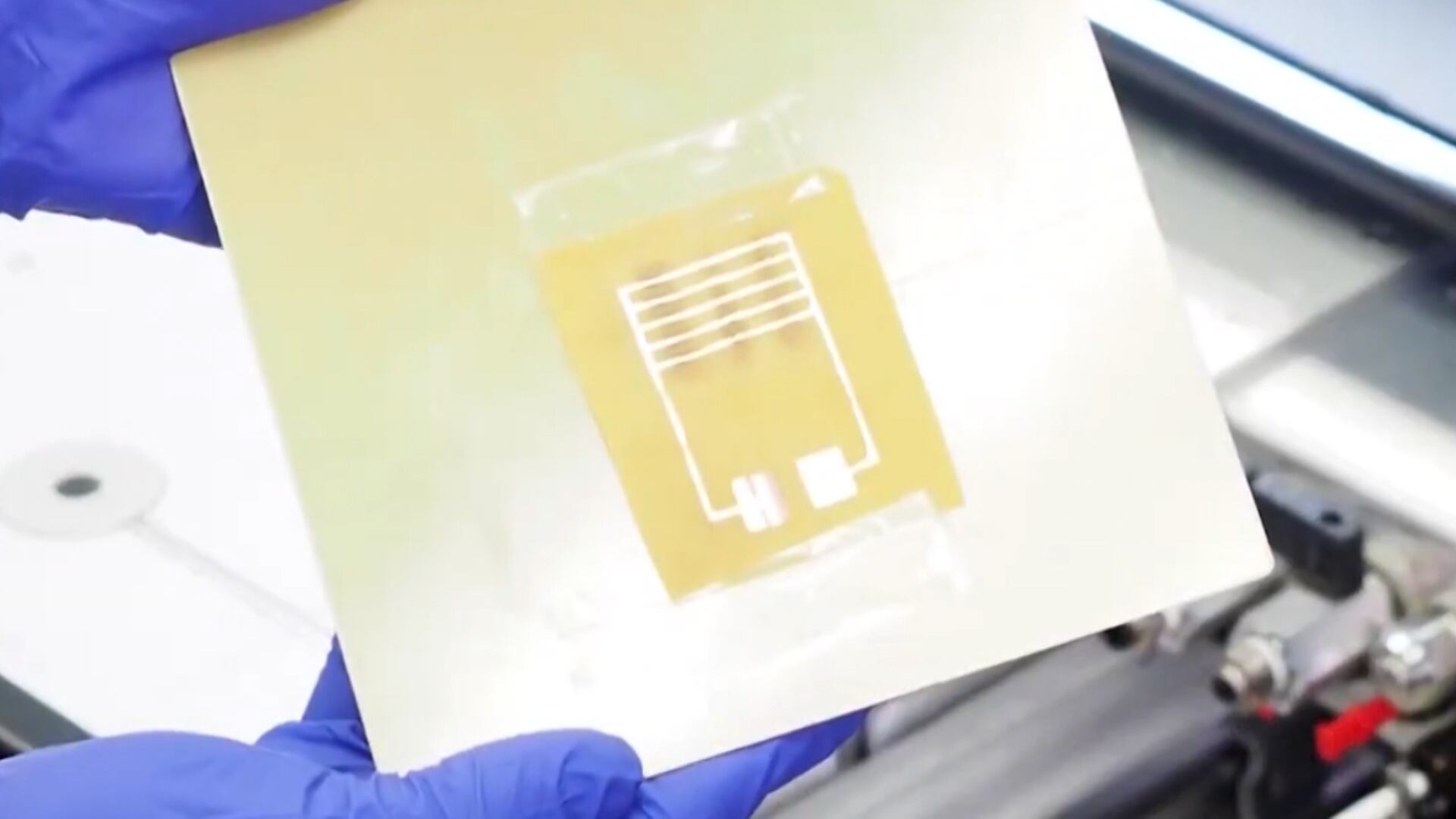
Stan Farnsworth, chief marketing officer at PulseForge, joined Cheddar to talk about his company's debut at CES 2022 and how it plans to innovate the sustainable tech manufacturing space. PulseForge is bringing a new approach to industrial thermal processing, which contributes to 30 percent of global greenhouse gas emissions, according to Farnsworth. "By using 85 percent less energy in the processing of materials through a variety of manufacturing processes, we can make a direct impact in reducing carbon output and reducing carbon footprint associated with manufacturing," he said.