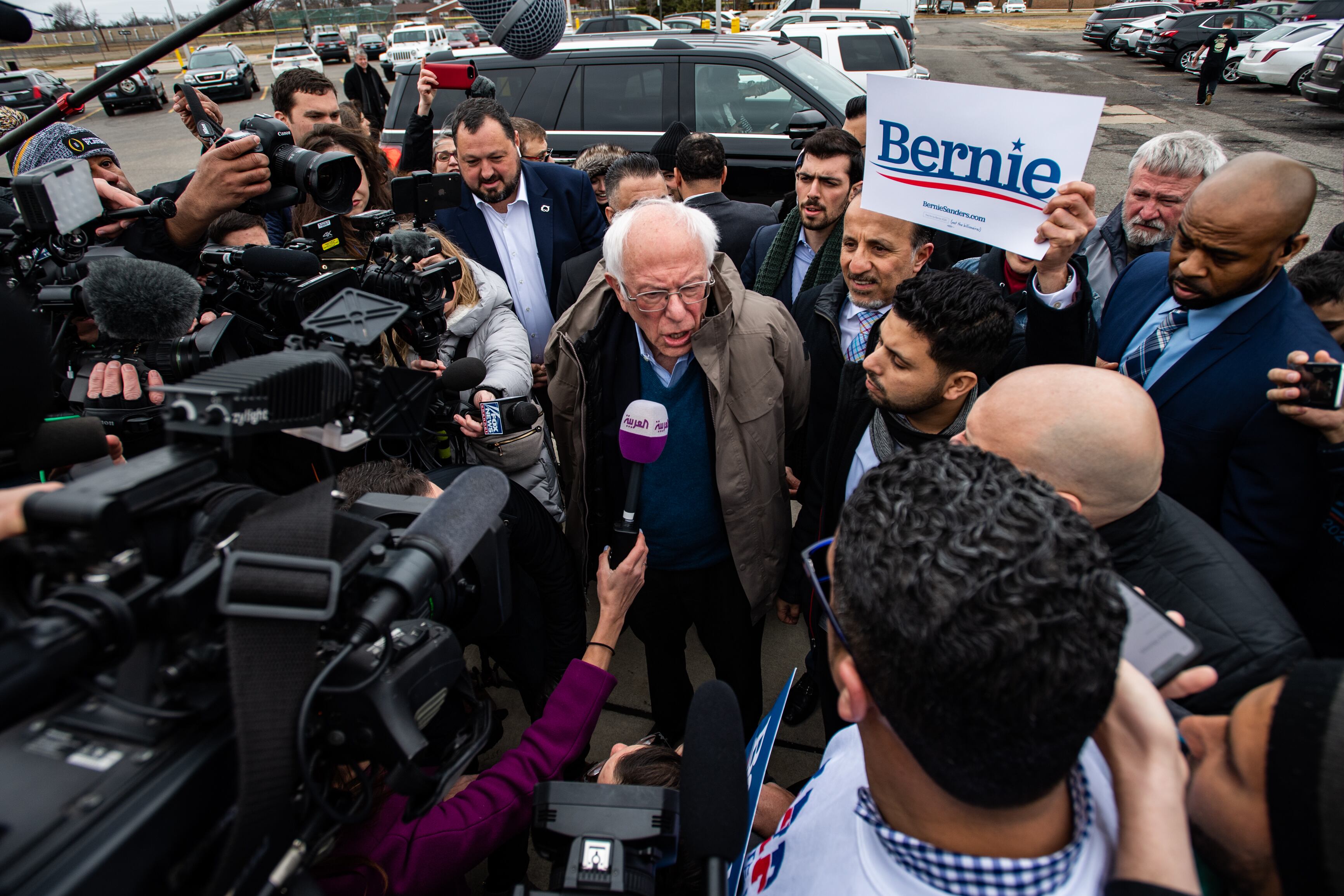
: Sen. Bernie Sanders, I-Vt., U.S. 2020 Democratic Presidential Candidate speaks to the media and supporters outside a polling location at Canfield Center on Tuesday, March 10, 2020 in Dearborn Heights, MI. (Photo by Salwan Georges/The Washington Post via Getty Images)
Senator Bernie Sanders of Vermont spoke at length about the need to defeat Donald Trump and discussed his campaign today after falling behind in another set of Democratic primaries on Tuesday but did not announce his intention to drop out of the contest.
While he cited that he appeared to be losing the race on the issue of electability, Sanders also stated that he felt his campaign was winning the ideological debate. He then directed several questions and challenges on healthcare, climate change, and mass incarceration to his rival former Vice President Joe Biden leading up to the Sunday debate in Arizona.
Biden, the only other remaining candidate aside from Rep. Tulsi Gabbard (far removed in the delegate count) took what looks to be a commanding lead in delegates following victories in Michigan, Missouri, Mississippi, and Idaho, while Sanders won the North Dakota caucus.
The results from the primary in Washington state still show Biden and Sanders nack-in-neck with 67 percent of precincts reporting as of this report.
Sanders, the social democrat who carried the banner, along with Senator Elizabeth Warren of Massachusetts, of what was considered the "progressive" side of the Democratic party, showed signs of leading the race early on among a still-large group of candidates. After a close race with former South Bend, Indiana Mayor Pete Buttigieg in Iowa for its caucus delegates, Sanders racked up wins in New Hampshire and Nevada.
But things would change after Biden garnered a dramatic and lopsided victory in South Carolina's primary. From there, other members of the "moderate" wing of the party, Pete Buttigieg and Senator Amy Klobuchar of Minnesota, dropped out, both endorsing Biden before Super Tuesday.
The Super Tuesday primary day featured the largest share of delegates to date, and while Sanders pulled off a victory in the largest prize of California, and wins in Colorado, Utah, and his own Vermont, Biden's momentum grabbed the lion's share of delegates throughout the Southeast, Minnesota, and Oklahoma.
The primary will conclude with the nomination at the Democratic National Convention in Milwaukee, Wisconsin, from July 13 to 16.
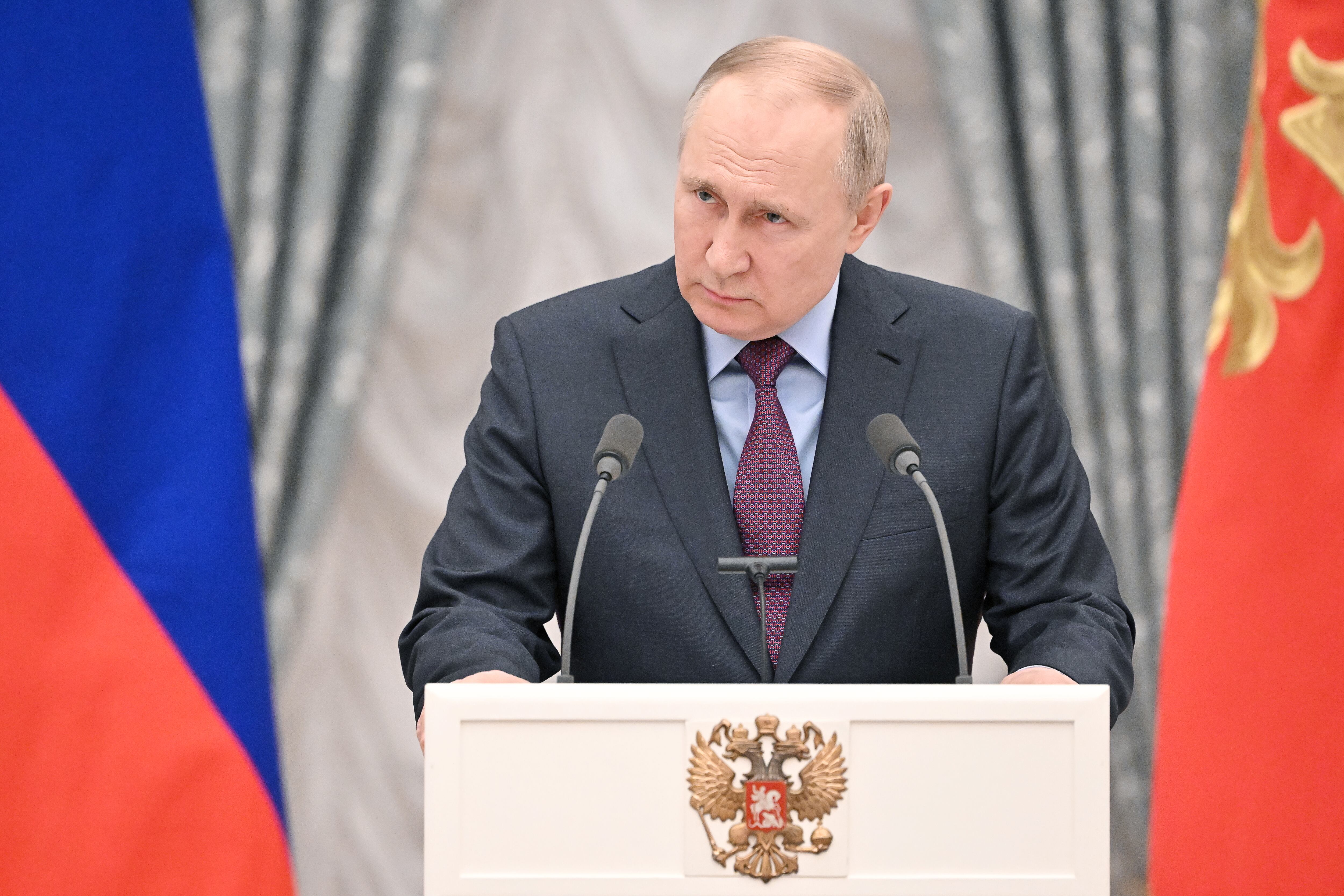
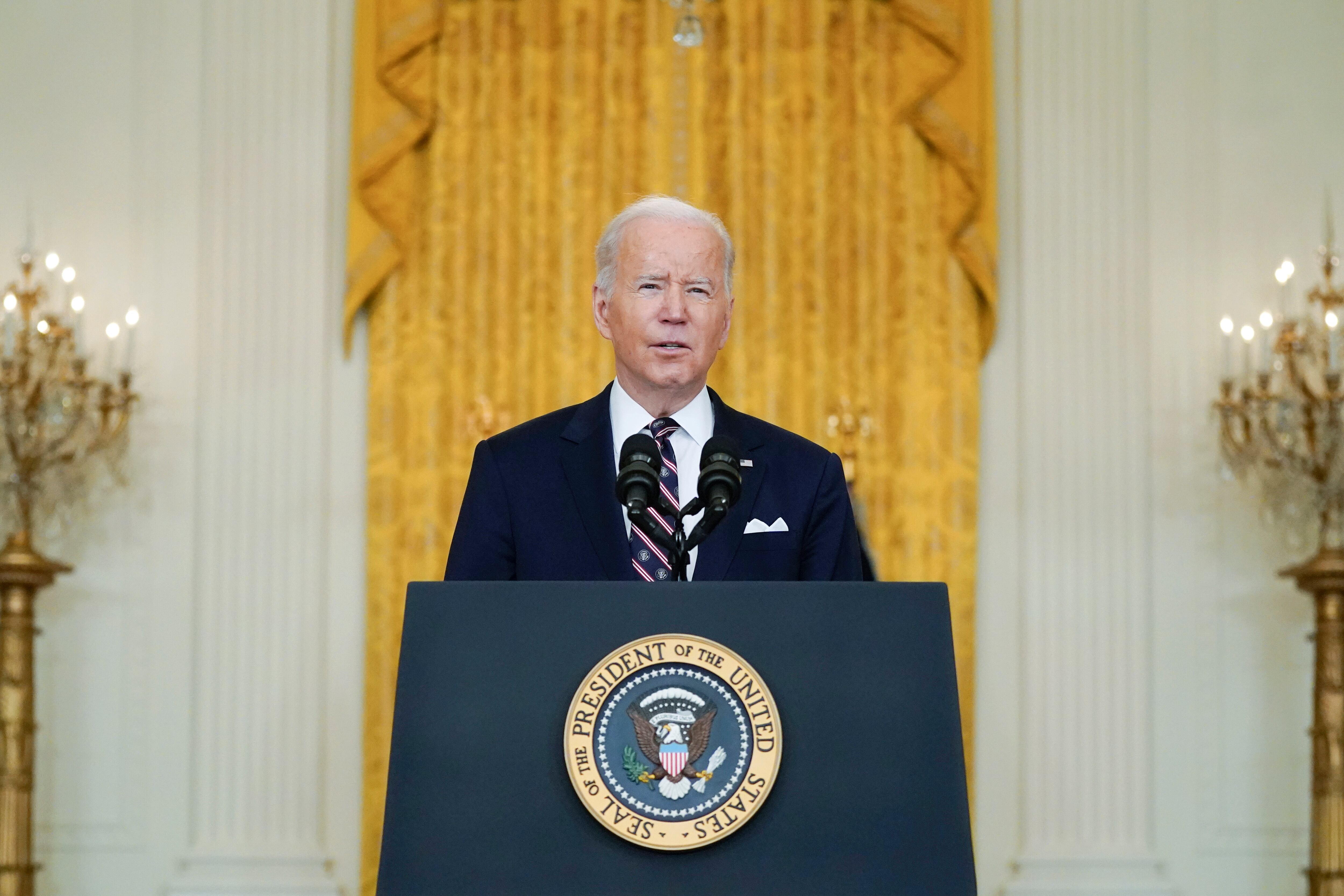
President Joe Biden said Tuesday that the U.S. will begin to impose sanctions on Russia, calling recent troop movement into Ukraine an 'invasion.' Biden and other government officials including from the State Department have begun to classify the Russian troop movement as an invasion after Russian President Vladimir Putin ordered troops to two independent Ukrainian areas in an alleged "peacekeeping" mission — which the West considers an act of aggression. Biden said Russia will continue to pay 'an even steeper price' if it continues sending troops into Ukraine. What happens next? Will Putin find a way around these sanctions? Ariel Cohen, senior fellow at the Atlantic Council, joins Closing Bell to discuss Biden's remarks, how the West will protect Ukraine since it doesn't belong to NATO, and more.
Russian lawmakers have given President Vladimir Putin a military force authorization in Ukraine, and President Biden has described Putin's announcement declaring the independence of two provinces within Ukraine and his subsequent deployment of peacekeepers as tantamount to "invasion. David Tafuri, a former Obama campaign foreign policy advisor and Bush State Department official, joined Cheddar News to discuss. "The Ukrainian military occupies more than 70 percent of those provinces still," Tafuri said, noting Putin alleged having a responsibility to defend those regions. "This would put Ukrainian forces and Russian forces right at each other engaged. And that might be how the war starts."
The major indexes ended Tuesday's session sharply lower due to escalating tensions between Russia and Ukraine. Bill Stone, Chief Investment Officer at The Glenview Trust Company, joins Cheddar News' Closing Bell, where he reminds viewers that Wall Street doesn't like uncertainty, and more of the recent losses are due to geopolitics than inflation.
Karim Hijazi, CEO of Prevailion, joins Cheddar News' Closing Bell, where he says that crypto's decentralized nature will pose obstacles for the FBI's new crypto unit, but it will also make progress with items such as managing fraudulent exchanges.
The Retail Industry Leaders Association released a report alleging the safety risks, economic losses, and potential job losses they link to a surge in shoplifting crimes in the United States. Lisa LaBruno, senior EVP of retail operations at the trade organization, joined Cheddar News to discuss the impact of websites that allow for the resale of unverified goods and passing the INFORM Consumers Act to stamp it out. “We need to hold the online marketplaces accountable for being a favored venue for criminals to resell stolen product," LaBruno said. "And that is exactly what the INFORM Act is designed to do."
The East-West faceoff over Ukraine has escalated dramatically, with Russian lawmakers authorizing President Vladimir Putin to use military force outside his country and President Biden and European leaders responding by slapping sanctions on Russian oligarchs and banks.
Stocks closed broadly lower Tuesday after Russia sent forces into Ukraine’s eastern region and the U.S., European Union and U.K. responded with economic sanctions.