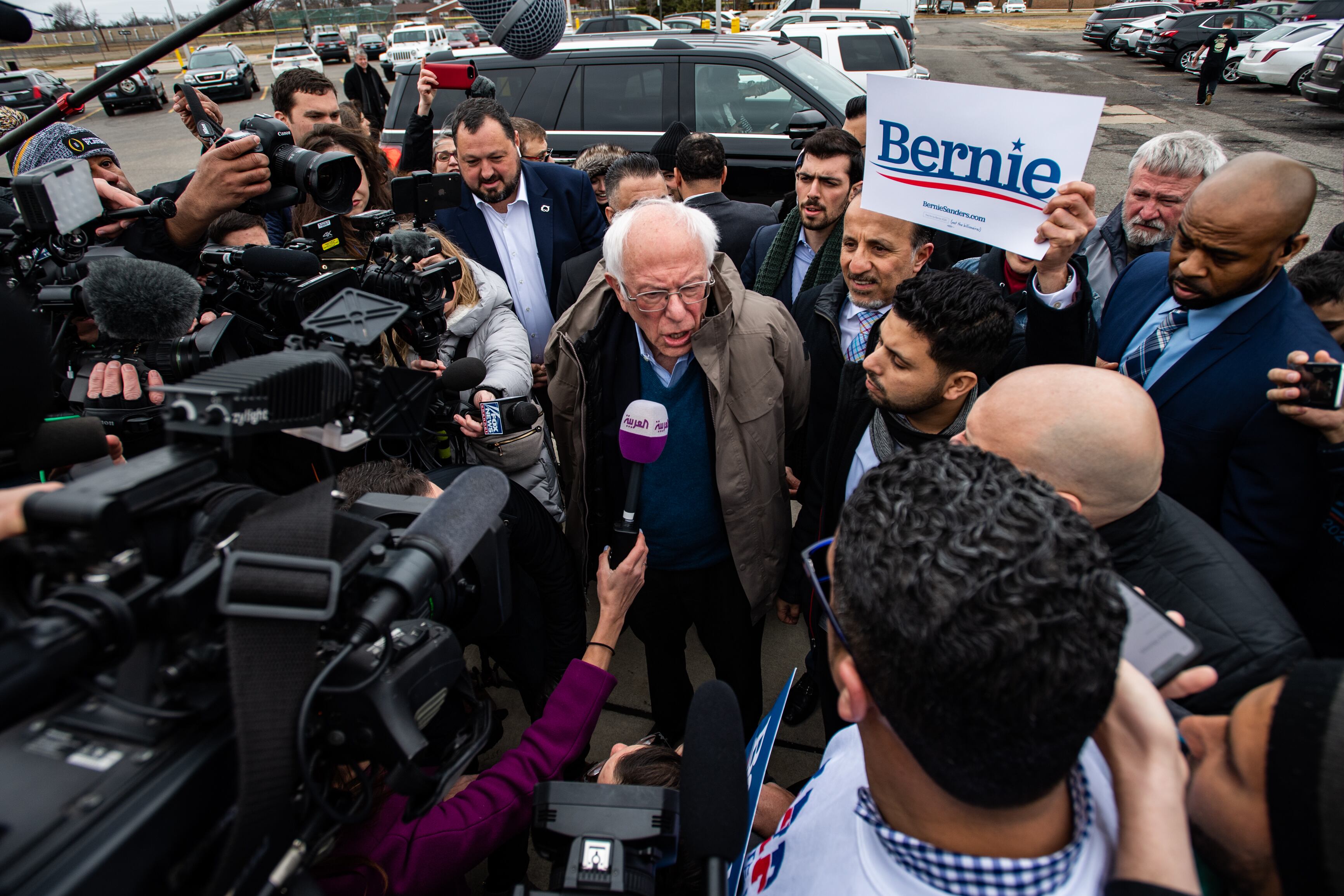
Senator Bernie Sanders of Vermont spoke at length about the need to defeat Donald Trump and discussed his campaign today after falling behind in another set of Democratic primaries on Tuesday but did not announce his intention to drop out of the contest.
While he cited that he appeared to be losing the race on the issue of electability, Sanders also stated that he felt his campaign was winning the ideological debate. He then directed several questions and challenges on healthcare, climate change, and mass incarceration to his rival former Vice President Joe Biden leading up to the Sunday debate in Arizona.
Biden, the only other remaining candidate aside from Rep. Tulsi Gabbard (far removed in the delegate count) took what looks to be a commanding lead in delegates following victories in Michigan, Missouri, Mississippi, and Idaho, while Sanders won the North Dakota caucus.
The results from the primary in Washington state still show Biden and Sanders nack-in-neck with 67 percent of precincts reporting as of this report.
Sanders, the social democrat who carried the banner, along with Senator Elizabeth Warren of Massachusetts, of what was considered the "progressive" side of the Democratic party, showed signs of leading the race early on among a still-large group of candidates. After a close race with former South Bend, Indiana Mayor Pete Buttigieg in Iowa for its caucus delegates, Sanders racked up wins in New Hampshire and Nevada.
But things would change after Biden garnered a dramatic and lopsided victory in South Carolina's primary. From there, other members of the "moderate" wing of the party, Pete Buttigieg and Senator Amy Klobuchar of Minnesota, dropped out, both endorsing Biden before Super Tuesday.
The Super Tuesday primary day featured the largest share of delegates to date, and while Sanders pulled off a victory in the largest prize of California, and wins in Colorado, Utah, and his own Vermont, Biden's momentum grabbed the lion's share of delegates throughout the Southeast, Minnesota, and Oklahoma.
The primary will conclude with the nomination at the Democratic National Convention in Milwaukee, Wisconsin, from July 13 to 16.