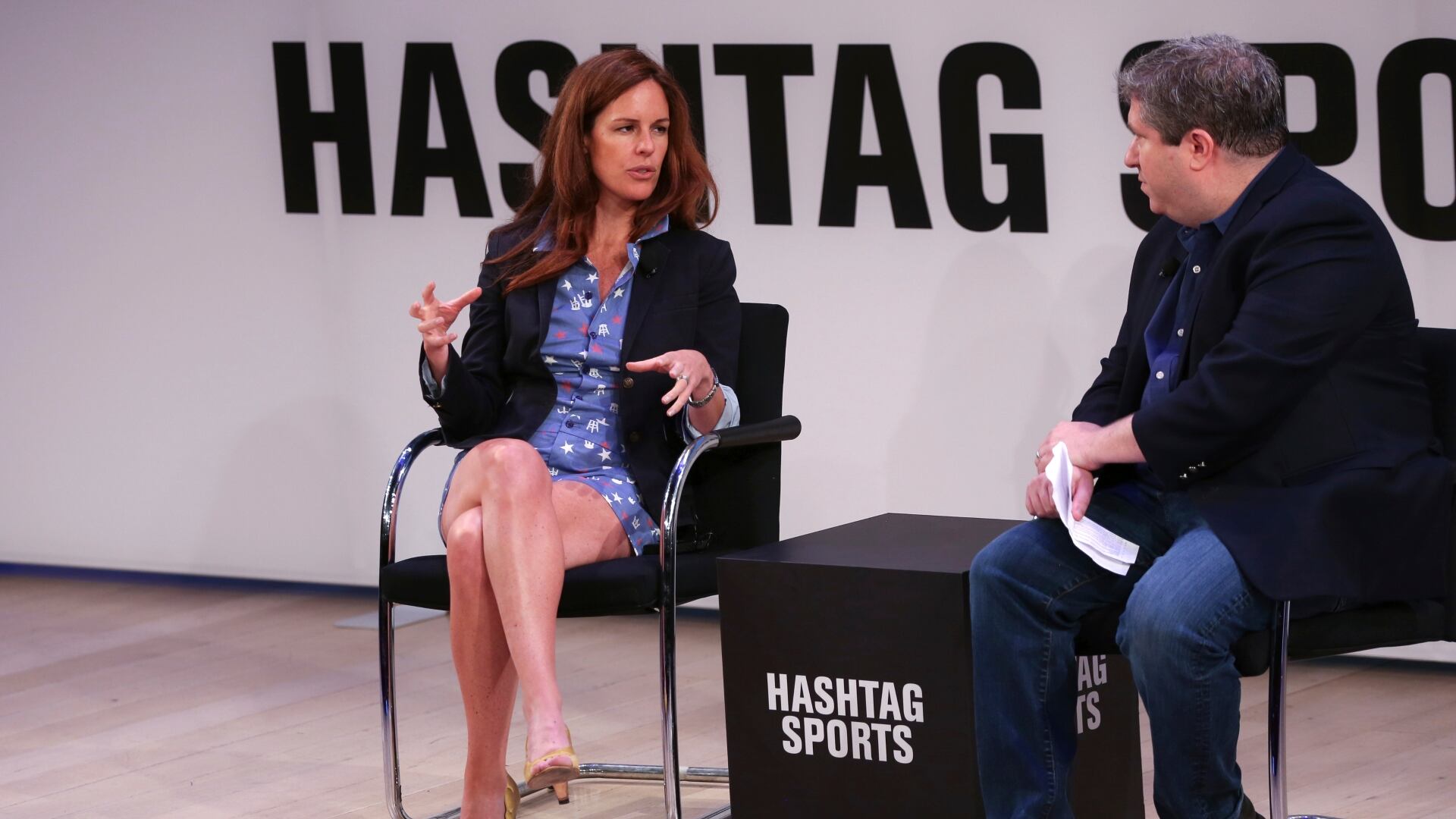
While the coronavirus pandemic forced many media companies to slow down production and forced athletics to grind to a halt, Barstool Sports adapted and CEO Erika Nardini says the company was able to capitalize on a slew of non-sports-related content.
Now Barstool Sports' priority is to show buyers at the company's first appearance at the NewFronts marketing conference that it can still be profitable even without the return of North American pro leagues.
"We wanted to show, not only the showcasing of what we're creating -- so, all of the brands we're developing and running -- but also how we're performing for advertisers," she said.
Barstool's success during the shutdowns, Nardini explained, is not only attributable to the team's ability to "create content that's authentic" but also its commitment to creating content that fans want to engage with.
"We're building some of, if not, the very biggest brands on the internet," she said. "I think that during quarantine, most media companies stopped making content. They either had production challenges, they weren't able to gather in studios. We took the opposite approach."
Barstool's growth on social media platforms like TikTok and Instagram has also allowed the company's "brands the ability to play ball with those audiences" where they otherwise might not have had access, according to the CEO.
"Every single brand that's created at Barstool is programmed and produced for the internet, which means that we naturally attract what you would call 'young viewers,'" she said.
Even with the success of the non-sports content, Nardini said the company will not abandon its newfound format despite the imminent return of the pros, but will instead marry the new content with Barstool's core programs.
"What we've found is when you have eyes for the internet, and you're making content for the internet, that stuff can last," she noted.
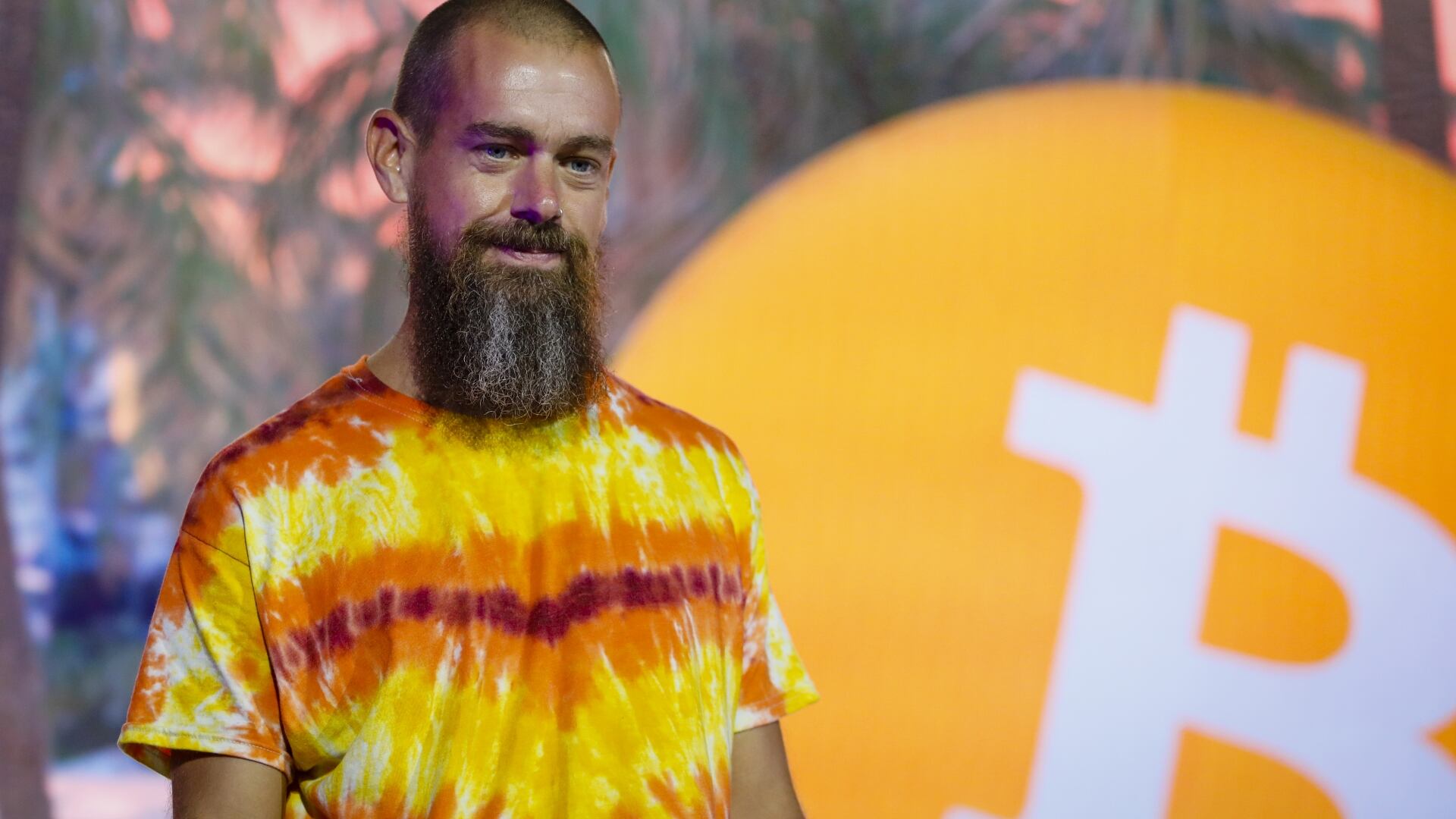
Venture capitalists and CEOs are clashing over the future of the internet. Web3 is the tech world's name for a decentralized, blockchain-based internet that runs on cryptocurrency. It was recently the topic of a tweet from Block CEO and former Twitter CEO Jack Dorsey who wrote that Web3 will not actually be owned by users, and instead be controlled by rich venture capitalists. Dorsey later shared that he was blocked on Twitter by Marc Andreesen, co-founder of VC firm Andreesen Horowitz, which has invested billions of dollars into Web3 and crypto projects. Correspondent for DealBook from the New York Times, Ephrat Livni, joins Cheddar News' Closing Bell to discuss what this could mean for the future of Web3.
Jim Worden, Chief Investment Officer at Wealth Consulting Group, joins Cheddar News' Closing Bell, where he says the period between Christmas and New Year's is difficult to predict due to a lack of institutional volume, with the Omicron variant adding even more uncertainty on Wall Street.
Prices at the pump this year reached a seven-year high, and a new forecast from GasBuddy shared with CNN predicts that gas prices will only continue to rise in 2022 and that the national average could even reach $4.00 a gallon; however, analysts at GasBuddy say anything could happen when it comes to gas prices in the future, as the pandemic has made it difficult to make any predictions about the economy. Consumer Energy Alliance federal policy advisor Michael Zehr joins Cheddar News' Closing Bell to discuss.
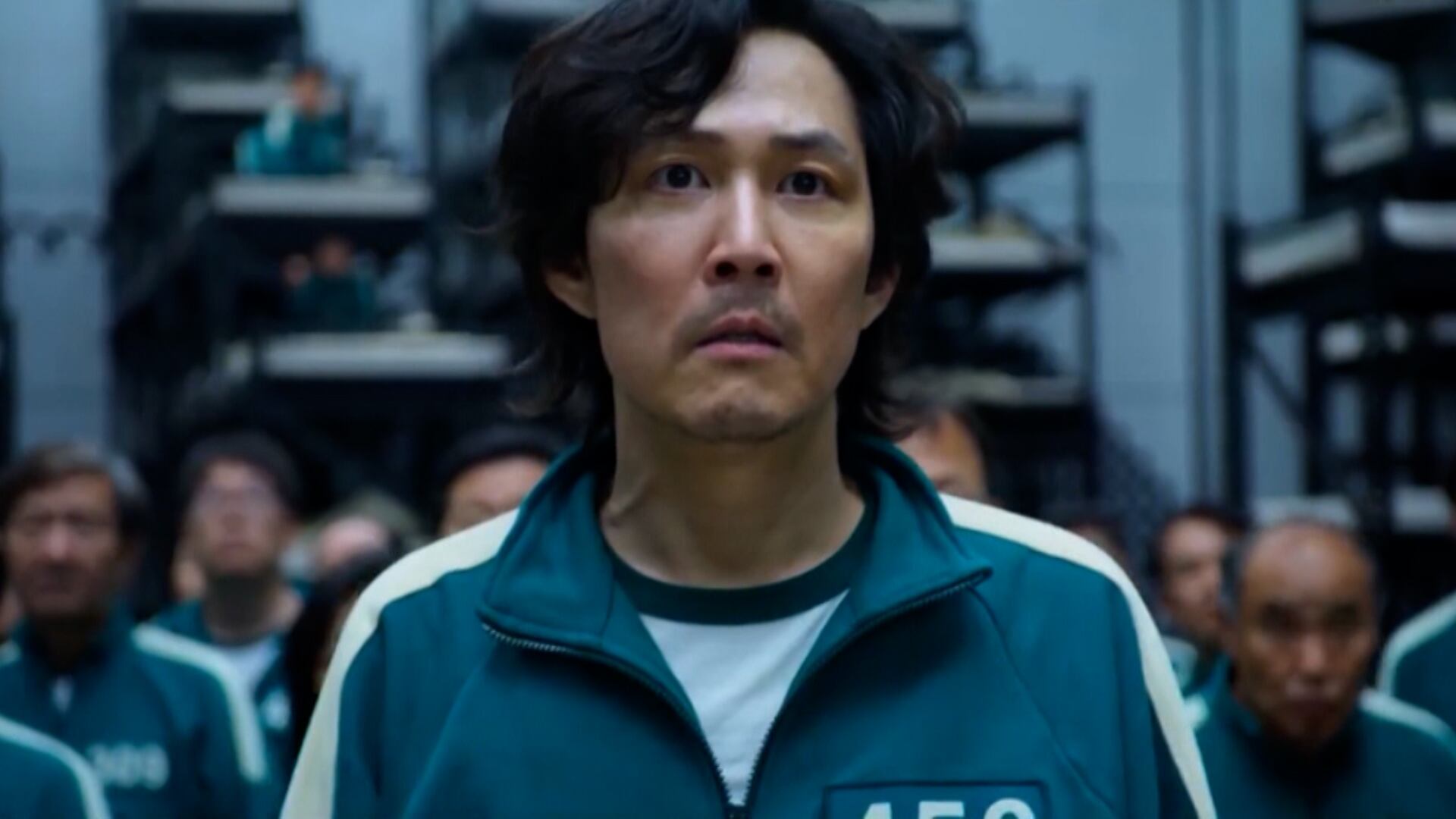
The record-breaking success of "Squid Game" on Netflix has many media companies competing to produce, stream, and invest in new content from South Korea. Netflix has spent half a billion dollars on developing Korean content this year, and other streaming services are taking note. Seth Schachner, managing director at StratAmericas and digital business executive, joins Cheddar News to discuss.
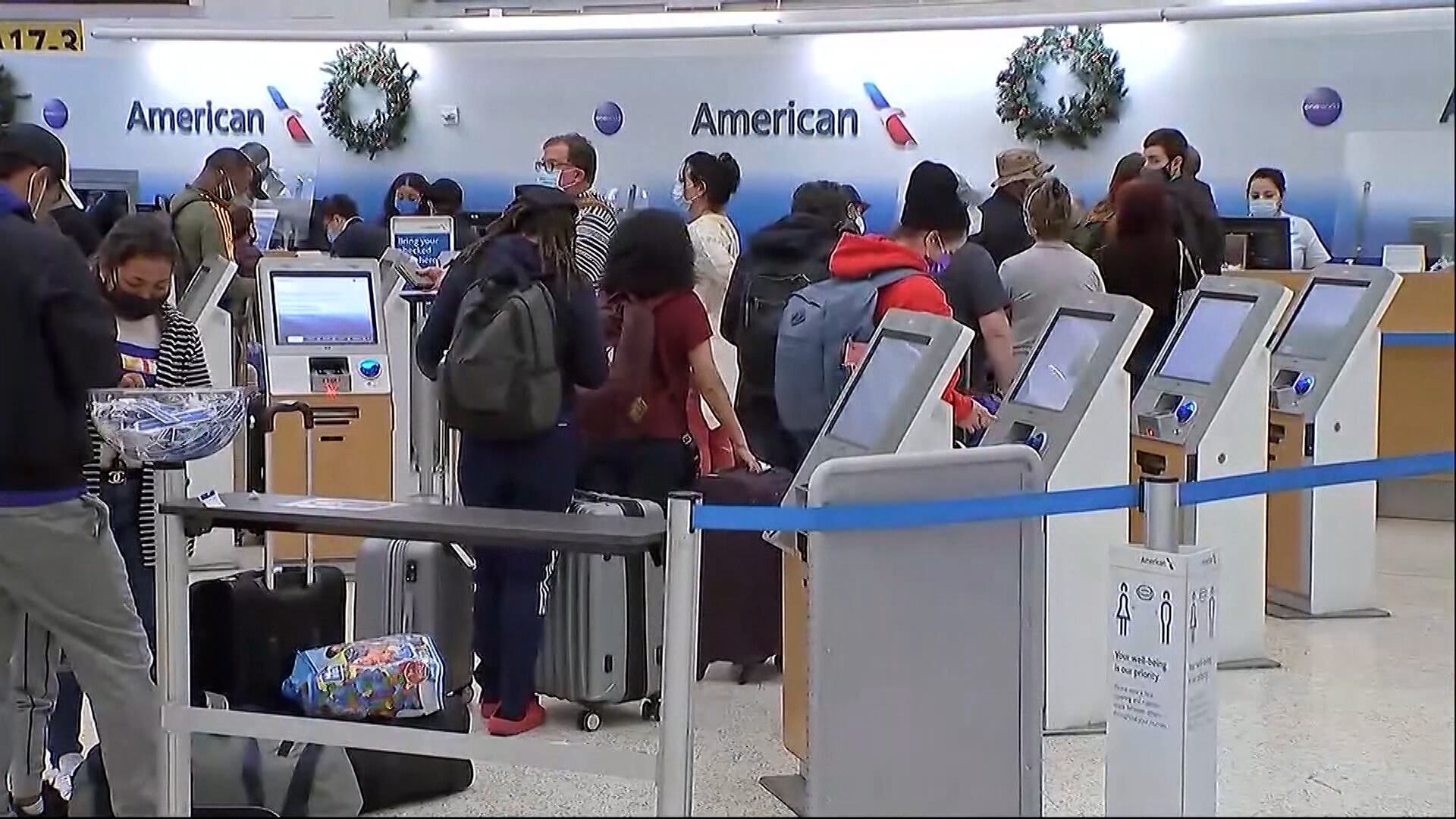
Airlines had to ground 2,500 flights in the U.S. on Tuesday, with bad weather and workers out with COVID-19 blamed as the main culprits. Scott Keyes, founder of ScottsCheapFlights.com and author of "Take More Vacations," joined Cheddar News Wrap to discuss how the surge from the omicron variant has been creating havoc in the air travel industry. Keyes noted that a lack of personnel from pilots to gate agents had been exacerbated by the coronavirus, an issue also disrupting labor markets throughout the economy. "Add to that the fact that travel has rebounded far quicker than many analysts and experts predicted, this is why I think you're seeing so many airlines caught a bit flat-footed in having to pare back the schedules they had set months ago," he said.
Barstool Sports CEO Erika Nardini joined Cheddar's Kristen Scholer to discuss plans for the future even as COVID-19 upended Barstool's sponsorship of the Arizona Bowl featuring the Boise State Broncos and the Central Michigan Chippewas due to the spreading omicron variant. "In our case as a company, coronavirus has been a big boom for us," she noted. "We've been able to create a lot of new programming, launch a lot of different personalities, and frankly take share from traditional media, and that's what we've done the entire pandemic." While she admitted to taking a hit on the canceled Bowl game, live events aren't completely off the table for Barstool in 2022. Nardini also talked about potential sports betting expansion following its partnership with Penn National Gaming.
Interest in the concept of the metaverse is heating up as more companies get on board, and Cathy Hackl, CEO of Futures Intelligence Group, a metaverse-focused consultancy, joined Cheddar to talk about trends to watch out for in 2022 and what it will take for it to be more than just a buzzword. Hackl noted that businesses likely will have to consider big technology upgrades in the upcoming year in order to keep up. "We're going to need new levels of computing power to be able to enable shared virtual experiences, both in VR but also in augmented reality," she said.