By Lisa Mascaro, Mark Sherman, and Laurie Kellman
Updated 4:35 pm ET
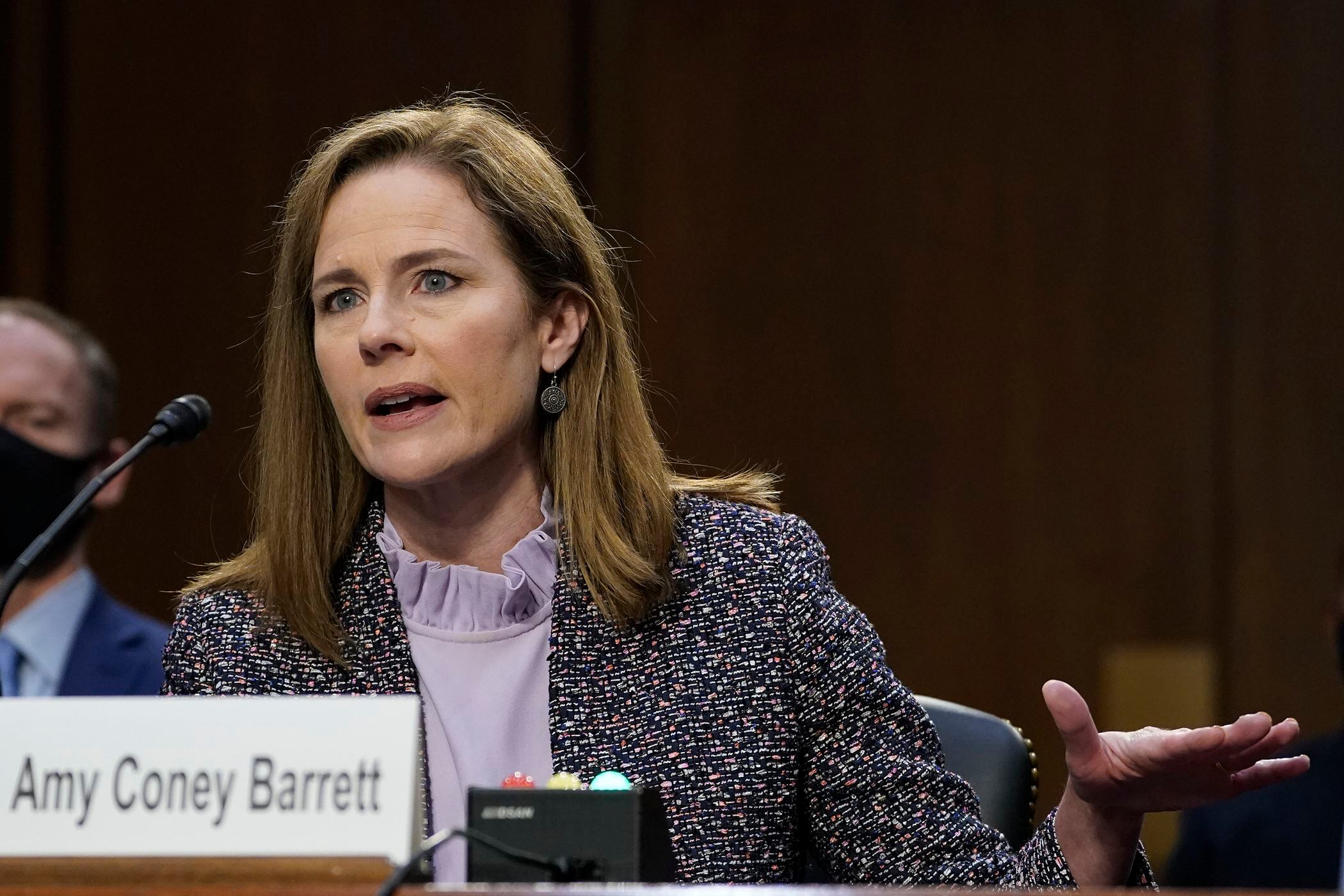
Over and over, Amy Coney Barrett said she’d be her own judge if she’s confirmed to the Supreme Court. But she was careful not to take on the president who nominated her and sought to create distance between herself and her past personal positions, writings on controversial subjects and even her late mentor.
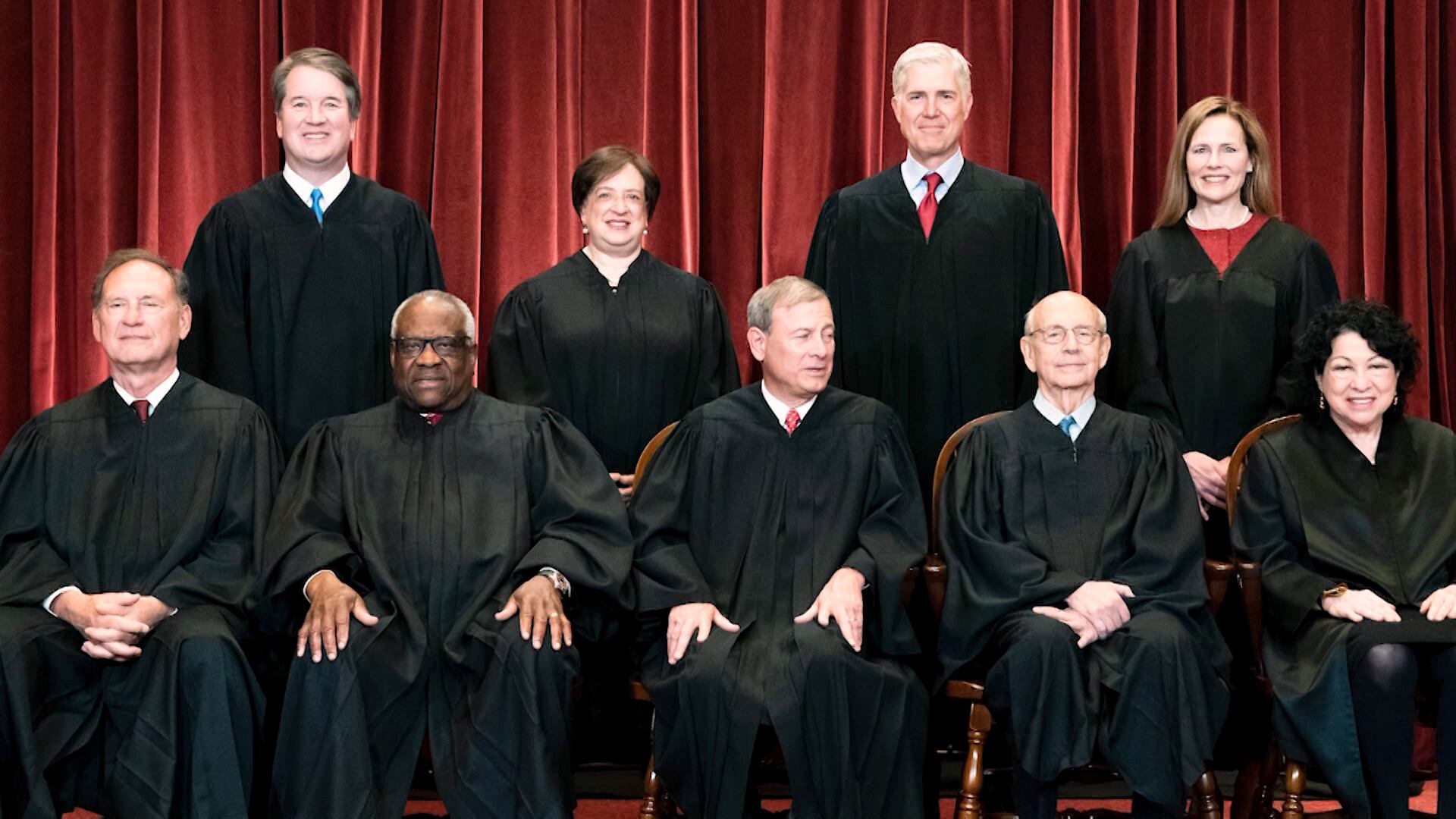
Barrett's confirmation to the Supreme Court to take the seat of the late Justice Ruth Bader Ginsburg seems inevitable, as even some Senate Democrats acknowledged in two days of Senate hearings. The shift would cement a 6-3 conservative majority on the court and would be the most pronounced ideological change in 30 years, from the liberal icon to the conservative appeals court judge.
The 48-year-old judge skipped past Democrats’ pressing questions about ensuring the date of next month's election or preventing voter intimidation, both set in federal law, and the peaceful transfer of presidential power. She also refused to express her view on whether the president can pardon himself. “It’s not one that I can offer a view," she said in response to question Wednesday from Sen. Pat Leahy of Vermont.
Democrats raised those questions because President Donald Trump has done so himself.
When it came to major issues that are likely to come before the court, including abortion and health care, she repeatedly promised to keep an open mind and said neither Trump nor anyone else in the White House had tried to influence her views.
“No one has elicited from me any commitment in a case," she said.
She said she is not on a “mission to destroy the Affordable Care Act,” though she has been critical of the two Supreme Court decisions that preserved key parts of the Obama-era health care law. She could be on the court when it hears the latest, Republican-led challenge on Nov. 10.
Barrett is the most open opponent of abortion nominated to the Supreme Court in decades, and Democrats fear that her ascension could be a tipping point that threatens abortion rights.
There was no hiding her views in at least three letters and ads she signed over 15 years and her membership in Notre Dame’s Faculty for Life. So Republican senators embraced her stance, proudly stating that she was, in Judiciary Committee Chairman Lindsey Graham’s words, an “unashamedly pro-life” conservative who is making history as a role model for other women.
Sen. Josh Hawley, R-Mo., said there “is nothing wrong with confirming a devout pro-life Christian.”
Barrett refused to say whether the 1973 landmark Roe v. Wade ruling on abortion rights was correctly decided, though she signed an open letter seven years ago that called the decision “infamous.”
Democrats pressed repeatedly on the judge’s approach to health care, abortion, racial equity and voting rights, but conceded they were unlikely to stop her quick confirmation.
“When you are on the court,” Sen. Sheldon Whitehouse, D-R.I., began one question in which he asked her to keep an open mind on the high court bench. Barrett readily agreed to do so.
In an exchange with Sen. Dianne Feinstein, D-Calif., Barrett resisted the invitation to explicitly endorse or reject the late Justice Antonin Scalia's comments about perpetuating “racial entitlement” in a key voting rights case.
“When I said that Justice Scalia’s philosophy is mine, too, I certainly didn’t mean to say that every sentence that came out of Justice Scalia’s mouth or every sentence that he wrote is one that I would agree with,” Barrett said.
She called the Voting Rights Act a “triumph in the civil rights movement,” without discussing the specifics of the earlier challenge to it. The court will hear another challenge to the law early next year.
As Democrats probed Barrett’s views, Sen. Dick Durbin, D-Ill., asked if her strict adherence to constitutional originalism means a president could not “unilaterally deny the right to vote” based on race, noting restrictions on mail-in ballots being erected in several states before Nov. 3.
She agreed there are “many laws” that protect the right to vote, including the 14th and 15th Amendments to the Constitution, but stopped short of a blanket statement: “I really can’t say anything more.”
Along with trying to undo the health care law, Trump has publicly stated he wants a justice seated for any disputes arising from the election, and particularly the surge of mail-in ballots expected during the pandemic as voters prefer to vote by mail.
Barrett testified she has not spoken to Trump or his team about election cases, and declined to commit to recusing herself from any post-election cases.
“I can’t offer an opinion on recusal without short-circuiting that entire process,” she said Tuesday.
Barrett’s nomination has been the focus at a Capitol mostly shut down by COVID-19 protocols. The health care debate has been central to the week’s hearings, as Americans struggle during the pandemic, leading to a sharp exchange among senators at one point.
Republican Ted Cruz of Texas scoffed that few Democratic senators attended the hearing. Durbin retorted that health risks left many senators monitoring from their offices rather than convening as a group. Two GOP senators who tested positive for COVID-19 after attending Barrett’s nomination at the White House now say they are symptom free, and they are attending in person.
Underscoring the Republicans’ confidence, Graham set an initial committee vote on the nomination for Thursday, the last day of hearings, which would allow final approval by the full Senate by the end of the month.
Allowing Trump to fill the seat with Barrett “poses a threat to safe and legal abortion in our country," Harris said.
___
Associated Press writers Mary Clare Jalonick, Matthew Daly and Jessica Gresko in Washington, and Elana Schor in New York contributed to this report.