By Ken Sweet

Can you trust Erica, or Sandi or Amy to increasingly control parts of your financial life without giving you inaccurate information or sending money to the wrong place?

That's what the Consumer Financial Protection Bureau is asking in a report released Tuesday, where the bureau lays out a number of concerns about the growing use of chatbots by banks to handle routine customer service requests.

The CFPB worries that banks or loan-servicing companies may cut back on human customer service employees and push an increasing number of routine tasks to AI. Further, the regulator says poorly designed chatbots could run afoul of federal laws that govern how debts are collected or how personal information is being used.

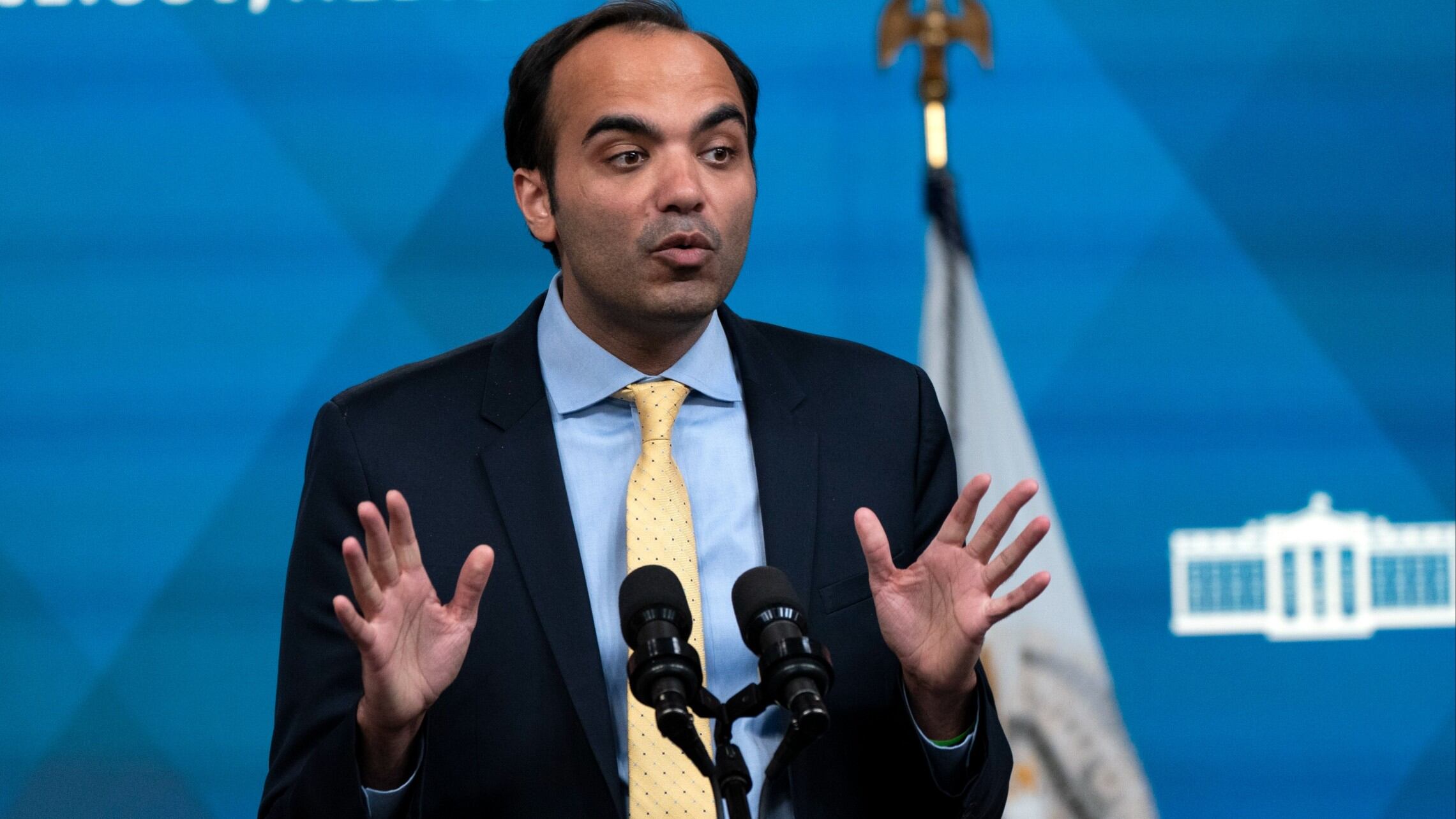
“If firms poorly deploy these services, there’s a lot of risk for widespread customer harm,” said Rohit Chopra, director of the CFPB, in an interview with The Associated Press.

For several years, banks have been handling more and more customer service requests with chatbots, often with female-sounding names like Sandi for Santander, Amy from HSBC, or Eno at Capital One.

Bank of America runs the biggest and most successful financial chatbot under the Erica brand. Erica — the last five letters in America — now handles hundreds of millions of inquiries a year from BofA's customers.

Initially bank chatbots were used to for basic inquiries, like changing a customers' address or phone number, or telling a customer where the nearest branch is or what the routing number might be on their account. But as banks have invested millions into these services, chatbots have gotten especially sophisticated, able to understand full sentences or even help a customer move money around or pay a bill.

The CFPB estimates that roughly four out of every 10 Americans interacted with a bank chatbot last year, a figure they expect will grow.

Banks are getting ready to roll out even more advanced AI-like services. JPMorgan Chase is reportedly developing plans to use ChatGPT and artificial intelligence to help customers pick appropriate investments. Bank of America bankers can use Erica to build customer profiles and potentially recommend products to those customers.

While these services may save customers minutes or hours waiting on hold to reach a human to ask a routine question, the agency has concerns about whether these chatbots will be able to handle the nuances and complicated nature of consumer protection laws without giving customers inaccurate information.

“There are federal laws that give customers rights when it comes to debts, or disputing a transaction, and if customer service agents are being substituted for chatbots, that can pose problems if that software gives them inaccurate information,” Chopra said.

The bureau also found that older customers or customers whose primary language is not English may end up in a customer service “loop” and unable to reach a human agent.

“Time and again, we found complaints of customers getting stuck in circular arguments with a robot or getting wrong information,” he said.

Chopra, both in his current role as director of the CFPB and previously as a commissioner at the Federal Trade Commission, has repeatedly raised concerns that banks and companies may violate consumer laws if they poorly implement algorithms or artificial intelligence software. There have been numerous reports of chatbots from Microsoft, Google and other companies that have used bias language when prompted.


Share:
More In Technology
Spain fines Airbnb $75 million for unlicensed tourist rentals
Spain's government has fined Airbnb 64 million euros or $75 million for advertising unlicensed tourist rentals. The consumer rights ministry announced the fine on Monday. The ministry stated that many listings lacked proper license numbers or included incorrect information. The move is part of Spain's ongoing efforts to regulate short-term rental companies amid a housing affordability crisis especially in popular urban areas. The ministry ordered Airbnb in May to remove around 65,000 listings for similar violations. The government's consumer rights minister emphasized the impact on families struggling with housing. Airbnb said it plans to challenge the fine in court.
Militant groups are experimenting with AI, and the risks are expected to grow
The Islamic State group and other militant organizations are experimenting with artificial intelligence as a tool to boost recruitment and refine their operations. National security experts say that just as businesses, governments and individuals have embraced AI, extremist groups also will look to harness the power of AI. That means aiming to improve their cyberattacks, breaking into sensitive networks and creating deepfakes that spread confusion and fear. Leaders in Washington have responded with calls to investigate how militant groups are using AI and seek ways to encourage tech companies to share more about how their products are being potentially misused.
Trump signs executive order to block state AI regulations
President Donald Trump has signed an executive order to block states from regulating artificial intelligence. He argues that heavy regulations could stifle the industry, especially given competition from China. Trump says the U.S. needs a unified approach to AI regulation to avoid complications from state-by-state rules. The order directs the administration to draw up a list of problematic regulations for the Attorney General to challenge. States with laws could lose access to broadband funding, according to the text of the order. Some states have already passed AI laws focusing on transparency and limiting data collection.
San Francisco woman gives birth in a Waymo self-driving taxi
Waymo's self-driving taxis have been in the spotlight for both negative and positive reasons. This week, the automated ride-hailing taxis went viral after a San Francisco woman gave birth inside a Waymo taxi while on her way to the hospital. A Waymo spokesperson on Wednesday confirmed the unusual delivery. It said the company's rider support team detected unusual activity inside the vehicle and alerted 911. The taxi arrived safely at the hospital before emergency services. Waymo's popularity is growing despite heightened scrutiny following an illegal U-turn and the death of a San Francisco cat. The company, owned by Alphabet, says it is proud to serve riders of all ages.
OpenAI names Slack CEO Dresser as first chief of revenue
OpenAI has appointed Slack CEO Denise Dresser as its first chief of revenue. Dresser will oversee global revenue strategy and help businesses integrate AI into daily operations. OpenAI CEO Sam Altman recently emphasized improving ChatGPT, which now has over 800 million weekly users. Despite its success, OpenAI faces competition from companies like Google and concerns about profitability. The company earns money from premium ChatGPT subscriptions but hasn't ventured into advertising. Altman had recently announced delays in developing new products like AI agents and a personal assistant.
Load More