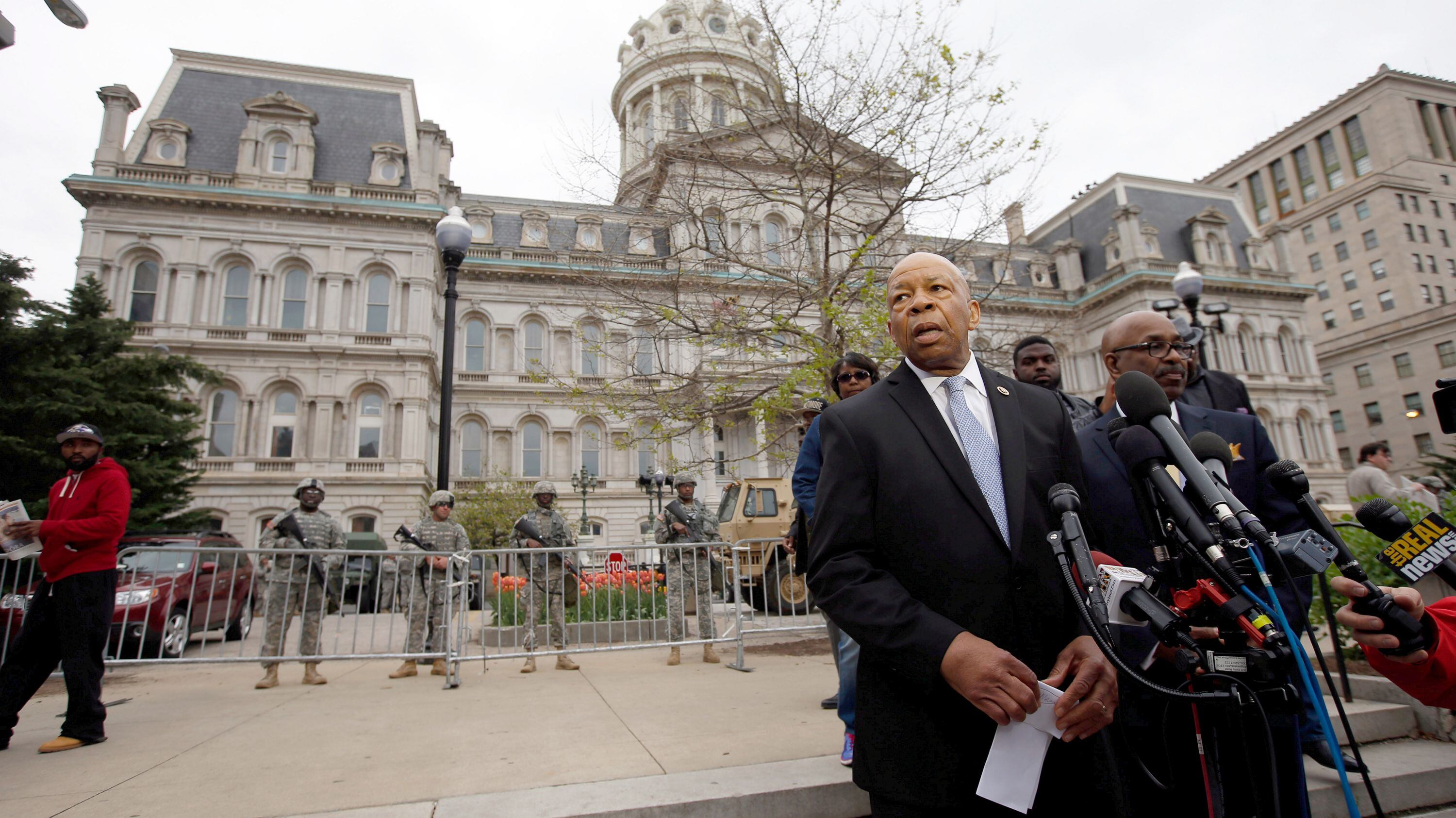
Residents of Baltimore are working to showcase the best that their hometown has to offer, just days after President Trump described the city as a "a disgusting, rat and rodent infested mess."
Trump's epithets came amid a Twitter tirade against Baltimore's congressional Rep. Elijah Cummings (D-Md.), who chairs the House Oversight Committee and has been a staunch critic of the president.
"His district is considered the Worst in the USA," Trump added. "If he spent more time in Baltimore, maybe he could help clean up this very dangerous & filthy place." The president also took a hit at residents of Baltimore.
Cummings dismissed the president's critique, saying in a tweet "each morning, I wake up, and I go and fight for my neighbors."
The city, moreover, has soundly rejected the president's characterization.
"People are furious, of course. People know that Baltimore is not how [Trump] describes it," Greg Tucker, the co-founder of the forthcoming website We Are Baltimore told Cheddar. "Indeed Baltimore has challenges. Indeed Baltimore has suffered years of underinvestment in critical neighborhoods… yet too often Baltimore is characterized solely by our worst elements."
"We Are Baltimore," which was in the works before Trump's tweets, will aggregate stories from residents and thriving local businesses to counter the negative narrative of the city.
It will "provide a definitive platform where we can aggregate and amplify the many positives, the many assets of Baltimore," Tucker added.
In a statement, Baltimore's Mayor Bernard C. Jack Young also slammed the president for using "hurtful and dangerous" rhetoric to "denigrate a vibrant American City."
Trump is "a disappointment to the people of Baltimore, our country, and to the world," Young added.
The president's invocation of rodents and infestations to describe a city that is more than 60 percent black was widely rebuked as using racist terms that have been historically used to demonize minorities.
Civil rights icon Reverend Al Sharpton said from a press conference in Baltimore on Monday that Trump had attacked the city in "the most bigoted and racist way."
"He has a particular venom for blacks and people of color," Sharpton said. "He doesn't refer to any of his other opponents or critics as infested."
Trump said "Democrats always play the Race Card" and criticized Sharpton as a "a con man, a troublemaker" on Twitter ahead of the press conference. He also doubled down early Monday morning on his critique of Cummings, who has represented Maryland's 7th congressional district since 1996. "25 years of all talk, no action!" Trump tweeted.
Several 2020 Democratic presidential candidates including Sen. Bernie Sanders (I-Vt.), Sen. Elizabeth Warren (D-Mass.), and Sen. Kamala Harris (D-Calif.) — whose campaign is headquartered in Baltimore — condemned Trump's remarks.
Yet the most scathing rebuke came from the Baltimore Sun's editorial board, which wrote "Better to have some vermin living in your neighborhood than to be one."
Trending on Twitter over the weekend was #TrumpIsARat.
In a statement to Cheddar, Twitter confirmed that Trump's tweets do not violate the platform's rules regarding the use of dehumanizing language.
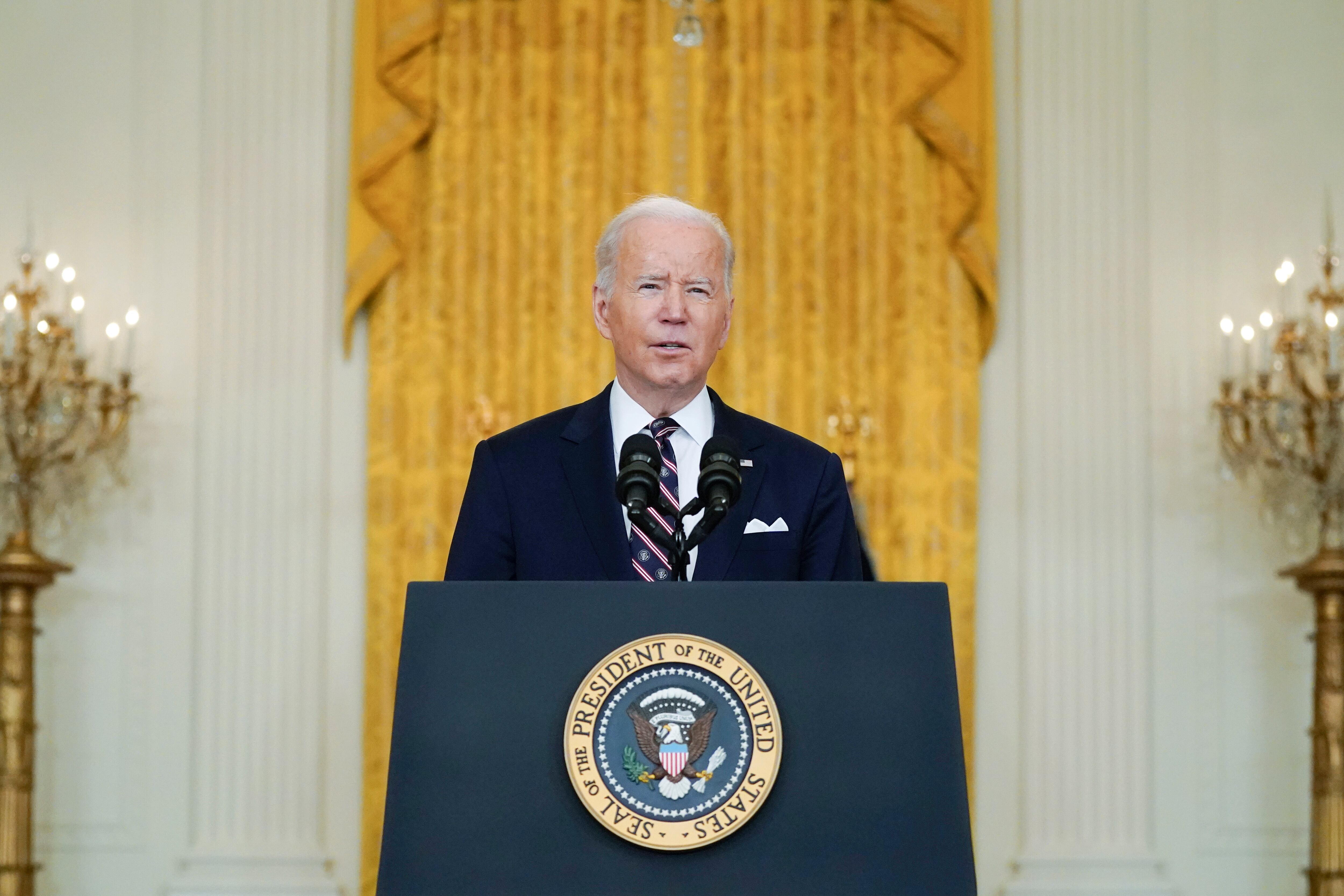
President Joe Biden said Tuesday that the U.S. will begin to impose sanctions on Russia, calling recent troop movement into Ukraine an 'invasion.' Biden and other government officials including from the State Department have begun to classify the Russian troop movement as an invasion after Russian President Vladimir Putin ordered troops to two independent Ukrainian areas in an alleged "peacekeeping" mission — which the West considers an act of aggression. Biden said Russia will continue to pay 'an even steeper price' if it continues sending troops into Ukraine. What happens next? Will Putin find a way around these sanctions? Ariel Cohen, senior fellow at the Atlantic Council, joins Closing Bell to discuss Biden's remarks, how the West will protect Ukraine since it doesn't belong to NATO, and more.
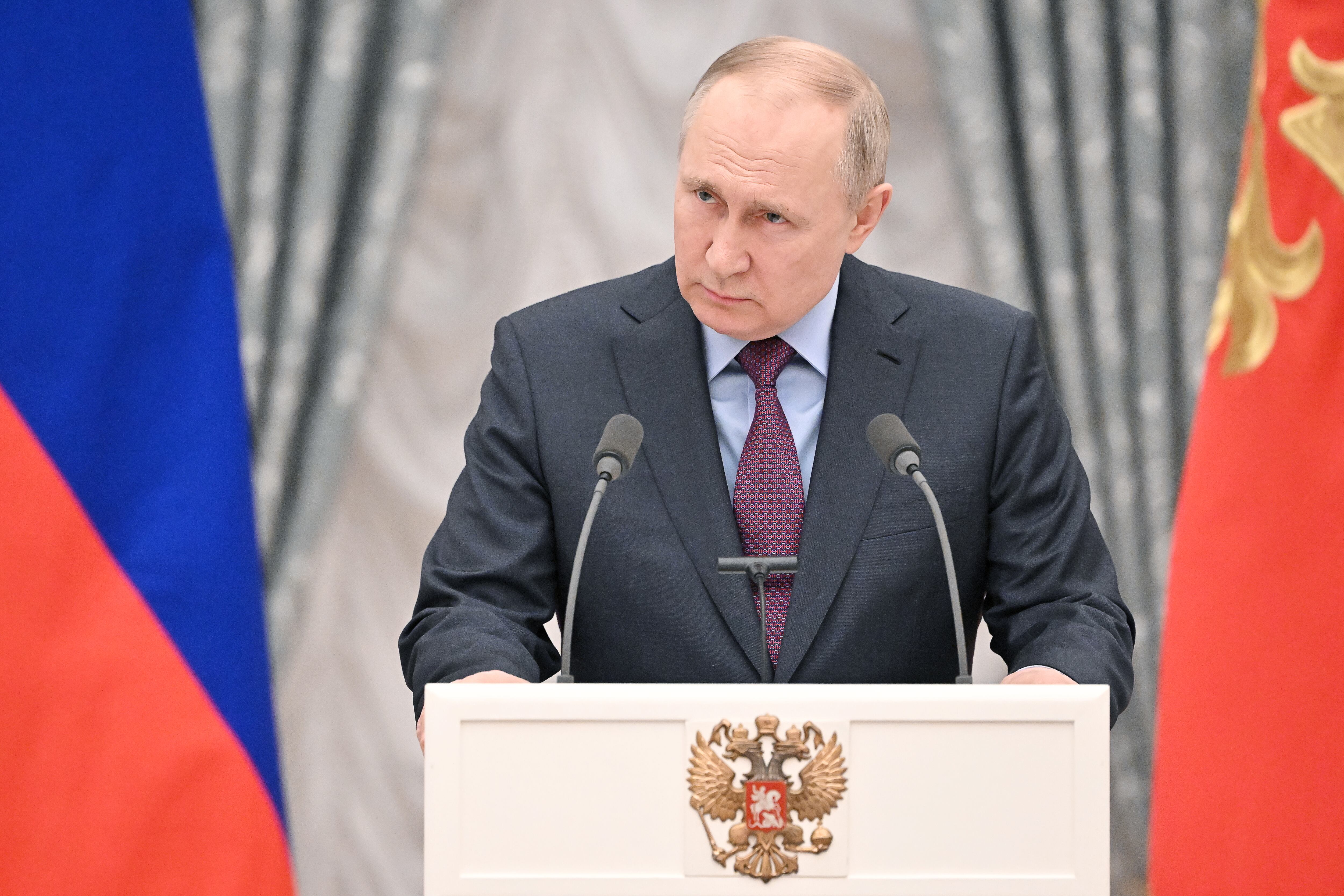
Russian lawmakers have given President Vladimir Putin a military force authorization in Ukraine, and President Biden has described Putin's announcement declaring the independence of two provinces within Ukraine and his subsequent deployment of peacekeepers as tantamount to "invasion. David Tafuri, a former Obama campaign foreign policy advisor and Bush State Department official, joined Cheddar News to discuss. "The Ukrainian military occupies more than 70 percent of those provinces still," Tafuri said, noting Putin alleged having a responsibility to defend those regions. "This would put Ukrainian forces and Russian forces right at each other engaged. And that might be how the war starts."
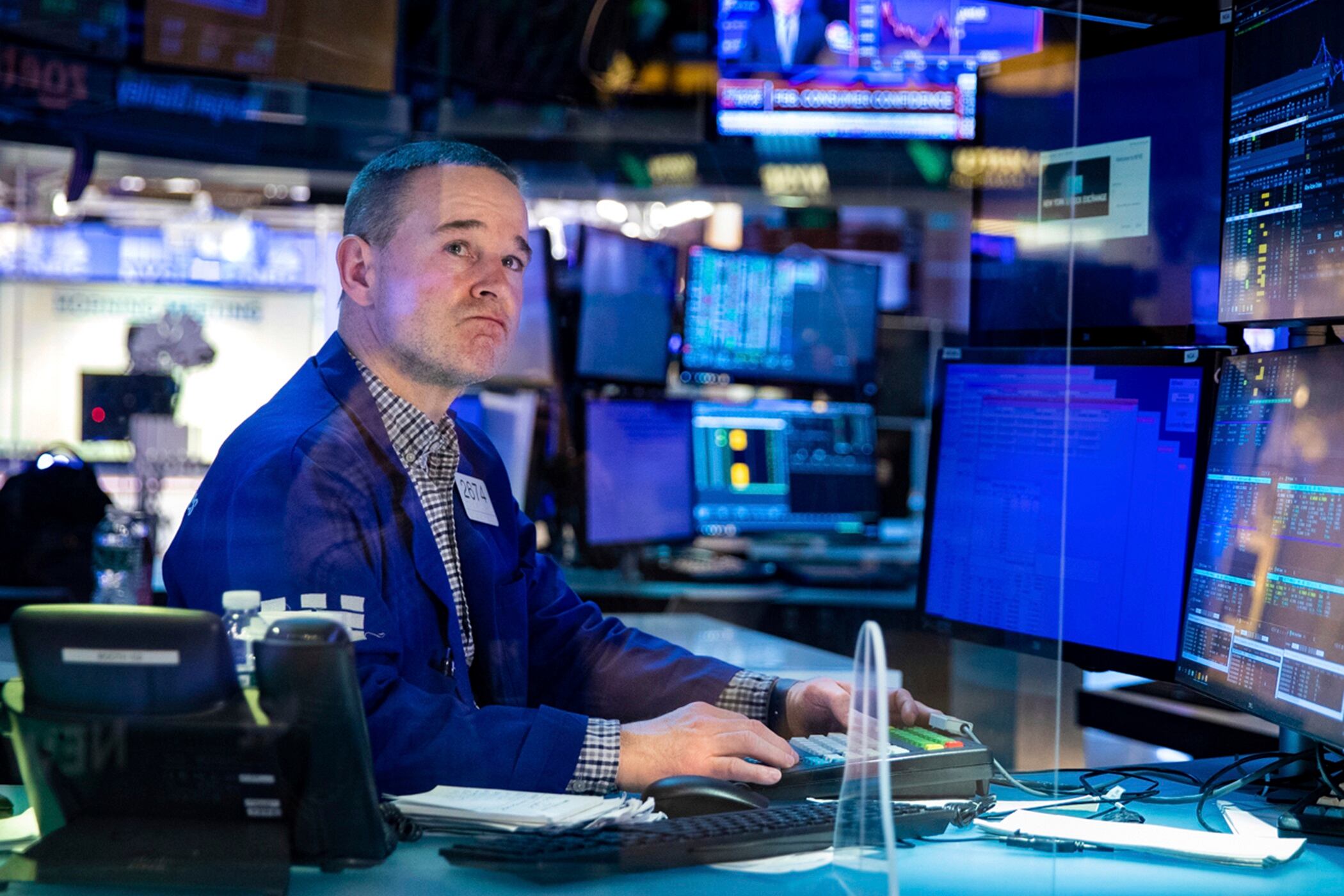
The major indexes ended Tuesday's session sharply lower due to escalating tensions between Russia and Ukraine. Bill Stone, Chief Investment Officer at The Glenview Trust Company, joins Cheddar News' Closing Bell, where he reminds viewers that Wall Street doesn't like uncertainty, and more of the recent losses are due to geopolitics than inflation.
Karim Hijazi, CEO of Prevailion, joins Cheddar News' Closing Bell, where he says that crypto's decentralized nature will pose obstacles for the FBI's new crypto unit, but it will also make progress with items such as managing fraudulent exchanges.
The Retail Industry Leaders Association released a report alleging the safety risks, economic losses, and potential job losses they link to a surge in shoplifting crimes in the United States. Lisa LaBruno, senior EVP of retail operations at the trade organization, joined Cheddar News to discuss the impact of websites that allow for the resale of unverified goods and passing the INFORM Consumers Act to stamp it out. “We need to hold the online marketplaces accountable for being a favored venue for criminals to resell stolen product," LaBruno said. "And that is exactly what the INFORM Act is designed to do."
The East-West faceoff over Ukraine has escalated dramatically, with Russian lawmakers authorizing President Vladimir Putin to use military force outside his country and President Biden and European leaders responding by slapping sanctions on Russian oligarchs and banks.
Stocks closed broadly lower Tuesday after Russia sent forces into Ukraine’s eastern region and the U.S., European Union and U.K. responded with economic sanctions.