*By Carlo Versano*
Avis Budget Group [announced](https://markets.businessinsider.com/news/stocks/avis-budget-group-fleet-expands-to-100-000-connected-cars-benefitting-customers-cities-and-the-company-bottom-line-1027453677) this week it has 100,000 connected cars in its global fleet, a milestone that the chief innovation officer said shows the company best-known for airport rentals is poised to become a next-generation mobility provider.
The car rental company that vows "We Try Harder" also announced recently it's adding Waymo, Lyft, and Airbnb to its slate of partners.
The expansion is all part of a strategic effort to appeal to Avis's customers who increasingly view mobility and transportation as a service, said the CIO Arthur Orduna.
"We need to understand how people want to consume their mobility," Orduna said Thursday in an interview on Cheddar.
He said he's divided future Avis customers into two camps: urban commuters, attracted to the company's on-demand services like Zipcar; and travelers who need access to rentals to get around a new place.
The main priorities for building a company that can service both types of customers, he said, are connected cars and the Avis app.
The ability to communicate with a vehicle creates a better experience for users ー finding and unlocking one's car via the app, for example ー Orduna said.
The app also helps Avis to streamline its fleet operations, and, as connected cars produce data on their own movements, Avis can use that data to partner with other companies and smart cities, "based on a digital ecosystem," Orduna said.
Avis, which operates in 11,000 locations in 180 countries, is also betting that the future of mobility means autonomy.
"AV \[autonomous vehicles]\ is not a matter of if ー it's really a matter of when," Orduna said.
To that end, Avis's partnership with Waymo, Alphabet's self-driving car unit, offers short-distance rides to a select group of residents in Arizona, where Waymo is testing its technology. This is in addition to an earlier deal for Avis to service Waymo's autonomous fleet.
For full interview, [click here] (https://cms.cheddar.com/videos/VmlkZW8tMjIyMjI=).
President Biden announced a ban on Russian oil and natural gas imports to the U.S. in response to its invasion of Ukraine, a move he warned could lead to an even greater surge in gas prices. The ban is prompting a conversation about the current oil production levels in the U.S. and whether or not the industry can ramp up production to soften the blow to American families at the gas pump. Clark Williams-Derry, Energy Finance Analyst with the Institute for Energy Economics and Financial Analysis, breaks down the state of the U.S. oil industry and how the ban might impact production levels here at home.
PepsiCo, Coca-Cola, McDonald’s, and Starbucks are the latest American food brands to have halted business operations in Russia after having faced scrutiny and criticism for originally failing to do so amid the country's invasion of Ukraine.
As Russia intensifies its war on Ukraine, President Biden announced a ban on oil imported from the aggressor nation. Critics of Russia have said this would be the best way to force Putin to pull back, but curbs on Russian oil exports are expected to send already skyrocketing oil and gas prices even higher, further impacting consumers, businesses, financial markets, and the global economy. Leslie Beyer, CEO of the Energy Workforce and Technology Council, joined Cheddar News' Closing Bell to discuss. "It's certainly going to increase pricing, but it is the right thing to do," she said. "The industry itself has already pulled out of the significant portion of its operations in Russia."
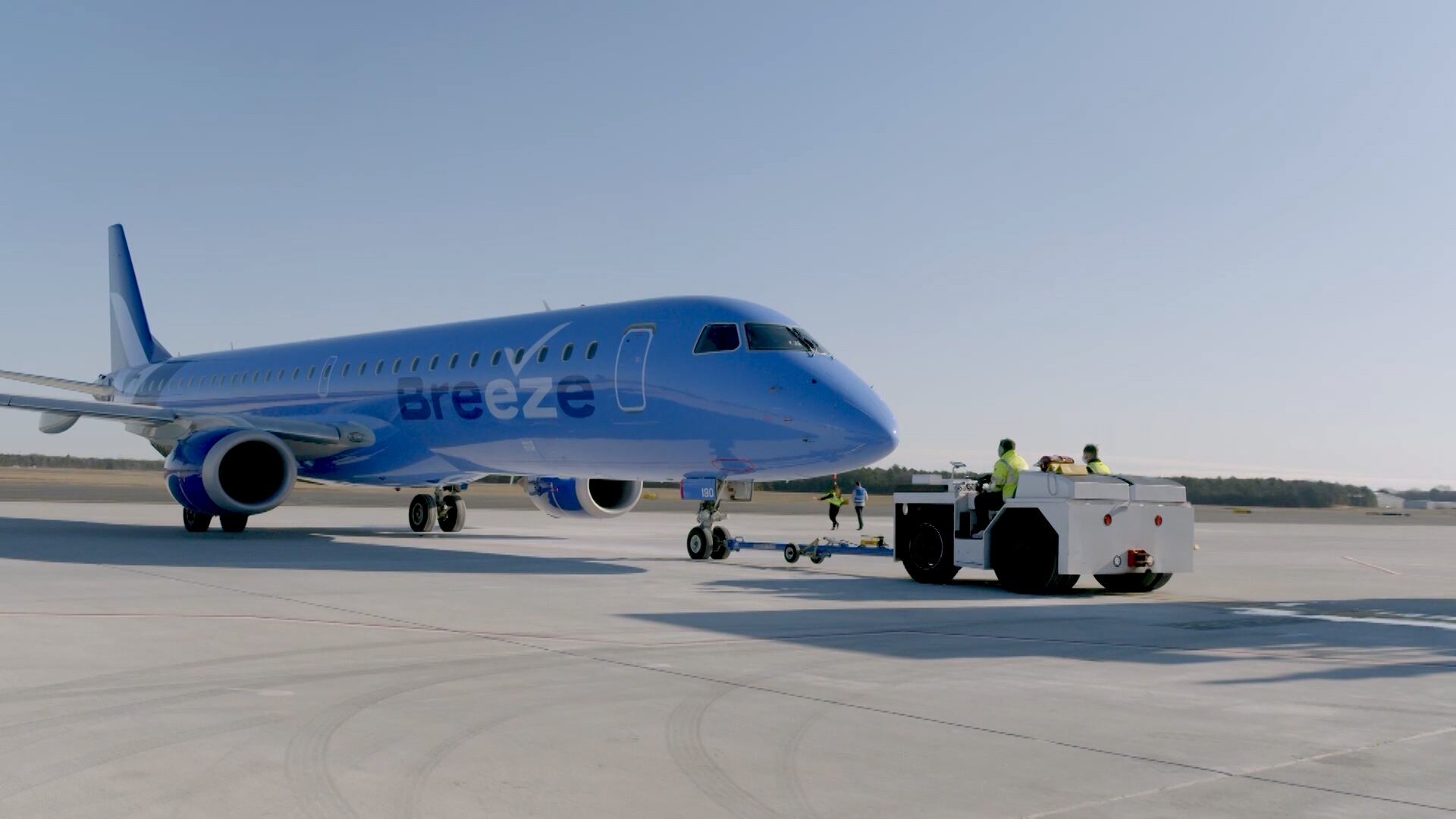
As airlines recover from COVID-19 and the industry becomes more competitive than ever, low-fare carrier Breeze Airlines is offering 35 new routes and reduced prices for its first-class experiences. CEO David Neeleman joined Cheddar News to talk about the rollout of services amid plenty of headwinds including high fuel costs. "We can limit a lot of costs because we're a technology company that happens to fly airplanes," he noted.
Despite women as a whole being among the groups most impacted by pandemic job losses, homesharing platform Airbnb reported that women hosts brought in $12 billion in revenue last year. Catherine Powell, Airbnb's global head of hosting, joined Cheddar News to discuss how women hosting has become a huge asset for the company. "Last year 21 percent more women joined the platform than men," she said. "So they are joining the platform. They are being successful. They're more super hosts, and they're doing incredibly well."