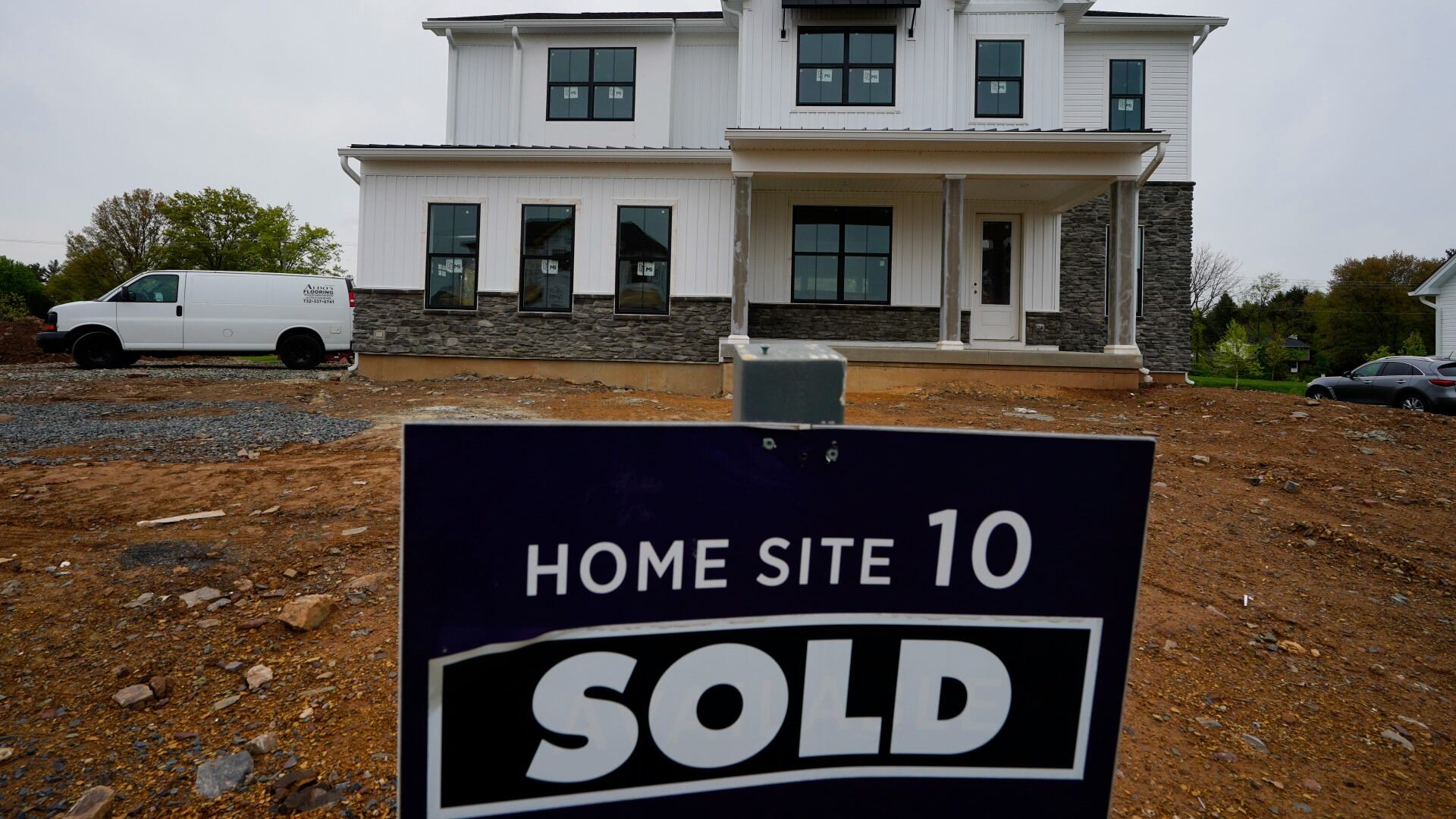
The average long-term U.S. mortgage rate rose this week to its highest level since mid March, driving up borrowing costs for prospective homebuyers facing a housing market that’s constrained by a dearth of homes for sale.
Mortgage buyer Freddie Mac said Thursday that the average rate on the benchmark 30-year home loan rose to 6.57% from 6.39% last week. The average rate a year ago was 5.10%.
High rates can add hundreds of dollars a month in costs for homebuyers, limiting how much buyers can afford in a market that remains unaffordable to many Americans after years of soaring home prices and limited housing inventory.
The median monthly payment listed on applications for home purchase loans in April rose to $2,112, up nearly 12% from a year ago and a 0.9% increase from March, the Mortgage Bankers Association said Thursday.
The average rate on a 30-year home loan has risen two weeks in a row, echoing moves in the 10-year Treasury yield, which lenders use as a guide to pricing loans.
The 10-year Treasury yield has been mostly rising of late, climbing to 3.79% in afternoon trading Thursday. Two weeks ago, it was at 3.39%.
The move up in bond yields comes as investors react to stronger-than-expected economic data and the implications that could have on whether the Federal Reserve will raise interest rates again next month.
Bond traders are also factoring in the possibility that the U.S. government may default on its debt as the White House and GOP leadership wrangle over a deal to raise the federal government’s debt ceiling so it can avoid an unprecedented default as soon as June 1.
“The U.S. economy is showing continued resilience which, combined with debt ceiling concerns, led to higher mortgage rates this week,” said Sam Khater, Freddie Mac’s chief economist.
Jitters over the possibility that the government ends up defaulting on its debt could cause creditors to ask for higher interest rates on U.S. Treasury bonds, which could lead to a “significant increase” in borrowing costs, including mortgages, said Jiayi Xu, an economist at Realtor.com.
“Resolving the debt impasse sooner, rather than later, would mitigate potential adverse effects on the housing market, which is already contending with high prices and elevated mortgage rates,” Xu said.
Investors’ expectations for future inflation, global demand for U.S. Treasurys and what the Fed does with interest rates influence rates on home loans.
The Fed has raised its benchmark interest rate 10 times in 14 months. At its last meeting of policymakers, the central bank signaled that it could finally pause its yearlong campaign of rate hikes, though a pause would likely only nudge mortgage rates slightly lower.
Low mortgage rates helped fuel the housing market for much of the past decade, easing the way for borrowers to finance ever-higher home prices. That trend began to reverse a little over a year ago, when the Fed started to hike its key short-term rate in a bid to slow the economy and cool the highest inflation in four decades.
The spring homebuying season got off to a lackluster start this year as prospective buyers grappled with higher borrowing costs and a near record-low inventory of homes on the market.
Sales of previously occupied U.S. homes fell 23.2% in the 12 months ended in April, marking nine straight months of annual sales declines of 20% or more, according to the National Association of Realtors. The national median home price fell to $388,800 last month — down 1.7% from a year earlier and the biggest year-over-year drop since January 2012.
The modest pullback in home prices reflects heated competition among buyers, especially those vying for the most affordable homes. At least one-third of the homes sold last month went for more than their list price, according to the NAR.
The average rate on 15-year fixed-rate mortgages, popular with those refinancing their homes, rose to 5.97% this week from 5.75% last week. A year ago, it averaged 4.31%, Freddie Mac said.