If you're searching for the future of transportation, look up. Transportation startup Skyryse just completed an end-to-end autonomous helicopter flight, where the pilot never had to touch the controls.
"This is a really large step toward realizing a transportation system in the sky that can one day move us away from the cars and the crumbling infrastructure that is throughout our cities," explained Mark Groden, the company's founder and CEO.
While the helicopter, called Luna, isn't to be overlooked, it isn't the main attraction as far as Skyryse is concerned. That distinction belongs to the Skyryse Flight Stack technology, which the company hopes will revolutionize short-distance air travel. The sector is flooded right now, with as many as 130 companies looking for a piece of the pie, including big names like Uber involved. Skyryse isn't looking to beat them, but assist them.
"What we're focused on is building the technology that will lead to this transportation system," said Groden.
Reliable, widely-used short-distance air travel has seemed like something of a pipe dream until now, but Groden is quick to point out the first automated flight actually took place decades ago, when the Lockheed-1011 safely crossed the Atlantic. The idea of automated air travel isn't a new one, and the CEO believes it will expedite the process of making it a reality.
"The pragmatic approach we're taking, following existing paths that the FAA is already very keen to work with us on, will allow us to realize this in single-digit years, and far sooner than I think a lot of people expect," he said.
On this episode of ChedHER: CEO of The Lactation Network breaks down how they are expanding access to lactation support for families nationwide; CEO of Vanta explains the importance of a security team for startups; Midwest Divison Area Manager at JPMorgan Chase discusses the perks of having a business mentor.
The global oil benchmark has crossed the $100 per barrel mark for the first time since 2014. Oil prices have surged nearly 10 percent since Russia's invasion of Ukraine. Russia is the number two oil producer in the world, and it comes at a time when global oil supplies have already been constrained over the course of the past year. Rob Thummel, portfolio manager at Tortoise, joined Cheddar Movers to discuss.
Russia's economy is falling on hard times as businesses throughout the world continue to shut out the country after its invasion of Ukraine. Cheddar News was joined by Christine McDaniel, Senior Research Fellow at the Mercatus Center, to learn more about the situation.
Tech companies such as Google, Apple, and Twitter are the latest to announce back-to-office plans. Google has asked its employees to return starting on April 4th. Heidi Brooks, senior lecturer in organizational behavior at Yale University School of Management, joins Cheddar News to discuss.
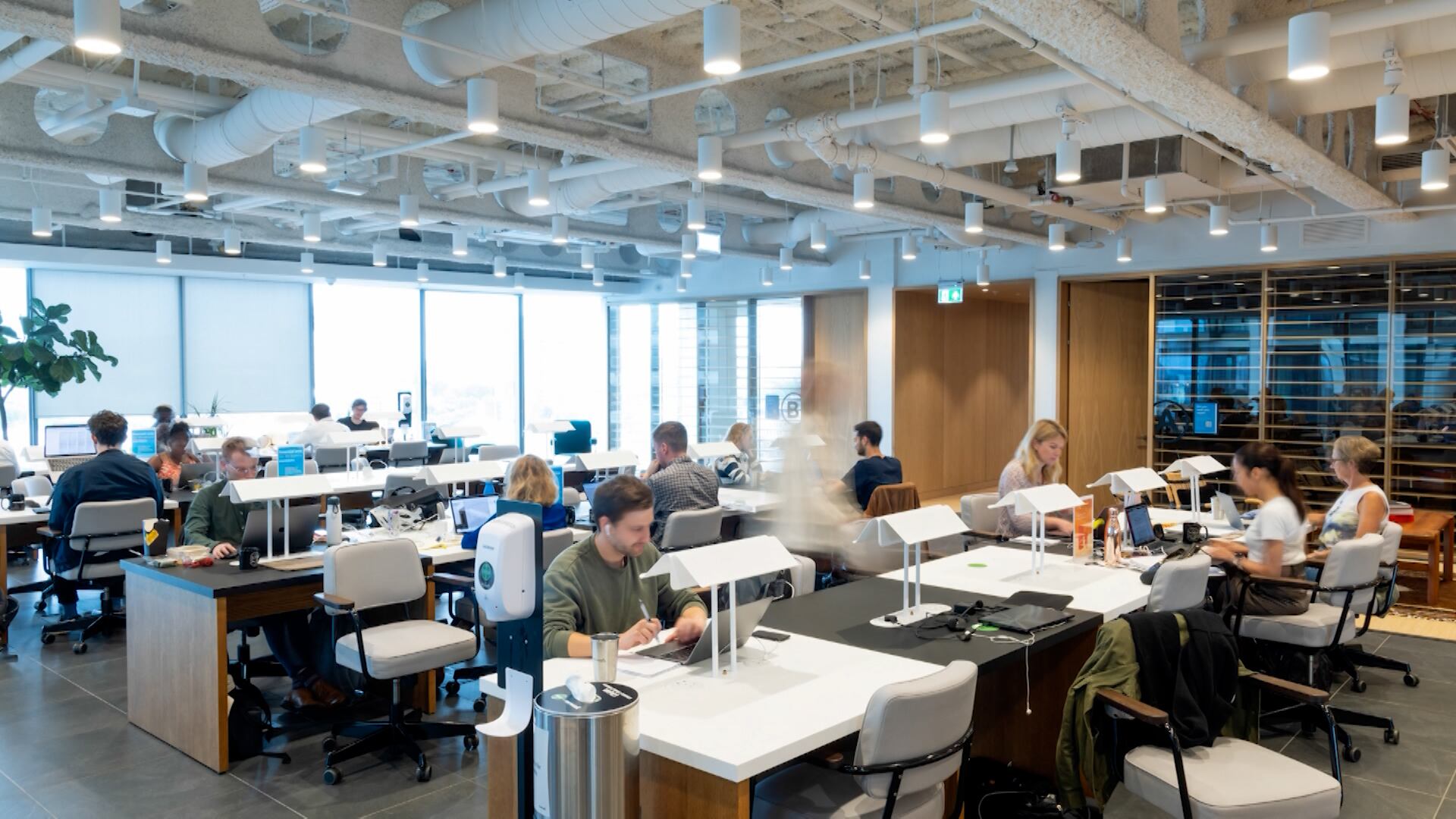
Businesses face more challenges for building a positive work environment as offices reopen. Workplace tech platform Envoy's At Work Report showed that hybrid work is currently in vogue, featuring focused work in both the office and at home. Annette Reavis, chief people officer for Envoy, joined Cheddar to discuss how employers can smooth the rough edges for their returning employees. "It is about hybrid though, it's really important for the future that we change our mindset from five days a week," she said. "Those are days of the past to working hybrids. So when you're in the office, you're focused, you're working cross-functionally."
Following the invasion of Ukraine, a multitude of Western companies have paused doing business with Russia. PepsiCo, Coca-Cola, McDonald's, and Starbucks are the most recent companies to temporarily cease operations in Russia. Dean of Miami Herbert Business School at the University of Miami, John Quelch, joined Cheddar News to discuss what message this sends to Russia and the Russian consumer. “I would not underestimate the collective strength of all of these multinational companies, essentially coming together to make their collective statement in support of the political statements that have come out of Washington," he said.
Cristyl Kimbrough, real estate attorney and star of 'Ladies Who List: Atlanta,' joins Cheddar News to discuss her new show on OWN and breaking into Atlanta's luxury real estate space.
Carl Tobias, professor of law at the University of Richmond, joins Cheddar News to talk about how Johnson & Johnson funded experiments on mostly Black men comparing the effects of talc and asbestos on their skin.