By Rod McGuirk
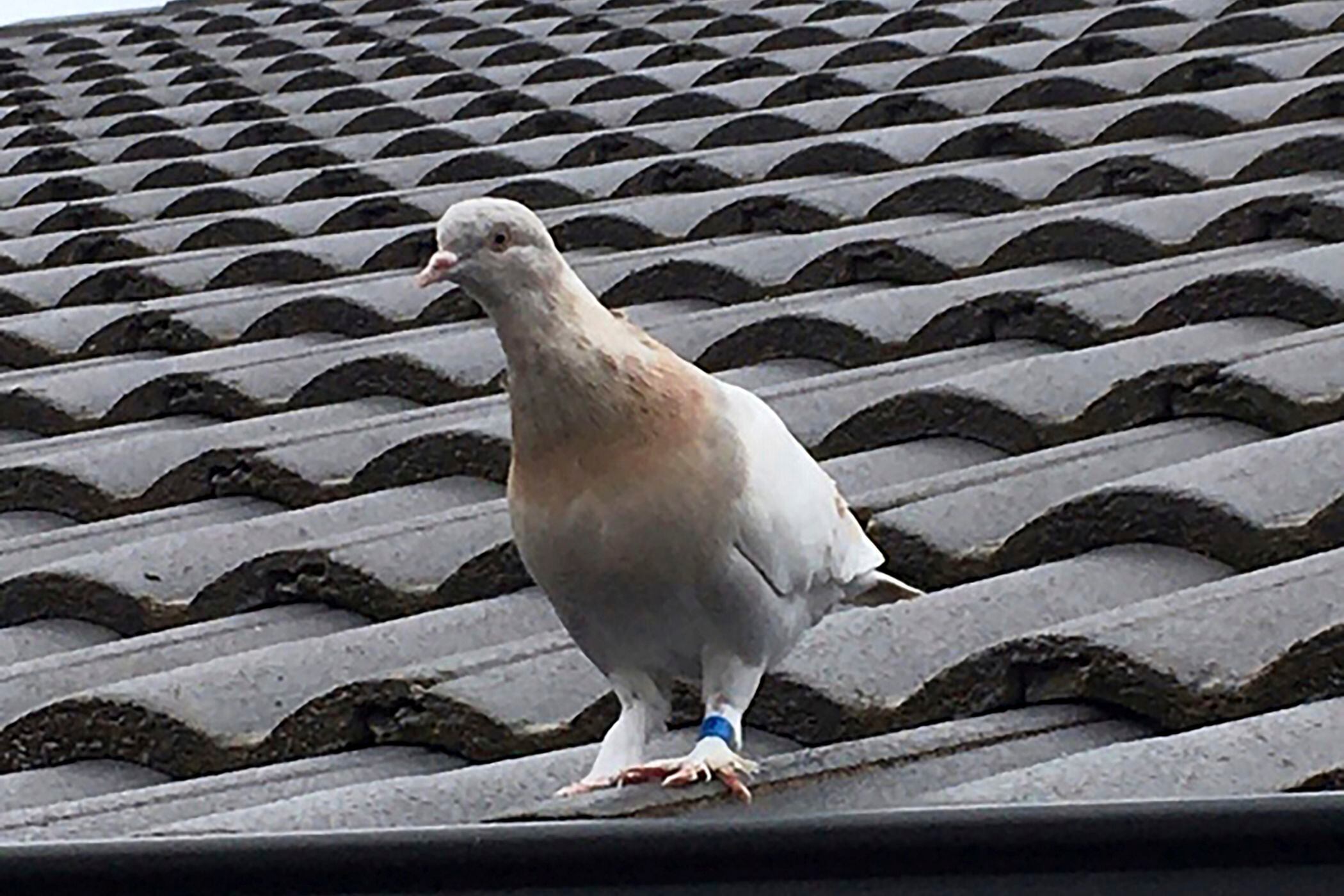
A racing pigeon has survived an extraordinary 13,000-kilometer (8,000-mile) Pacific Ocean crossing from the United States to find a new home in Australia. Now authorities consider the bird a quarantine risk and plan to kill it.
Kevin Celli-Bird said Thursday he discovered the exhausted bird that arrived in his Melbourne backyard on Dec. 26 had disappeared from a race in the U.S. state of Oregon on Oct. 29.
Experts suspect the pigeon that Celli-Bird has named Joe, after the U.S. president-elect, hitched a ride on a cargo ship to cross the Pacific.
Joe’s feat has attracted the attention of the Australian media but also of the notoriously strict Australian Quarantine and Inspection Service.
Celli-Bird said quarantine authorities called him on Thursday to ask him to catch the bird.
“They say if it is from America, then they’re concerned about bird diseases,” he said. “They wanted to know if I could help them out. I said, ’To be honest, I can’t catch it. I can get within 500 mil (millimeters or 20 inches) of it and then it moves.’”
He said quarantine authorities were now considering contracting a professional bird catcher.
The Agriculture Department, which is responsible for biosecurity, said the pigeon was “not permitted to remain in Australia” because it "could compromise Australia's food security and our wild bird populations.”
“It poses a direct biosecurity risk to Australian bird life and our poultry industry,” a department statement said.
In 2015, the government threatened to euthanize two Yorkshire terriers, Pistol and Boo, after they were smuggled into the country by Hollywood star Johnny Depp and his ex-wife Amber Heard.
Faced with a 50-hour deadline to leave Australia, the dogs made it out in a chartered jet.
Pigeons are an unusual sight in Celli-Bird’s backyard in suburban Officer, where Australian native doves are far more common.
“It rocked up at our place on Boxing Day. I’ve got a fountain in the backyard and it was having a drink and a wash. He was pretty emaciated so I crushed up a dry biscuit and left it out there for him,” Celli-Bird said.
“Next day, he rocked back up at our water feature, so I wandered out to have a look at him because he was fairly weak and he didn’t seem that afraid of me and I saw he had a blue band on his leg. Obviously, he belongs to someone, so I managed to catch him,” he added.
Celli-Bird, who says he has no interest in birds “apart from my last name,” said he could no longer catch the pigeon with his bare hands since it had regained its strength.
He said the Oklahoma-based American Racing Pigeon Union had confirmed that Joe was registered to an owner in Montgomery, Alabama.
Celli-Bird said he had attempted to contact the owner but had so far been unable to get through.
The bird spends every day in the backyard, sometimes sitting side-by-side with a native dove on a pergola. Celli-Bird has been feeding it pigeon food from within days of its arrival.
“I think that he just decided that since I’ve given him some food and he’s got a spot to drink, that’s home,” he said.
Australian National Pigeon Association secretary Brad Turner said he had heard of cases of Chinese racing pigeons reaching the Australian west coast aboard cargo ships, a far shorter voyage.
Turner said there were genuine fears pigeons from the United States could carry exotic diseases and he agreed Joe should be destroyed.
"While it sounds harsh to the normal person -- they’d hear that and go: ‘this is cruel,’ and everything else -- I’d think you’d find that A.Q.I.S. and those sort of people would give their wholehearted support for the idea,” Turner said, referring to the quarantine service.
It is claimed that the greatest long-distance flight recorded by a pigeon is one that started at Arras in France and ended in Saigon, Vietnam, back in 1931, according to pigeonpedia.com. The distance was 11,600 kilometers (7,200 miles) and took 24 days.
There are some known instances of long-distance flights but whether these are one-offs performed by the marathon runners of the pigeon world or they are feats that could be achieved by the average pigeon is not known.