By Rod McGuirk

Australia said Tuesday it will fight against plans to downgrade the Great Barrier Reef’s World Heritage status due to climate change, while environmentalists have applauded the U.N. World Heritage Committee’s proposal.

The committee said in a draft report on Monday that “there is no possible doubt” that the network of colorful corals off Australia’s northeast coast was “facing ascertained danger.”

The report recommends that the world’s most extensive coral reef ecosystem be added to UNESCO’s List of World Heritage in Danger, which includes 53 sites, when the World Heritage Committee considers the question in China in July.

The listing could shake Australians' confidence in their government's ability to care for the natural wonder and create a role for UNESCO headquarters in devising so-called “corrective measures,” which would likely include tougher action to reduce Australia's greenhouse gas emissions.

Any downgrade of the reef’s World Heritage status could reduce tourism revenue that the natural wonder generates for Australia because fewer tourists would be attracted to a degraded environment and dead coral.

Reef cruise operators said the report was wrong and that tourists continued to be awed by dazzling coral and multicolored fish. But some tourists said the reef had seemed more colorful during visits decades ago.

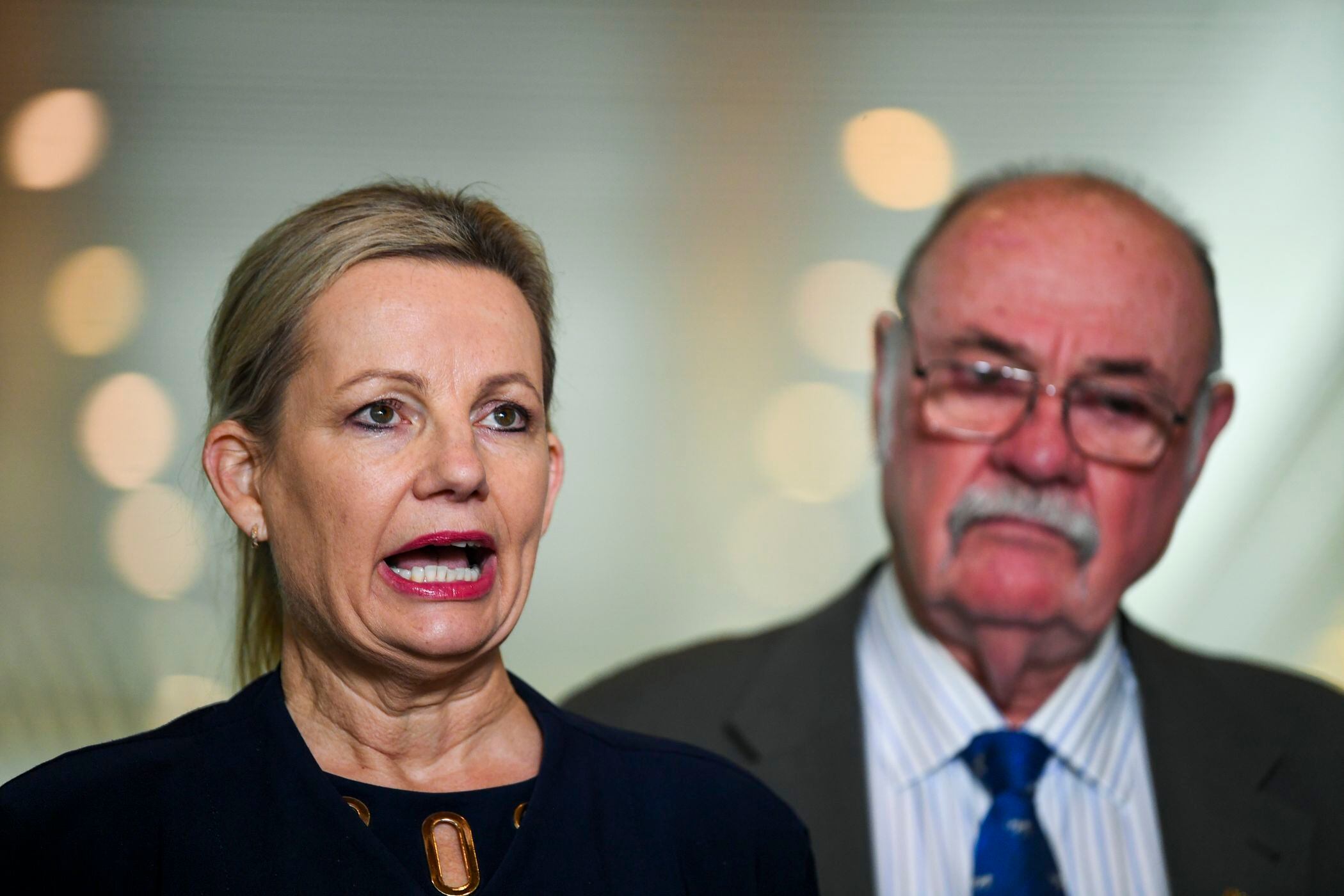
Environment Minister Sussan Ley said she and Foreign Minister Marise Payne had called UNESCO Director-General Audrey Azoulay to express the government’s “strong disappointment” and “bewilderment” at the proposal.

Australia, which is one of 21 countries on the committee, will oppose the listing, Ley said.

“This decision was flawed. Clearly there were politics behind it,” Ley told reporters. “Clearly those politics have subverted a proper process and for the World Heritage Committee to not even foreshadow this listing is, I think, appalling.”

The network of 2,500 reefs covering 348,000 square kilometers (134,000 square miles) has been World Heritage-listed since 1981.

But its health is under increasing threat from climate change and rising ocean temperatures.

The report found the site had suffered significantly from coral bleaching events caused by unusually warm ocean temperatures in 2016, 2017 and last year.

Australian Marine Conservation Society environmental consultant Imogen Zethoven welcomed the committee’s recognition that “Australia hasn’t done enough on climate change to protect the future of the reef.”

The reef would become the first site to be added to the List of World Heritage in Danger primarily for climate change reasons, Zethoven said.

“It would be a very significant step for the World Heritage Committee to make this decision and one that we really hope that it does make because it will open up a lot of potential change,” she said.

Richard Leck, a spokesman for the environmental group WWF, said listing the reef as in-danger would be “a real shock" to many Australians.

In 2014, Australia was warned that an “in danger” listing was being considered rather than being proposed for immediate action.

Australia had time to respond by developing a long-term plan to improve the reef’s health called the Reef 2050 Plan.

The committee said this week that plan “requires stronger and clearer commitments, in particular towards urgently countering the effects of climate change.”

Ley said climate change policy debate should be restricted to the U.N. Framework Convention on Climate Change.

“I know ... that climate change is the biggest threat to the reef and in no way am I stepping away from that recognition and countries including European countries have got strong views about what policies different countries should have on climate change and I understand that as well, but this is not the convention in which to have those conversations,” Ley said, referring to the Convention Concerning the Protection of the World Cultural and Natural Heritage.

Observers say the swearing in on Tuesday of new Deputy Prime Minister Barnaby Joyce, who opposes action on climate change that increases prices, signals Australia is likely to set less ambitious targets for reducing greenhouse gas emissions.

Terry Hughes, director of the Australian Research Council’s Center for Excellence in Coral Reef Studies, said Australia’s refusal to commit to a net zero carbon emissions target by 2050 made the country a “complete outlier.”

“This draft decision from UNESCO is pointing the finger at Australia and saying: ’If you’re serious about saving the Great Barrier Reef, you need to do something about your climate policies,’” Hughes told Australian Broadcasting Corp.
Share:
More In Politics
Markets Open Lower on Final Trading Day of 2021
Markets opened lower this morning as investors rounded out a wild 2021. Jay Hatfield, CEO Infrastructure Capital Advisors, joined Cheddar's Opening Bell to discuss which sectors and industries to watch in the new year.
Markets Open Higher, Extending Santa Claus Rally
Markets opened higher as investors react to positive data on the labor front, with weekly jobless claims falling to 198,000 for the week ending December 25. Ross Mayfield, investment strategy analyst at Baird joined Cheddar's Opening Bell to discuss the market open.
U.S.-Russia Talks Hit a Wall as Ukrainian Tensions Remain
U.S. officials spoke to Russian leaders for nearly eight hours earlier this week, in hopes of reducing tensions between Russia and Ukraine. Russia forced the west to the negotiating table by massing 100,000 troops near the Ukrainian border, sparking fears of an invasion, and then submitted a set of demands which the west rejected. Joel Rubin, former Deputy Assistant Secretary of State & President at Washington Strategy Group explains what the rest of the week might look like, and why other European nations may be on the side of the U.S.
Schools Open Across the Nation Amid Omicron Anxiety
Chicago schools opened their doors again following a dispute between the teachers union and the city over as the omicron variant continues to surge, but the safety issues they fought over weren't just limited to the Windy City. Dr. Bayo Curry-Winchell, family medicine and urgent care doctor, joined Cheddar in discussing concerns of parents, teachers, and students as schools try to operate amid COVID and noted what she's been observing as the number of infections among children rises. "I am seeing them contract the illness from so many different aspects," she said. "It could be from a fellow classmate. It could be from a parent. All of those things really play in the effect of transmission as well as contracting the illness."
Sen. Hickenlooper Calls for a Federal Impairment Standard for Driving While High
Sen. John Hickenlooper (D-Colo.) is looking for clarification about a federal standard regarding THC impairment while driving. "I think in terms of marijuana, the fact that it's still a Schedule 1 narcotic — it's treated the same as heroin and cocaine — it means that we can't get standards developed," he said about the lack of cohesive regulations. The lawmaker also explained his previous opposition to cannabis legalization in Colorado when he was governor and why his position changed.
Rep. James Clyburn on Honoring Martin Luther King Jr. and Fate of the Filibuster
With Martin Luther King Jr. Day fast approaching, Rep. James Clyburn (D-S.C. 6th District), the House Majority Whip, talked about the importance of honoring the iconic civil rights activist. "As we consider the life and celebrate the legacy of Martin Luther King Jr., let's think about who and what we are as a country, and whether or not we're going to give up on the ideals of this country or continue to press forward," he said. Clyburn also discussed the push for new voting legislation, the For the People Act and the John Lewis Act, as well as the fate of the Senate filibuster.
One Year Later, America Is Still Divided On January 6
One year after the attack on Capitol Hill, America is still deeply divided and politically broken. Zoe Tillman, senior reporter for BuzzFeed News, breaks down President Biden's remarks on January 6, and why the country disagrees on its views over the violent insurrection.
Americans' Finances Grew More Secure During Pandemic
While the pandemic caused financial troubles for many, the unique circumstances of the last two years proved helpful to many Americans. Whether it was the federal government's stimulus checks, expanded unemployment insurance, or general lockdowns, recent data reveals that the covid-19 pandemic helped many reach financial security. Neale Godfrey, Financial Expert and New York Times #1 Best Selling Author joined Cheddar's Opening Bell to discuss.
Markets Trade Higher Despite Hot Inflation Data
U.S. markets opened higher despite red-hot inflation data which showed the highest surge in nearly 40 years. Jon Maier, CIO, GlobalX ETFs joined Cheddar's Opening Bell to discuss this historic report.
Facebook Parent Meta Loses Bid to Dismiss FTC Antitrust Lawsuit
Meta's request to have a Federal Trade Commission antitrust lawsuit dismissed was rejected by a federal judge. Prosecutors presented enough evidence in their latest filing to go forward with the case accusing the tech giant of operating a social networking monopoly through Facebook, Instagram, and WhatsApp.
Load More