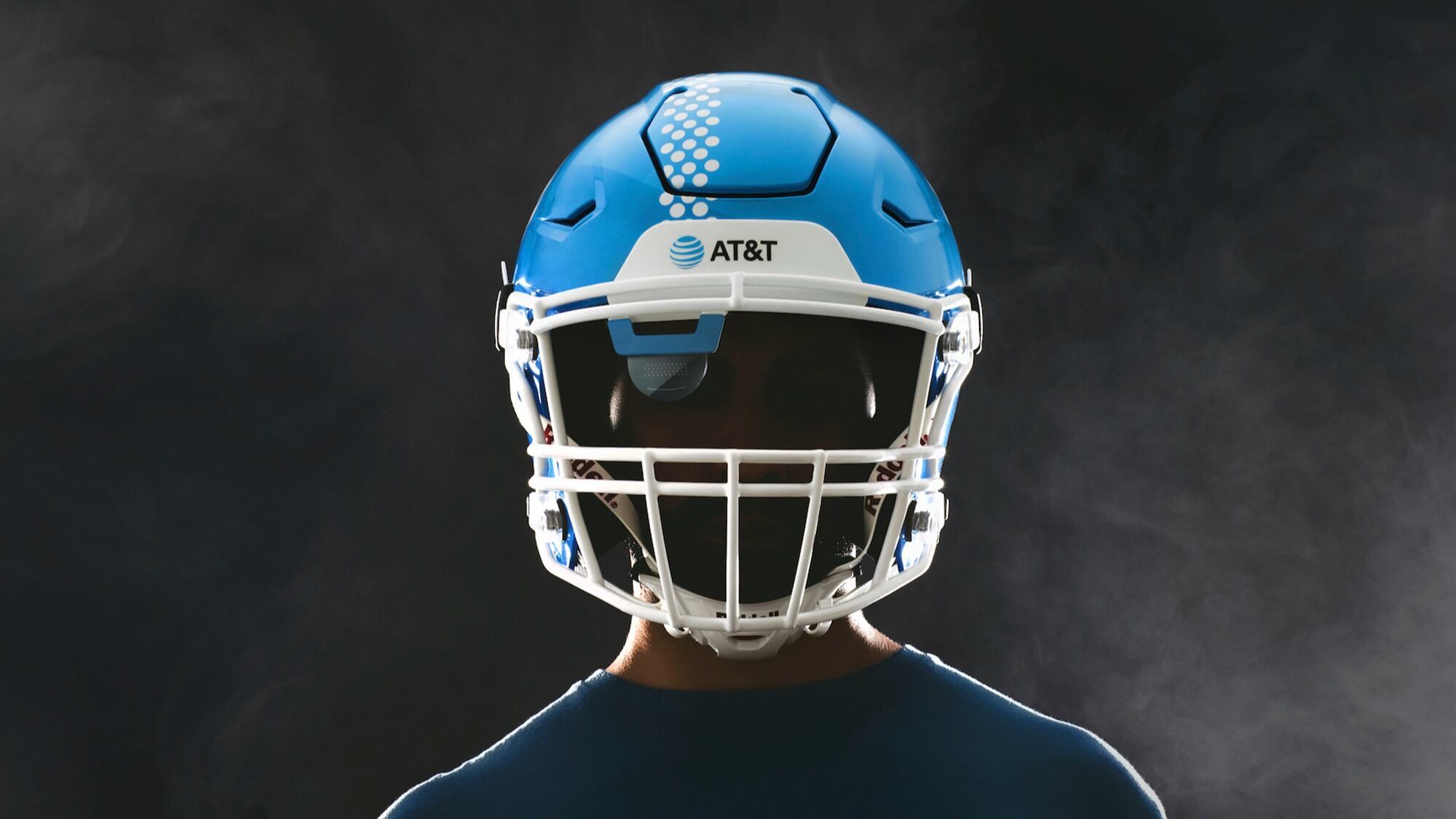
This handout provided by AT&T shows a football helmet developed for quarterbacks who are deaf or hard of hearing, at Gallaudet University in Washington D.C., Sept. 22, 2023. The innovation allows a coach to call a play on a tablet from the sideline that then shows up visually on a small display screen inside the quarterback's helmet. (Matt Monath/AT&T via AP)
By Stephen Whyno
AT&T and Gallaudet University have developed a football helmet for players who are deaf or hard of hearing and communicate using American Sign Language.
The company and Washington-based school for students who are deaf or hard of hearing unveiled the new technology Thursday.
It allows a coach to call a play on a tablet from the sideline that then shows up visually on a small display screen inside the quarterback’s helmet. Gallaudet, which competes in Division III, was cleared by the NCAA to use the helmet in its game on Saturday at home against Hilbert.
Gallaudet coach Chuck Goldstein said he thinks the helmet “will change football.”
“We work out the same way as every other college football program, we practice the same way, we compete the same way," Goldstein said. “The difference between coaching a hearing team compared to a Deaf team is first the communication.”
The final product is the result of almost two years of communication between the team and AT&T, which came up with the concept as a way to close the inclusion gap for the Deaf community with its 5G network.
“We came up with ideas on how to make this helmet more effective (and) we’d interact with (players and coaches)," said Corey Anthony, AT&T senior VP of networking engineering and operations. "They would give us feedback. We’d go back, make changes, work on it. It’s just a beautiful relationship that we have with that university.”
Anthony said the company also leaned on employees who are deaf or hard of hearing during the process.
“This is probably one of the more sort of exciting and enriching projects that we’ve worked on in a very long time,” he said.
Minty Bets, sports betting analyst for Yahoo Sportsbook, joins Cheddar News to discuss same-game parlays and navigating this week's slate of NFL games despite the league-wide outbreak of COVID-19.
Sponsored by BetMGM
The sports world has been at the forefront of dealing with the pandemic ever since the NBA temporarily halted operations in March 2020 and opted to play in their Florida bubble. As the omicron variant and current COVID surge forces game postponements and player quarantines, how leagues manage to continue operations through the outbreaks could be a sign of what is to come for the general public. Dr. Robby Sikka, chair of the COVID Sports Society Workgroup and a former VP with the Minnesota Timberwolves, joined Cheddar's "Closing Bell" to talk about the ways in which the NBA, NHL, and NFL are innovating amid the disruptions.
Tom Shannon, Bowlero CEO, joined Cheddar to discuss the decision to bring the company to the New York Stock Exchange via a SPAC merger with Isos Acquisition Corporation. Shannon said one of the goals of the public offering is to expand operations internationally, noting that Bowlero has the potential to reach worldwide markets due to the sport's popularity. "Bowling is a global market, and I'll give you an example. In South Korea, there are three million league bowlers and 1,200 bowling centers in South Korea alone," he said.
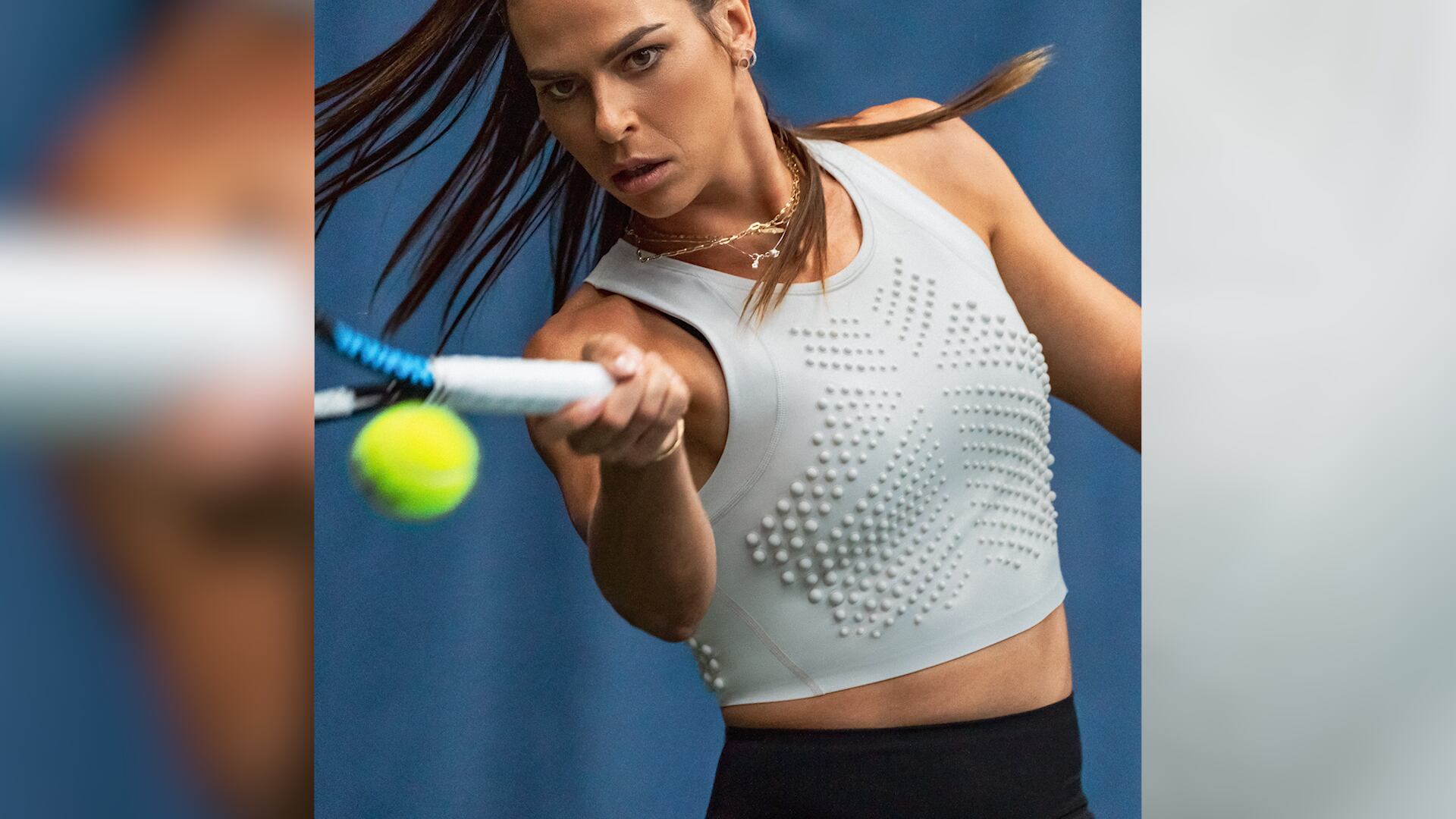
Stefan Olander, Co-Founder of Omorpho, joins Cheddar Innovates to discuss how they are bringing innovation into athleticwear by creating 'gravity sportswear.'
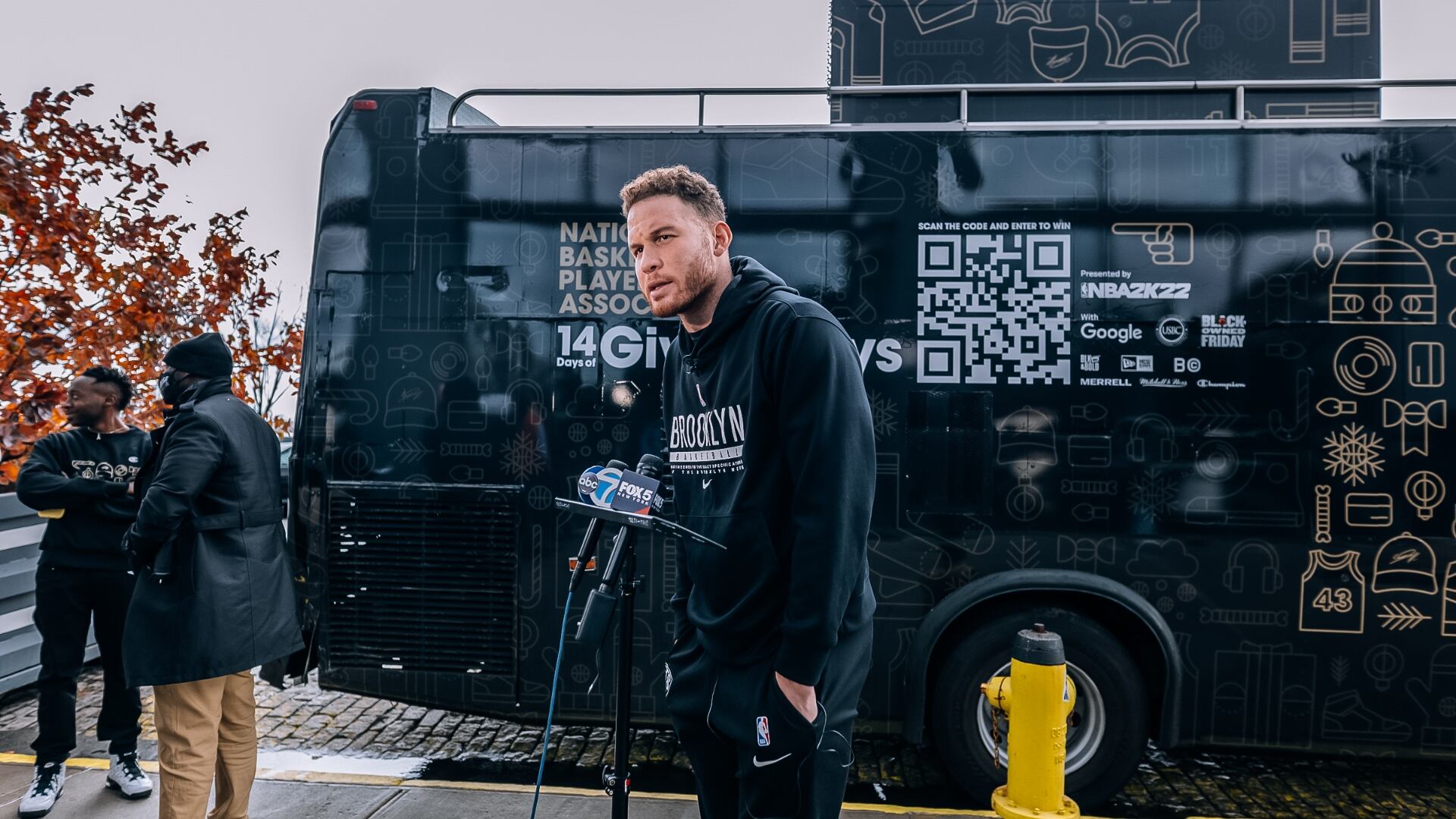
This year on Black Friday, the National Basketball Players Association launched a traveling NBPA-branded holiday pop-up called 'NBPA 450 Gives.' This was a 14-day long experiential and digital activation showcasing the best gifts for this holiday season, featuring items from black-owned businesses to celebrate Google's black-owned Friday initiative. JD sat down with Brooklyn Nets player, Blake Griffin, who helped launch this initiative.
We're entering a brave new world of broadly legal sports betting. Over 30 states and Washington, DC, have legalized sports betting in the year and a half since the supreme court struck down the federal ban on the activity.
But legalization isn't a simple proposition. The federal law might be struck down but its still up to each state to decide whether to legalize sports betting, and answer a litany of questions that come with it. Should you include online gambling? How much should people be allowed to bet? Should there be limits on advertising for sports betting?
Darren Heitner, founder of Heitner Legal, and Daniel Wallach, founder of Wallach Legal, join None of the Above's "Business of Sports: The Year Gambling Took Over" special to discuss.
Carlo and Baker cover the latest data showing the Omicron wave has likely started, Pfizer's Covid pill, Jan. 6 and a box office rescue attempt courtesy of Spider-Man.
Allegiant Stadium in Las Vegas is slated to be the home of Super Bowl LVIII in 2024. The stadium was completed in July 2020 for a price tag of $1.8 billion.