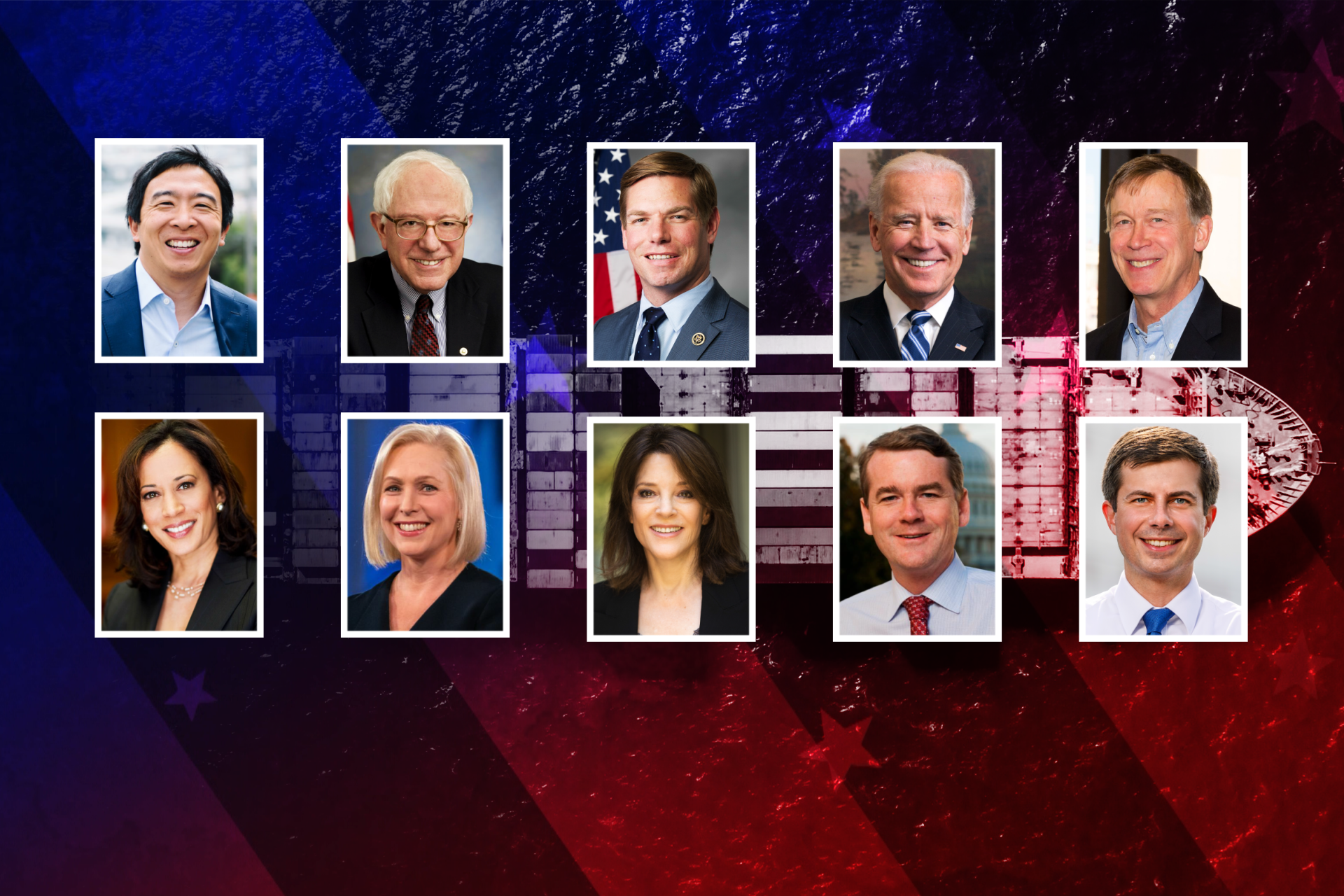
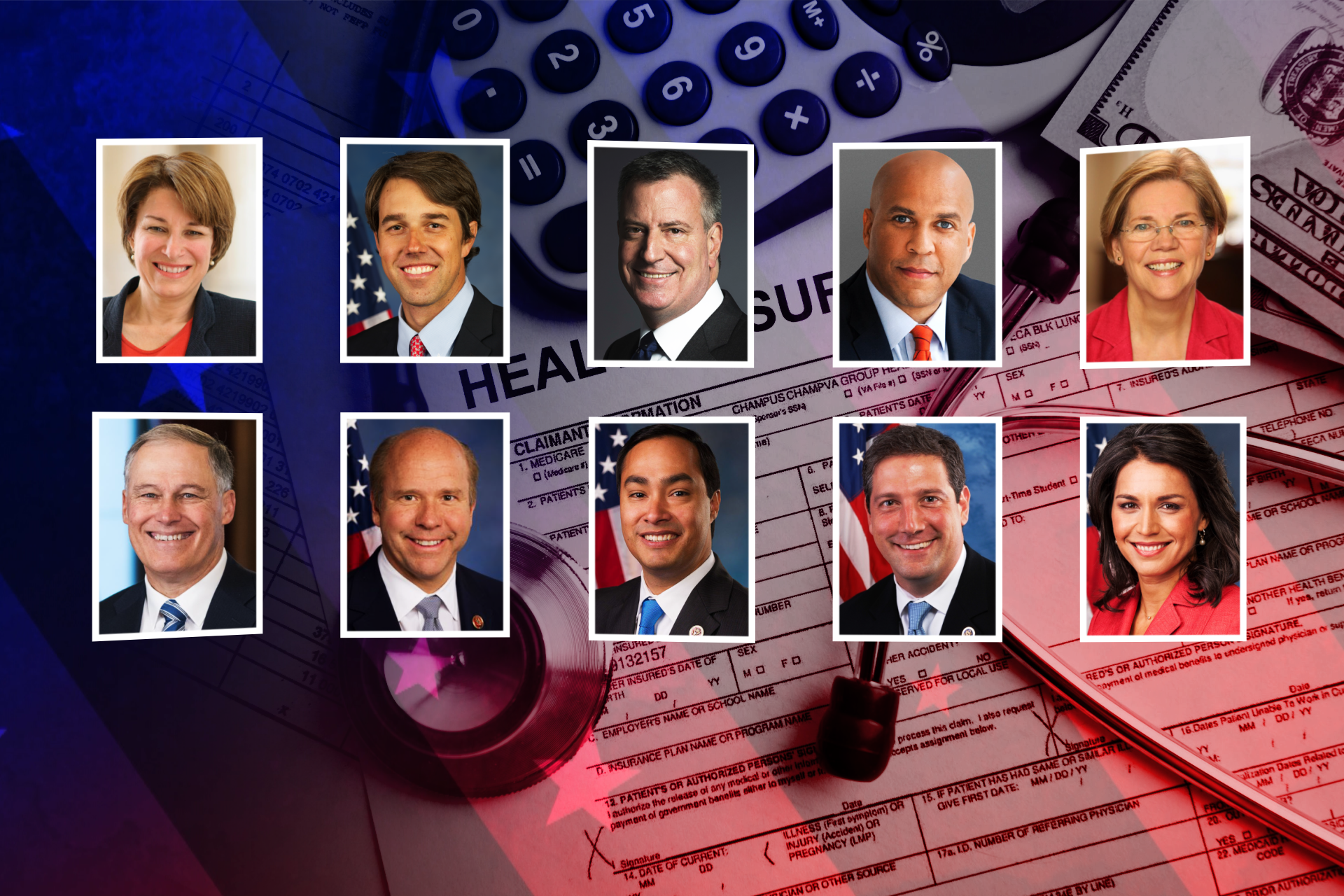
During the second night of this week's Democratic primary debates, President Donald Trump's approach to China came under fire as candidates spoke about how they would approach relations with the country and explained what they believed to be the greatest threat to the United States.
The moderators' discussion of China comes amid ongoing trade tensions between Washington and Beijing — including several cycles of tariffs on billions of dollars on both American and Chinese goods — and just weeks after the Trump administration announced it would effectively ban Chinese telecoms giant Huawei over security concerns.
During Wednesday's debate, former Rep. John Delaney, Sen. Amy Klobuchar, Rep. Tim Ryan, and former HUD Secretary Julián Castro all pointed to China as one of or the greatest threat to the nation.
While some candidates, during the second night of debates, called Russia the greatest threat to the United States, there was agreement that China poses a significant challenge, but debaters maligned Trump's aggressive imposition of tariffs.
"On China, I think the president's been right to push back on China but has done it in completely the wrong way," said Colorado Sen. Michael Bennet, who otherwise targeted Russia as the top threat. "We should mobilize the entire rest of the world, who all have a shared interest in pushing back on China's mercantilist trade policy."
Entrepreneur Andrew Yang pointed to Moscow's meddling in the 2016 election as evidence that Russia should be Americans' greatest concern. "They've been hacking our democracy successfully. They've been laughing their asses off about it for the last couple of years," he said.
However, on China, Yang said: "They do pirate our intellectual property, it's a massive problem. But the tariffs and the trade war are just punishing businesses and producers and workers on both sides”
He pointed to the challenges of farmers, who, facing tariffs, fear losing valuable foreign contracts that they've worked years to secure.
“The beneficiaries have not been American workers or people in China. It’s been Southeast Asia, and other producers, that have then stepped into the void.“ Yang argued.
Farmers, who produce a large portion of the U.S.'s trade surplus, have been the primary target of retaliatory tariffs imposed by China. This pain has been acutely felt by soybean farmers, who saw their crop prices hit a 10-year low in May.
"We've got to recognize that the China challenge really is a serious one," cautioned South Bend Mayor Pete Buttigieg. "This is not something to dismiss or wave away. And if you look at what China is doing, they're using technology for the perfection of dictatorship. But their fundamental economic model isn't going to change because of some tariffs."
"Manufacturers — and especially soy farmers — are hurting. Tariffs are taxes. And Americans, are going to pay, on average $800 more a year, because of these tariffs," Buttigieg added.
"Meanwhile, China is investing so that they could soon be able to run circles around us in artificial intelligence," the mayor said. "The biggest thing we've got to do is invest in our own domestic competitiveness."