AT&T Merger Could Threaten Netflix's & Amazon's Competitive Edge
*By Alisha Haridasani*
AT&T's $85 billion takeover of Time Warner will disrupt traditional broadcast and upend internet streaming, fundamentally changing the way consumers watch TV, said Rich Greenfield, an analyst at BTIG.
With content from HBO, CNN, and Warner Bros., AT&T will launch a "skinny bundle" of 30 channels called AT&T Watch that will be free for all AT&T wireless subscribers, Greenfield said.
“That is going to be a really disruptive move by AT&T,” he added. “It’s going to be interesting to see how the other tech companies react to this.”
Streaming services Netflix, Hulu, and Amazon, which create original programming that reaches consumers directly via the internet, have broken the broadcast and cable TV stranglehold on content, putting pressure on subscription and TV advertising revenue.
“Roughly 20 percent of American households have cut the cord, discontinuing traditional MVPD services,” U.S. District Judge Richard Leon wrote in his [opinion](http://www.dcd.uscourts.gov/sites/dcd/files/17-2511opinion.pdf) approving the AT&T bid. “That number, high as it is, continues to grow.”
The AT&T-Time Warner merger, which is expected to be completed next week, sets the stage for more vertical integrations between content creators and distributors. Comcast is expected to make another [bid](https://cheddar.com/videos/rich-greenfield-murdoch-no-longer-set-on-selling-to-disney-for-stock) for 21st Century Fox’s assets as early as Wednesday in an effort to wrestle it away from Disney. If Comcast is successful, it would marry Fox’s Hollywood studio and its British broadcaster Sky with Comcast's NBC Universal.
Comcast may partner up with other companies to make that offer more attractive for Fox chairman Rupert Murdoch, said Greenfield.
“In order to really beat Disney, they sort of need a stronger balance sheet,” he said.
For the full interview, [click here](https://cheddar.com/videos/why-at-and-ts-victory-is-monumental).
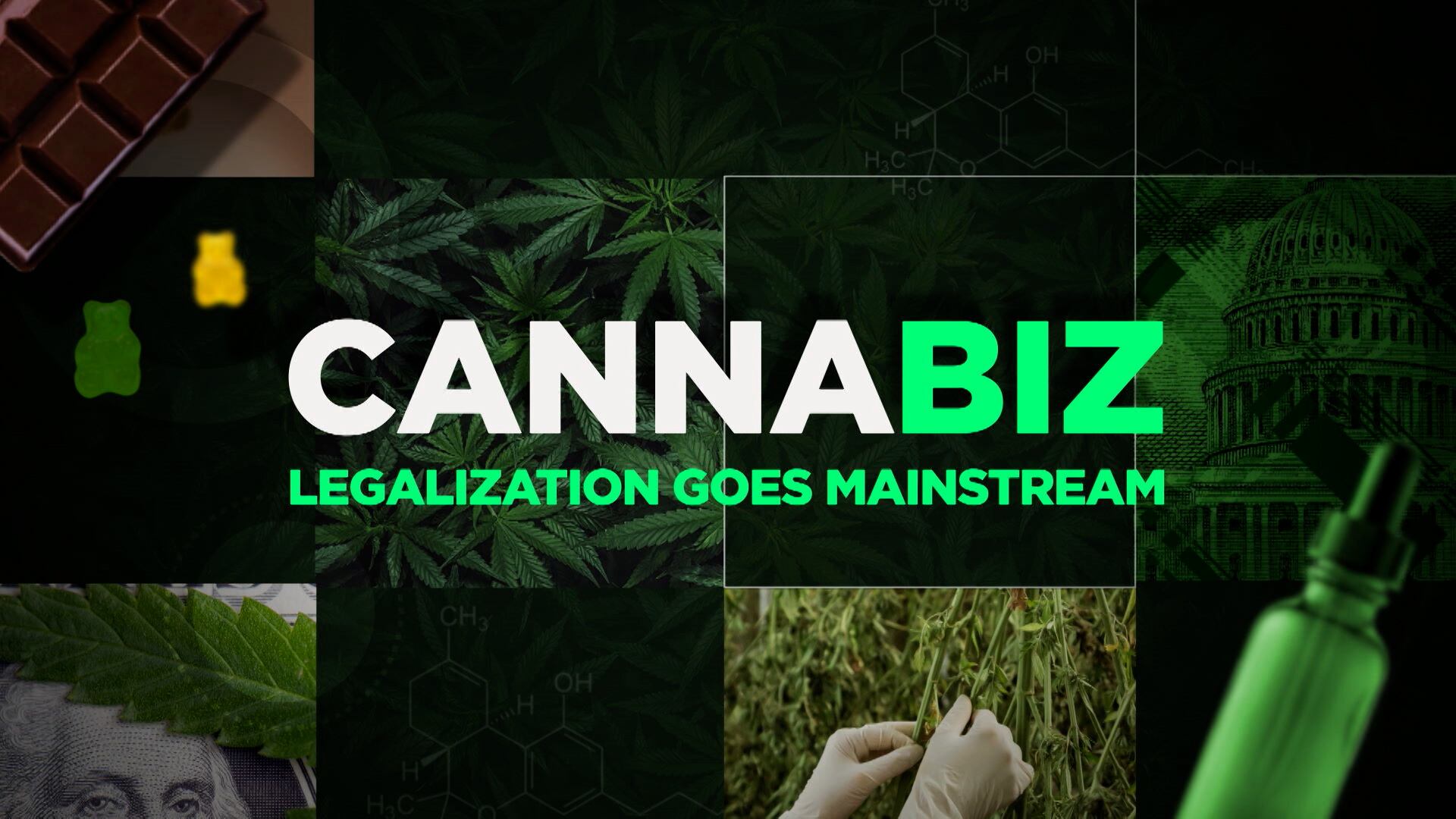
The one-hour special 'Cannabiz: Legalization Goes Mainstream' explores the state of marijuana. Cheddar News is joined by Rep. Earl Blumenauer (D-OR), Village CEO Dan Pettigrew, and many more.
Bitcoin is still struggling to hold $47,000 and is well off from the near $68,000 high it saw in November. As the Federal Open Market Committee wraps up its two-day monetary policy meeting, some crypto investors are worried as they wait for news on policy. Shiv Madan, CEO of Moonwalk joins Cheddar News to discuss what's in store for the industry.
We're entering a brave new world of broadly legal sports betting. Over 30 states and Washington, DC, have legalized sports betting in the year and a half since the supreme court struck down the federal ban on the activity.
But legalization isn't a simple proposition. The federal law might be struck down but its still up to each state to decide whether to legalize sports betting, and answer a litany of questions that come with it. Should you include online gambling? How much should people be allowed to bet? Should there be limits on advertising for sports betting?
Darren Heitner, founder of Heitner Legal, and Daniel Wallach, founder of Wallach Legal, join None of the Above's "Business of Sports: The Year Gambling Took Over" special to discuss.
Over the past decade, the resale market has completely transformed, allowing people to utilize platforms such as Etsy, Poshmark, eBay, and more to create a lucrative business from the comfort of their homes. However, as the space of secondhand sellers and thrifters gets more and more crowded, small businesses are facing bigger obstacles to not only thrive in the market but also survive. Yvette Liebesman, a law professor at Saint Louis, joins Cheddar News to discuss.
Even as tech giant Google implements a vaccination mandate, charging its employees to declare their vaccine status within a time frame or risk dismissal, the federal government is tangled up in the court system trying to impose one of its own. Cindy Cohn, the executive director of the Electronic Frontier Foundation, and Harry Nelson, founder and managing partner of Nelson Hardiman LLP, joined Cheddar to debate the ethics, efficacy, and legality surrounding the issue. While Cohn noted that she thinks the federal mandate might be legally sound, her organization is also concerned with a separate question of privacy. "At EFF what we're most interested in is the digital surveillance that's going along with some of these attempts to try to track and confirm whether people are vaccinated or not," she said.