AT&T Merger Could Threaten Netflix's & Amazon's Competitive Edge
*By Alisha Haridasani*
AT&T's $85 billion takeover of Time Warner will disrupt traditional broadcast and upend internet streaming, fundamentally changing the way consumers watch TV, said Rich Greenfield, an analyst at BTIG.
With content from HBO, CNN, and Warner Bros., AT&T will launch a "skinny bundle" of 30 channels called AT&T Watch that will be free for all AT&T wireless subscribers, Greenfield said.
“That is going to be a really disruptive move by AT&T,” he added. “It’s going to be interesting to see how the other tech companies react to this.”
Streaming services Netflix, Hulu, and Amazon, which create original programming that reaches consumers directly via the internet, have broken the broadcast and cable TV stranglehold on content, putting pressure on subscription and TV advertising revenue.
“Roughly 20 percent of American households have cut the cord, discontinuing traditional MVPD services,” U.S. District Judge Richard Leon wrote in his [opinion](http://www.dcd.uscourts.gov/sites/dcd/files/17-2511opinion.pdf) approving the AT&T bid. “That number, high as it is, continues to grow.”
The AT&T-Time Warner merger, which is expected to be completed next week, sets the stage for more vertical integrations between content creators and distributors. Comcast is expected to make another [bid](https://cheddar.com/videos/rich-greenfield-murdoch-no-longer-set-on-selling-to-disney-for-stock) for 21st Century Fox’s assets as early as Wednesday in an effort to wrestle it away from Disney. If Comcast is successful, it would marry Fox’s Hollywood studio and its British broadcaster Sky with Comcast's NBC Universal.
Comcast may partner up with other companies to make that offer more attractive for Fox chairman Rupert Murdoch, said Greenfield.
“In order to really beat Disney, they sort of need a stronger balance sheet,” he said.
For the full interview, [click here](https://cheddar.com/videos/why-at-and-ts-victory-is-monumental).
Following the invasion of Ukraine, a multitude of Western companies have paused doing business with Russia. PepsiCo, Coca-Cola, McDonald's, and Starbucks are the most recent companies to temporarily cease operations in Russia. Dean of Miami Herbert Business School at the University of Miami, John Quelch, joined Cheddar News to discuss what message this sends to Russia and the Russian consumer. “I would not underestimate the collective strength of all of these multinational companies, essentially coming together to make their collective statement in support of the political statements that have come out of Washington," he said.
Cristyl Kimbrough, real estate attorney and star of 'Ladies Who List: Atlanta,' joins Cheddar News to discuss her new show on OWN and breaking into Atlanta's luxury real estate space.
Carl Tobias, professor of law at the University of Richmond, joins Cheddar News to talk about how Johnson & Johnson funded experiments on mostly Black men comparing the effects of talc and asbestos on their skin.
Amazon unveiled its new mobile app called Amp as a direct competitor to Clubhouse, allowing people to host live radio shows. Although it is still in beta, users can join the waitlist from the iOS store.
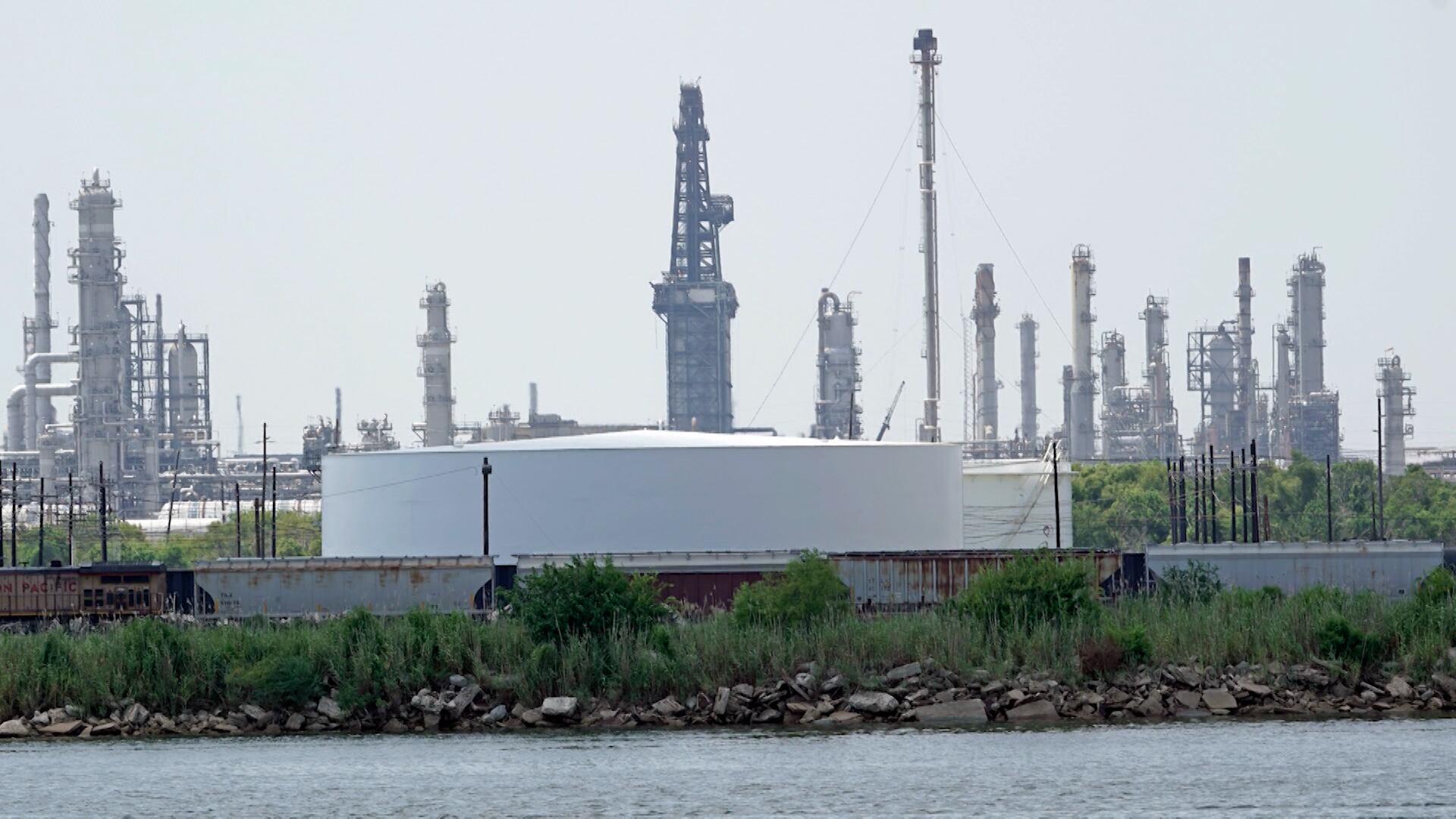
President Biden announced a ban on Russian oil and natural gas imports to the U.S. in response to its invasion of Ukraine, a move he warned could lead to an even greater surge in gas prices. The ban is prompting a conversation about the current oil production levels in the U.S. and whether or not the industry can ramp up production to soften the blow to American families at the gas pump. Clark Williams-Derry, Energy Finance Analyst with the Institute for Energy Economics and Financial Analysis, breaks down the state of the U.S. oil industry and how the ban might impact production levels here at home.
PepsiCo, Coca-Cola, McDonald’s, and Starbucks are the latest American food brands to have halted business operations in Russia after having faced scrutiny and criticism for originally failing to do so amid the country's invasion of Ukraine.
As Russia intensifies its war on Ukraine, President Biden announced a ban on oil imported from the aggressor nation. Critics of Russia have said this would be the best way to force Putin to pull back, but curbs on Russian oil exports are expected to send already skyrocketing oil and gas prices even higher, further impacting consumers, businesses, financial markets, and the global economy. Leslie Beyer, CEO of the Energy Workforce and Technology Council, joined Cheddar News' Closing Bell to discuss. "It's certainly going to increase pricing, but it is the right thing to do," she said. "The industry itself has already pulled out of the significant portion of its operations in Russia."