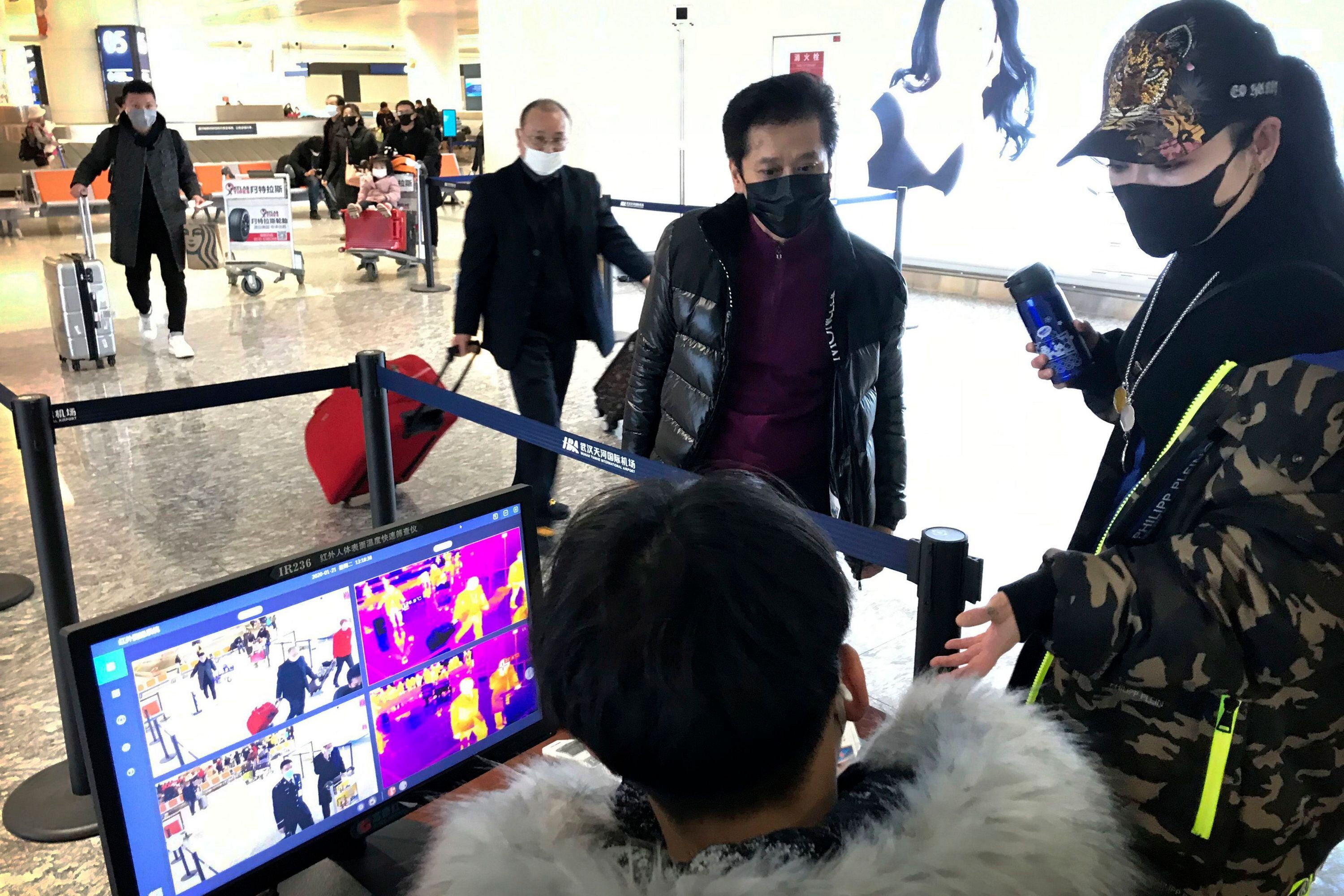
As U.S. investors returned to the markets Tuesday after a long weekend, they found Asian stock markets dropping on fears that a flu-like virus in China could spread and become a pandemic.
A top Chinese health official confirmed on Monday that the so-called coronavirus is now able to spread via human-to-human contact, similar to how influenza can be "caught" from a handshake or sneeze. The virus has already killed at least six people in central China, where it is believed to have originated, according to local reports. Confirmed cases of the virus, which resembles pneumonia in its symptoms, have jumped to nearly 300, adding a new element of worry for public health officials in Asia as tens of millions of people are set to travel in the coming days to celebrate the Lunar New Year.
That worry translated to a nearly 1.5 percent drop in the Shanghai Composite at Tuesday's close, its biggest decline in weeks. The Nikkei in Japan and Hang Seng in Hong Kong also closed lower. Hong Kong stocks had their worst day in five months, partly due to fears that the coronavirus could jump from the mainland and add a new burden on top of the protests that have crippled the region's economy.
The World Health Organization has convened an emergency meeting, scheduled for Wednesday in Geneva, to determine whether the outbreak constitutes a public-health emergency that would allow the WHO to deploy resources.
With the coronavirus now communicable through person-to-person contact, it resembles the early days of the SARS outbreak, which began with a similar type of virus and ultimately killed nearly 800 people in southern China in 2002 and 2003.
James Gallagher, CEO and Co-Founder of GreenLite, discusses the challenges of rebuilding the fire-affected LA area and how permitting complicates the process.
Super Bowl Champion, Julian Edelman, talks Chiefs' conspiracies, his fave TSwift song and his bet for Super Bowl LIX. Plus, the best time for a bathroom break.
Ron Hammond, Sr. Director of Government Relations at the Blockchain Association, breaks down Trump’s plan to strengthen U.S. leadership in financial technology.
BiggerPockets Money podcast is now available on Cheddar Wednesdays at 10am ET! Mindy Jensen shares how her podcast is helping people gain financial freedom.
The social video platform's future remains in doubt, as players scramble to profit from the chaos. Plus: Big oil gets bigger, DOGE downsizes, and tariffs!
Ty Young, CEO of Ty J. Young Wealth Management, joins Cheddar to discuss Trump's moves as he returns to Washington D.C. and how it may affect the U.S. economy.
Starbucks’ decision to restrict its restrooms to paying customers has flushed out a wider problem: a patchwork of restroom use policies that varies by state and city. Starbucks announced last week a new code of conduct that says people need to make a purchase if they want to hang out or use the restroom. The coffee chain's policy change for bathroom privileges has left Americans confused and divided over who gets to go and when. The American Restroom Association, a public toilet advocacy group, was among the critics. Rules about restroom access in restaurants vary by state, city and county. The National Retail Federation says private businesses have a right to limit restroom use.
President Donald Trump is talking up a joint venture investing up to $500 billion for infrastructure tied to artificial intelligence by a new partnership formed by OpenAI, Oracle and SoftBank. The new entity, Stargate, will start building out data centers and the electricity generation needed for the further development of the fast-evolving AI in Texas, according to the White House. The initial investment is expected to be $100 billion and could reach five times that sum. While Trump has seized on similar announcements to show that his presidency is boosting the economy, there were already expectations of a massive buildout of data centers and electricity plants needed for the development of AI.
Chris Ruder, Spikeball Founder and CEO, explains how he and his friends put roundnet on the global map, plus, how Spikeball helps people "find their circle."