As U.S. Readies Chinese Import Tax, Worries of Economic Impact Loom Large
*By Alisha Haridasani*
The first round of tariffs for American and Chinese goods goes into effect on Friday, officially plunging the two countries into a trade war that could end up undermining the U.S. economy.
The Trump administration is poised to impose taxes on $50 billion of Chinese imports in high-tech industries, such as robotics, aerospace, and industrial machinery, in an attempt to punish Beijing for intellectual property theft and to rebalance a trade deficit. The first phase of that will affect $34 billion worth of goods.
"The United States will be opening fire on the whole world and also opening fire on itself," said China's Commerce Ministry spokesperson on Thursday, reiterating that Beijing will fight back.
China has promised to immediately hit back with tariffs of “equal scale, equal intensity” on American soybeans, corn, wheat, rice, beef, and poultry.
President Trump announced the tariffs in June and since then the U.S. and China have been locked in a series of threats and negotiations that have rattled markets.
The back-and-forth has already forced companies to rethink their strategies. Chinese companies have started turning away from U.S. soybean suppliers and looking to other sources for agricultural products.
“Farmers in America’s heartland are already feeling the pain,” said Sara Hsu, economist and associate professor at SUNY-New Paltz. “Consumers can expect to feel the pain in the coming months.”
And enduring the pinch isn't going to pay off. Protectionism has historically proven to be destructive for the global economy and won’t achieve what the Trump administration is trying to accomplish, said Hsu.
The tariffs will hurt the American high-tech companies that Trump is trying to protect from intellectual property theft as it becomes increasingly difficult for those companies to do business in China, she said.
“Also, in terms of reducing the U.S.-China deficit, this is a point that I think the administration misunderstands,” she said. “A deficit is actually a good thing for the U.S. because we’re the world’s biggest economic power, and other countries are willing to hold our debt,” said Hsu. Reducing the deficit would signal that the global economy shouldn’t be investing in U.S. debt.
“We’re going to reduce our own power, it’s going to backfire on us.”
The trade spat with China is part of the president’s broader plan to renegotiate American trade deals with other countries. The U.S. has already levied tariffs on steel and aluminum imports from Canada, Mexico, and the EU, angering those allies and prompting them to retaliate.
Shots fired on that front have already claimed one American victim: Harley-Davidson. The motorcycle company announced last month it would move production out of the U.S. to get around the EU’s retaliatory tariffs.
For full interview, [click here](https://cheddar.com/videos/china-warns-u-s-on-trade).
David Daley, senior fellow for FairVote, joins Cheddar News to discuss the Supreme Court denying the GOP's challenge to congressional maps in North Carolina and Pennsylvania.
With the Russian invasion of Ukraine raging on, millions have turned to TikTok to stay up-to-date on the latest developments and get a first-hand look. The social media platform has been so prominent that the war has been dubbed "the first TikTok war" by many publications — and even the White House has taken notice. The Biden administration held a virtual briefing with 30 social media creators to discuss their role in communicating to their followers by countering what it deems as being misinformation. Ellie Zeiler, an 18-year-old TikTok star who attended the briefing, joined Cheddar to talk about the conference and her responsibilities as a social media creator. "How could you not be a little nervous or scared when you're getting your information and media all from this app? But also then you think back to, I guess, when media was changing between newspapers and TV, and I'm sure people were nervous about that too," she said. "So the fact is, is that people do really look to Tiktok and social media for their news."
U.S. markets closed the day at session lows as the Dow marked its fifth straight week of losses. Investors continue to weigh inflation and the ongoing Russia-Ukraine war and growing economic risk factors. George Seay, CEO of Annandale Capital, joins Cheddar News' Closing Bell to discuss.
U.S. stocks ended Thursday's session lower as new CPI data show inflation continues to rise and the Russia-Ukraine war continues. Philip Palumbo, founder, CEO, & Chief Investment Officer of Palumbo Wealth Management, joins Cheddar News' Closing Bell to discuss.
It's been an eventful past few weeks for the WNBA. One of the league's top players, Brittney Griner, remains in Russian custody after being detained at an airport last month. The league is also dealing with a scandal after fining a team for providing charter flights to their players. Emily Caron, sports business reporter for Sportico, joined Cheddar News' Closing Bell to discuss.
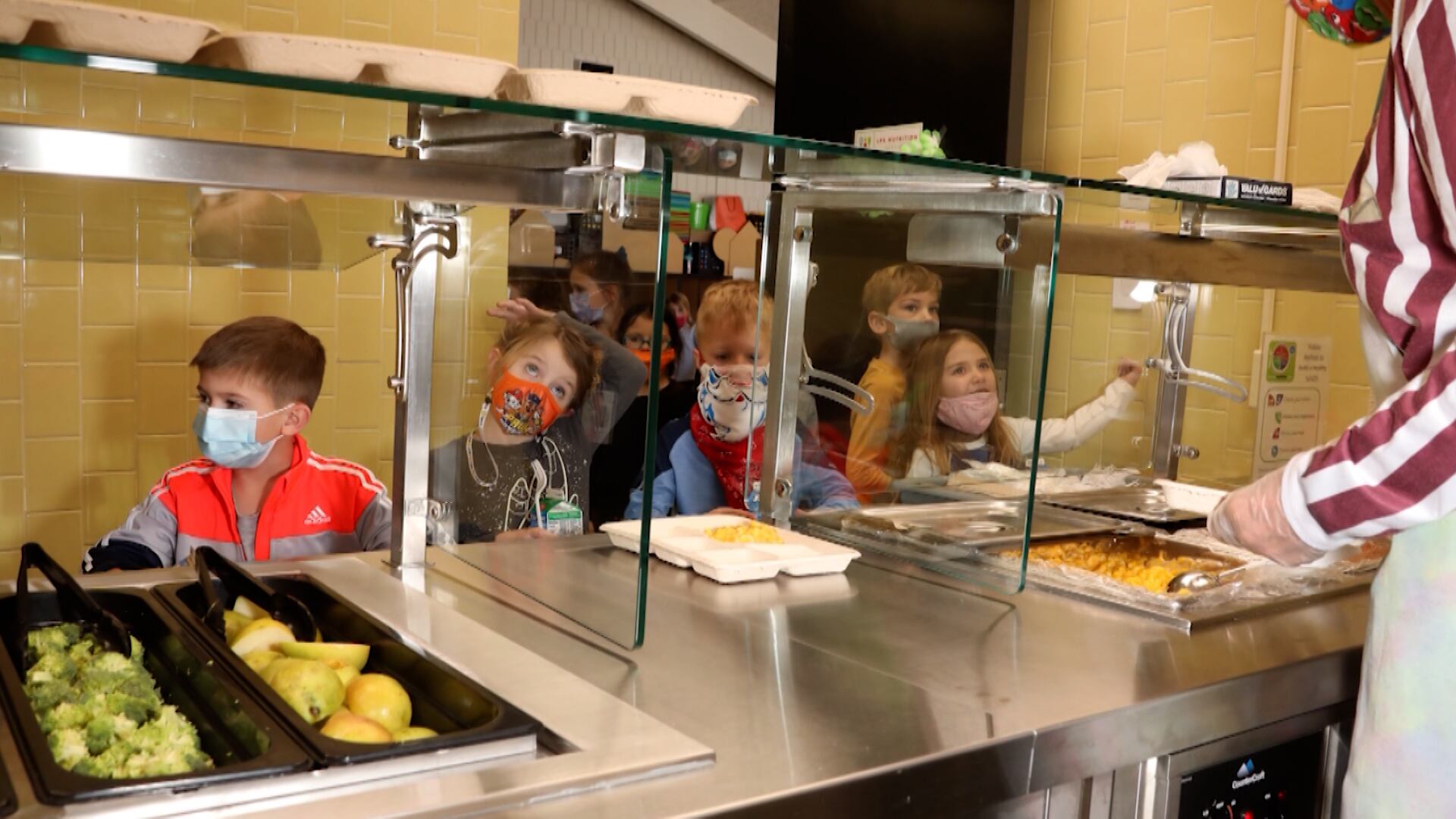
School nutrition experts warn that millions of children could go hungry as soon as this summer, after Congress excluded waivers that would extend universal lunch for children in school from the $1.5 trillion omnibus spending bill. Cheddar News speaks with Jessica Gould, chair of the public policy and legislation committee at the School Nutrition Association, about the issue.
The ongoing semiconductor chip shortage has been impacting everything from the purchase of cars to smartphones. Deputy Commerce Secretary Don Graves spoke with Cheddar about the Biden administration's efforts to combat the issue and if the current crisis in Ukraine will have any impact on the global supply chain problems for semiconductors. "We're working very closely with all of our partners and allies around the globe, just as we have on the export controls and sanctions that we've applied to Russia to deal with that needless aggression," he said. "We're also working with them on the challenges of raw materials for a range of industries, including the semiconductor industry. We believe that we are going to be able to meet the demand for the for the near term."