As U.S. Readies Chinese Import Tax, Worries of Economic Impact Loom Large
*By Alisha Haridasani*
The first round of tariffs for American and Chinese goods goes into effect on Friday, officially plunging the two countries into a trade war that could end up undermining the U.S. economy.
The Trump administration is poised to impose taxes on $50 billion of Chinese imports in high-tech industries, such as robotics, aerospace, and industrial machinery, in an attempt to punish Beijing for intellectual property theft and to rebalance a trade deficit. The first phase of that will affect $34 billion worth of goods.
"The United States will be opening fire on the whole world and also opening fire on itself," said China's Commerce Ministry spokesperson on Thursday, reiterating that Beijing will fight back.
China has promised to immediately hit back with tariffs of “equal scale, equal intensity” on American soybeans, corn, wheat, rice, beef, and poultry.
President Trump announced the tariffs in June and since then the U.S. and China have been locked in a series of threats and negotiations that have rattled markets.
The back-and-forth has already forced companies to rethink their strategies. Chinese companies have started turning away from U.S. soybean suppliers and looking to other sources for agricultural products.
“Farmers in America’s heartland are already feeling the pain,” said Sara Hsu, economist and associate professor at SUNY-New Paltz. “Consumers can expect to feel the pain in the coming months.”
And enduring the pinch isn't going to pay off. Protectionism has historically proven to be destructive for the global economy and won’t achieve what the Trump administration is trying to accomplish, said Hsu.
The tariffs will hurt the American high-tech companies that Trump is trying to protect from intellectual property theft as it becomes increasingly difficult for those companies to do business in China, she said.
“Also, in terms of reducing the U.S.-China deficit, this is a point that I think the administration misunderstands,” she said. “A deficit is actually a good thing for the U.S. because we’re the world’s biggest economic power, and other countries are willing to hold our debt,” said Hsu. Reducing the deficit would signal that the global economy shouldn’t be investing in U.S. debt.
“We’re going to reduce our own power, it’s going to backfire on us.”
The trade spat with China is part of the president’s broader plan to renegotiate American trade deals with other countries. The U.S. has already levied tariffs on steel and aluminum imports from Canada, Mexico, and the EU, angering those allies and prompting them to retaliate.
Shots fired on that front have already claimed one American victim: Harley-Davidson. The motorcycle company announced last month it would move production out of the U.S. to get around the EU’s retaliatory tariffs.
For full interview, [click here](https://cheddar.com/videos/china-warns-u-s-on-trade).
Even as tech giant Google implements a vaccination mandate, charging its employees to declare their vaccine status within a time frame or risk dismissal, the federal government is tangled up in the court system trying to impose one of its own. Cindy Cohn, the executive director of the Electronic Frontier Foundation, and Harry Nelson, founder and managing partner of Nelson Hardiman LLP, joined Cheddar to debate the ethics, efficacy, and legality surrounding the issue. While Cohn noted that she thinks the federal mandate might be legally sound, her organization is also concerned with a separate question of privacy. "At EFF what we're most interested in is the digital surveillance that's going along with some of these attempts to try to track and confirm whether people are vaccinated or not," she said.
A new report from CNBC says Instagram recently reached a new milestone -- 2 billion monthly active users. It comes amid a year of controversy for the photo-sharing app and its parent company, Meta. SocialFlow CEO Jim Anderson joins Cheddar News' Closing Bell to discuss.
There is a new way for investors to bet on cannabis - the AdvisorShares Poseidon Dynamic Cannabis ETF targets about 20 of the biggest names in U.S. cannabis. It comes at a time when it's still difficult for investors to access the space. Cheddar News cannabis reporter Chloe Aiello spoke with co-founder and managing director for Poseidon Investment Management, Emily Paxhia.
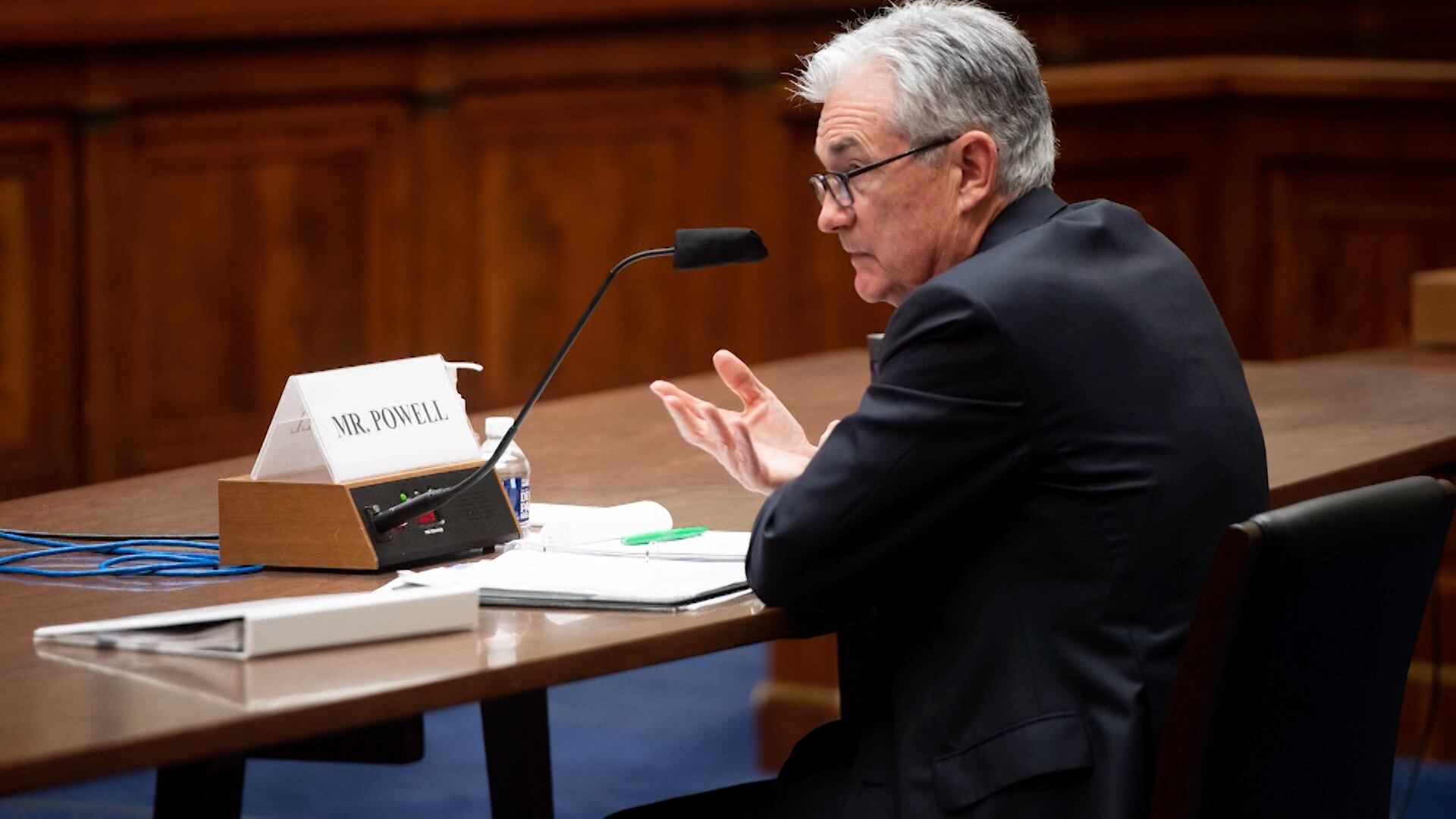
Victor Li, an economics professor at the Villanova School of Business, joins Cheddar News' Closing Bell, where he discusses the latest Fed decision and the implications it has on the stock market.
After nearly two years of the pandemic, U.S. consumers are ready to spend big this holiday season. However, shoppers may be faced with limited inventory as the U.S. continues to face shortages of key products and extended order backlogs. Per Hong, partner at consulting firm Kearney, joined Cheddar's Opening Bell to discuss the country's path forward.
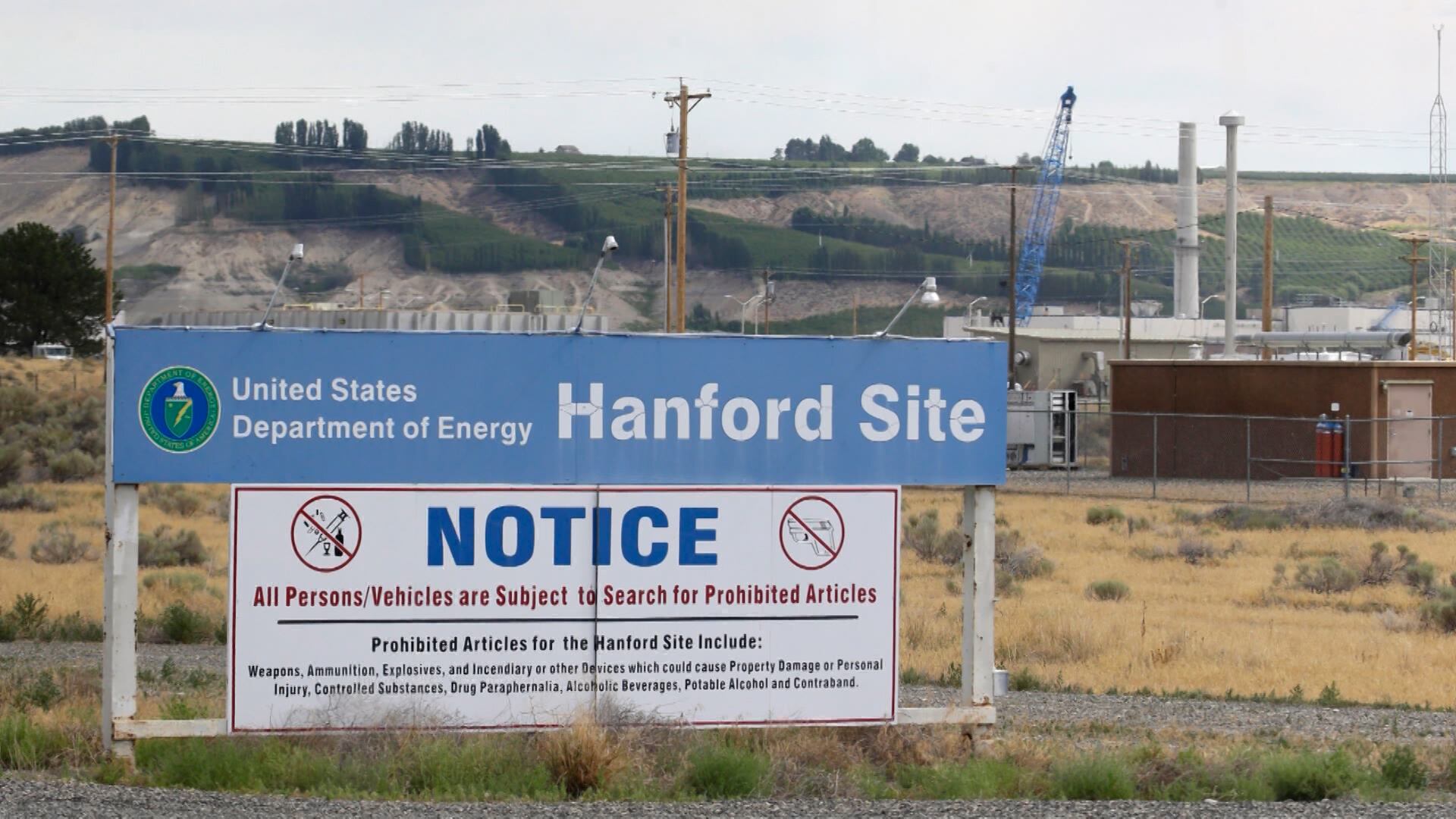
The U.S. Government is making its first major move toward encouraging nuclear energy in the U.S., as it pushes toward a sustainable future. Scott Waldman, White House reporter for Politico's E&E News joined Cheddar News to break down the developments. "There's definitely an audience for this now since we're looking at the value of nuclear in terms of climate policy," he said, regarding the prospects for bipartisan support.
CEOs of the top U.S. airlines are set to testify in front of a Senate committee Wednesday. Lawmakers will ask airline executives about how they used pandemic-related federal aid, specifically in light of staffing issues and widespread cancellations. Among those expected to participate are the CEOs of American, United, and Southwest Airlines. David Slotnick, Senior Aviation Business Reporter at The Points Guy, joined Cheddar News to discuss.
Carlo and Baker cover the latest data showing the Omicron wave has likely started, Pfizer's Covid pill, Jan. 6 and a box office rescue attempt courtesy of Spider-Man.