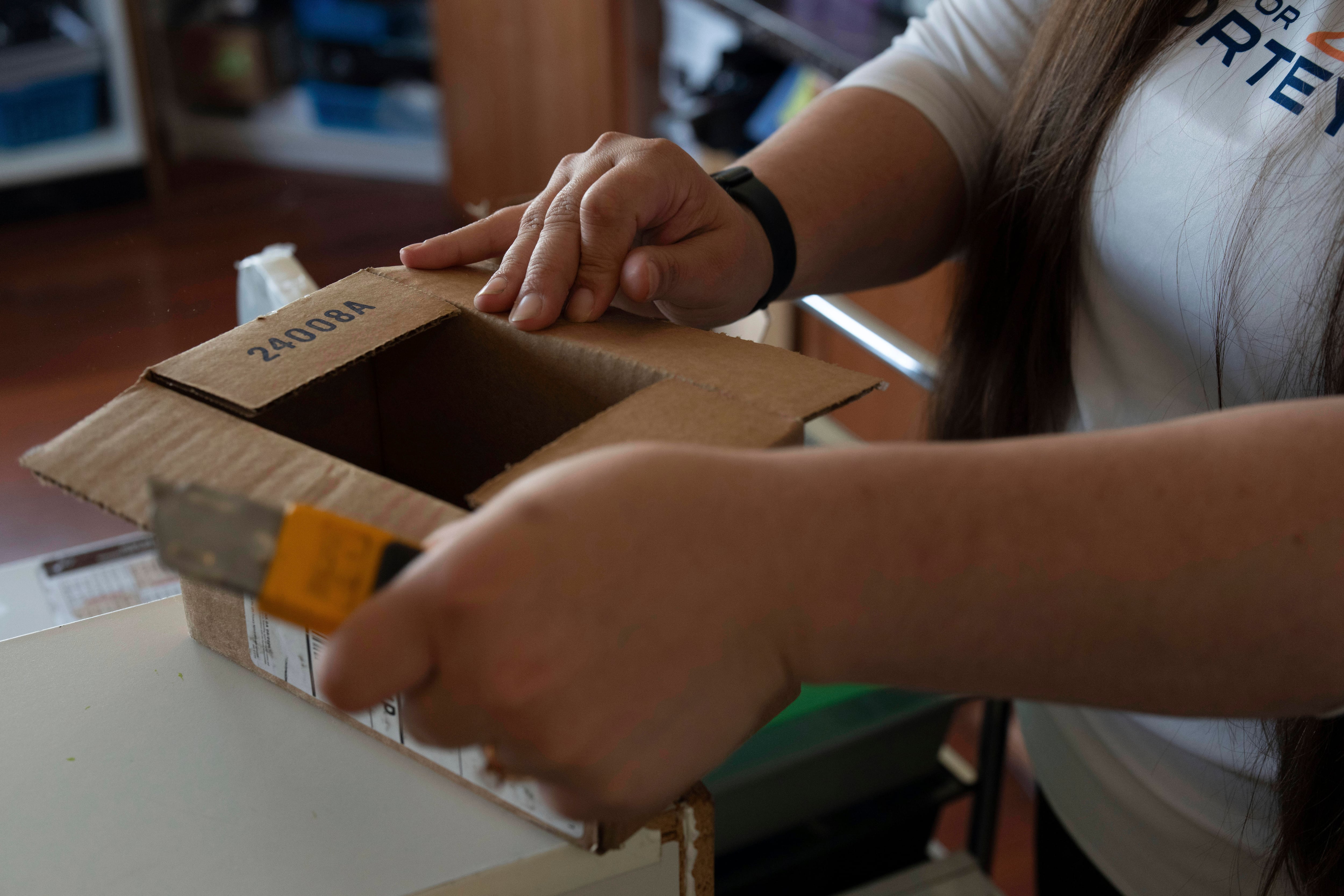
McDonald's franchisees that operate 62 locations across Kentucky, Indiana, Maryland, and Ohio are facing more than $212,000 in fines for child labor violations. The details of the offenses shocked the nation, with some children as young as 10 years old working until as late as 2 a.m. But child labor violations are increasingly common — and lawmakers across several states are working to weaken protections at the state level.
"This has to be viewed on largely as simply the latest multi-industry attempt and moment of opportunity that they're seeing where they have very significant influence in some state legislatures to, once again, try to roll back standards," Jennifer Sherer, Economic Policy Institute senior state policy coordinator, told Cheddar News.
The number of instances of child labor exploitation has surged in recent years. There were 1,012 minors found to be employed in violation of labor laws in 2015 and 355 employed in violation of hazardous occupation orders that year, according to the Economic Policy Institute. Hazardous occupation orders are intended to prevent kids from working dangerous jobs like mining, roofing, or working with heavy machinery. By 2022, 3,876 minors were found to be working in violation of labor laws and 688 in violation of hazardous occupation orders.
Three McDonald's franchisees are a recent high profile example of the issue. In some cases children were tasked with dangerous jobs like operating a deep fryer or the drive through, according to the U.S. Department of Labor.
Tiffanie Boyd, a senior vice president and chief people officer at McDonald's, called the reports "unacceptable" and "deeply troubling," adding that, "We are committed to ensuring our franchisees have the resources they need to foster safe workplaces for all employees and maintain compliance with all labor laws."
But McDonald's is not the only company found to have been violating federal law.
A GROWING TREND
Chipotle in 2020 paid $1.4 million to settle a Massachusetts lawsuit that alleged it had more than 13,000 child labor law violations between 2015 and 2019, The New York Times reported. The chain in 2022 agreed to pay $7.75 million to settle a Department of Labor investigation that found more than 30,000 violations across New Jersey, according to New Jersey Monitor. Packers Sanitation Services, which places workers in jobs at meatpacking facilities owned by Tyson, Cargill, and others, paid a $1.5 million fine for placing children as young as 13 years-old in dangerous jobs, according to the Labor Department. At least three children were injured while working risky jobs that required them to work overnight shifts and clean hazardous equipment. And, children as young as 12 and 13 were found working in Hyundai-Kia factories or suppliers in Alabama, Reuters reported.
Some of the children working in Hyundai and meatpacking factories were migrants — and Sherer said that's no accident.
"Our broken immigration system incentivizes and sanctions the ability of employers to exploit particularly vulnerable youth who are in some cases caught in the backlog of our asylum system," Sherer explained.
Nearly 130,000 unaccompanied migrant children arrived at the U.S. Border just in 2022, according to CBS News. Many are eligible for asylum, but have been unable to receive work permits or social services right away due to a backlog in the asylum application system. As of December, there were almost 1.6 million individuals awaiting asylum hearings, which is a record, according to TRAC Immigration, a quick facts tool from Syracuse University. Lack of support has made these youth vulnerable to exploitation.
STATES WEAKEN PROTECTIONS
As startling as these violations have been, lawmakers in some states are working to make it even easier for companies to employ children at a time when the labor market is tight and wage demands are rising.
In the past two years, at least 10 states have introduced or passed bills designed to roll back child labor protections across the U.S. Just in 2023, Republican Gov. Sarah Huckabee Sanders of Arkansas signed a bill making it easier for employers to hire 14- and 15-year-olds, according to NPR. Iowa Gov. Kim Reynolds, also a Republican, has expressed her intention to sign a bill that would allow kids as young as 14 to work risky jobs like roofing and construction while eliminating hour restrictions for 16- and 17-year olds, the Washington Post reported, and Ohio is also poised to pass a bill that would allow 14- and 15-year-olds to work as late as 9 p.m. on school nights with the permission of their parents or guardians.
Sherer said the goal of some local lawmakers is to weaken federal laws to match those being enacted at the state level. But the challenge, she said, also represents an opportunity to rethink enforcement.
"The spotlight being shown on the problem and the increase in really troubling violations is also raising the question of what are some of the problems in our enforcement system? What are some of the weaknesses in our existing laws that actually we should have been addressing a long time ago," she posed.
Possible strategies for lawmakers, proposed by the Economic Policy Institute, include increasing penalties for child labor violations, increasing funding to enforcement agencies, raising the overall minimum wage and eliminating substandard minimum wages for kids, as well as reforming immigration.
"Hopefully the dialogue that parents, policymakers and concerned voters are having about this right now will result in some improvements, rather than weakening laws and really legalizing the kinds of troubling violations that we're seeing going on right now," Sherer said.