Mikey Coale knows how to take cultural inspiration and then serve it up as a delicious ice cream treat. He's created flavors based on Jay-Z, Hillary Clinton, and Foxy Brown, as well as Southern hospitality and the Incredible Hulk.
But during the pandemic he found himself having to be creative in a different way: How to make enough money to keep his Manhattan and Harlem, New York-based Mikey Likes It ice cream shops alive. So, he went back to his employees, promising that if they continued to hustle they could make it through this crisis.
"I decided to say, 'guess what, guys, If you believe in me standing tall, I need you guys to come to work, and we're going to make it work,'" Coale said.
Part of that meant hand-packing ice cream tubs and taking orders via Facebook Messenger. From that point, Mikey and his team would personally bring their treats to customers.
"When people saw myself genuinely delivering ice cream, they understood the struggle that we're in," Coale said. "And through COVID, we got in cars, and we got them their ice cream."
Businesses across the U.S. are hurting because of pandemic restrictions and the public health crisis, but there is evidence minority-owned businesses have suffered the most. According to a recent Facebook study, 70 percent of businesses owned in majority-minority areas that reported lower sales have experienced a decline of about 50 percent during the pandemic. More than one-third of companies in those areas have shut down, higher than the 22 percent rate in non-minority communities.
Black-owned businesses, in particular, have been hit hard. Previous existing issues like lack of relationships with banks and lower business savings have been further exacerbated by the coronavirus crisis, according to the Federal Reserve Bank of New York. Black-owned establishments are also more likely to be in COVID-19 hotspots, and aid is also scarce, with the government PPP Loan program only reaching 20 percent of eligible businesses in states with the highest number of black-owned businesses.
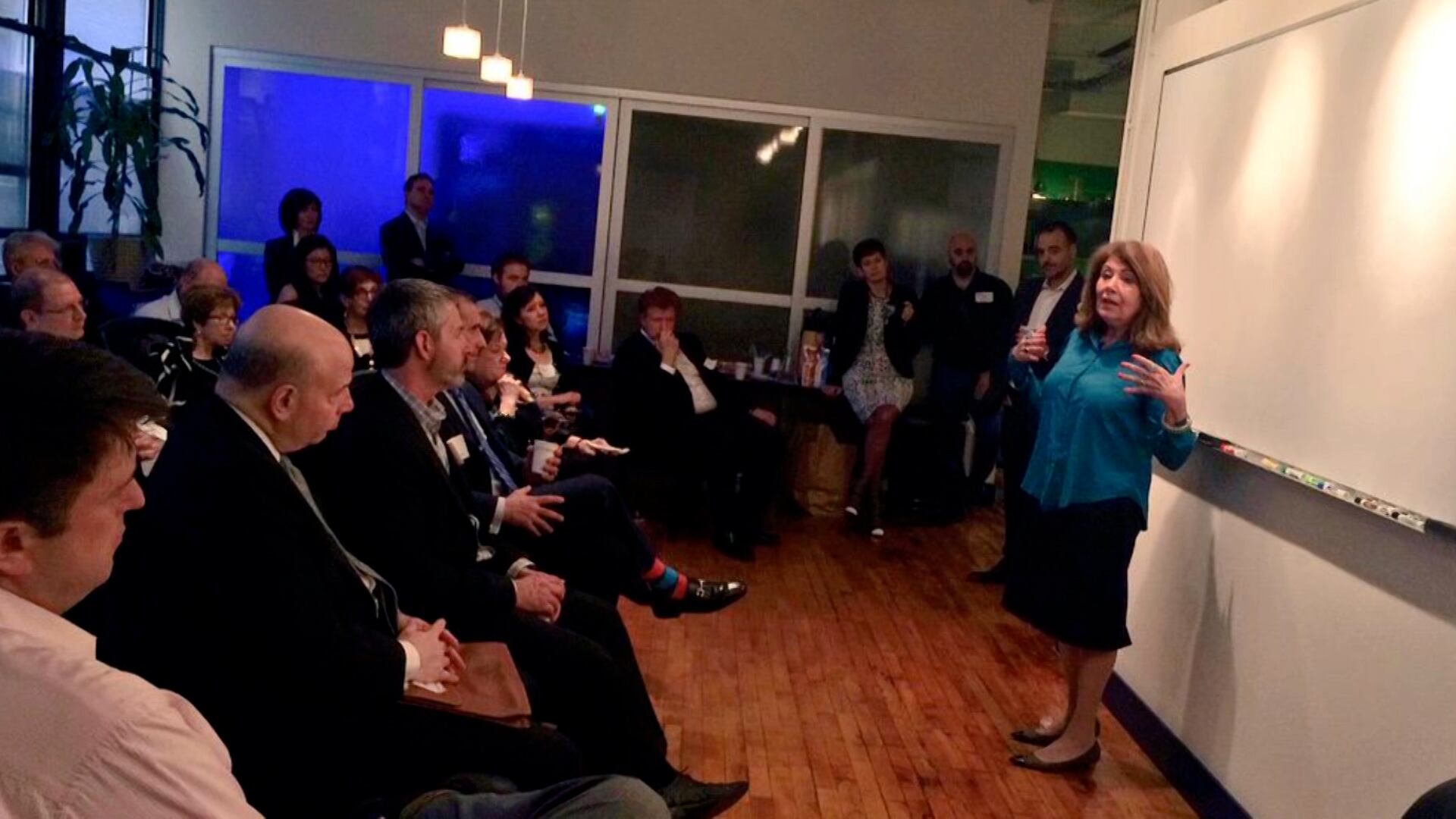
"Realistically a lot of them were suffering from not having enough capital," said Facebook Elevate program director Irene Walker. "They are seeing their doors closed, opened up, back and forth."
Walker founded Facebook Elevate, a free training program for Black and Latino-owned establishments to teach them how to use online marketing tools. It's become especially important during the pandemic, as many businesses have to pivot online to continue. Facebook has also given $200 million in grants through June 2020 to Black-owned businesses, creators, and nonprofits to help them survive at this time.
"Once you can master the skills of using them, you can almost use any platform to market your business," she said. "And our whole goal is for these businesses to be successful regardless of platform."
Walker was inspired by her father's own journey as a physician who set up a private practice.
"As I was seeing the decline in Black-owned businesses that I also frequented, it brought to mind these memories I had of my father who was also an entrepreneur," she said. "He also had a hard time accessing resources to build his business."
Vanity Beauty Bar in Flatbush, Brooklyn, already had many setbacks that they had to persist through. After finding it difficult to secure loans, best friends Patrick Celestin and Dave Gachelin decided to invest their own money and labor into their vision of a nail salon that was accepting to all women in the neighborhood they grew up in.
"Opening a business in your community essentially was something that has been an aspiration of mine, and the fact that we were able to do it is just one of the goals I was able to complete," Celestin said.
But a fire and other city inspections delayed their opening from May 2018 to 2020. They had to fix numerous violations that they were unaware of when they rented the location and rehire staff. Then the pandemic hit, and they had to start again from scratch.
"The court of public opinion is something we all faced," Gachelin explained. "They already rendered their decision on the nail salon industry…. The state of New York kind of vilified in-person services, gyms."
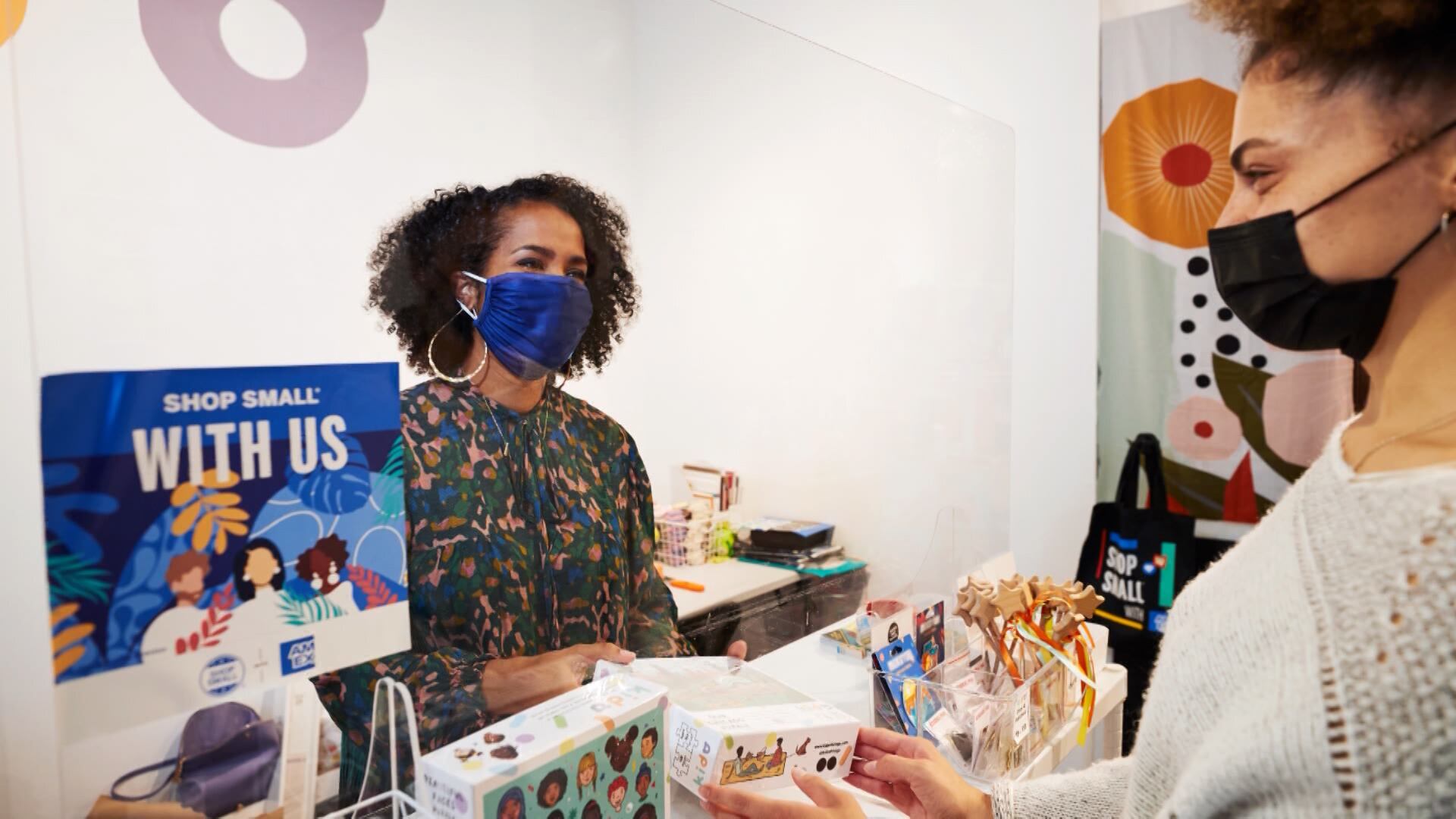
Luckily, Celestin and Gachelin were able to secure one of the Facebook grants, which allowed them to pay off debt and buy some PPE including plastic shields, hand sanitizers, and other equipment that would allow them to operate within state guidelines. They also digitized their appointments through a Square pilot program, which helped them organize and ensure social distancing and accept non-cash payments.
They're also thriving thanks to the neighborhood and its support, Celestin pointed out.
"The community is very tight-knit, so we support each other," he said. "And what people fail to understand is that without supporting the businesses in the community, there's no way we're going to survive."
Mikey Likes It Ice Cream's Coale added that if you stick to your vision even through the tough times, anything is possible.
"Survival is definitely key," he said. "We're struggling just like everybody else is. The difference is we're staying persistent and dedicated to our message."