The end is nigh.
Members of the Electoral College are set to meet Monday to cast their votes for president and vice president. Given that every state and Washington, D.C., have certified their presidential vote totals, Joe Biden is set to win a majority of electoral votes.
And then the election is effectively over.
But despite all the major news networks calling the election for Biden within a week of Election Day, President Trump and his allies have employed nearly every tool at their disposal to try to overturn the election result.
They filed upwards of 50 lawsuits claiming massive fraud without evidence. They tried and failed to persuade state-level officials to overturn election results or appoint new slates of electors. They are still trying to get results thrown out in key states that Trump lost.
The Electoral College vote will make all these defeated attempts moot. But it is precisely because of the Electoral College system itself that the president and his campaign could pursue some of these efforts, and may have succeeded in different circumstances.
How We Got the Electoral College
A Google search for “electoral college” returns a box labeled “People also ask” in which the top questions are “What is the point of the Electoral College?” and “Why did they create the Electoral College?”
The answer taught in schools is some combination of “protecting the small states” and preventing “tyranny of the majority.”
Jesse Wegman, author of “Let the People Pick the President,” which recounts the history of the Electoral College and argues for reform, said that when you actually look at the history and what the Founding Fathers were saying at the time, that image from school begins to fall apart.
Documents from the Constitutional Convention show that there was not a philosophical and deliberative process to come up with the system to elect the president. An office like this had never existed before. They spent time debating it but ultimately could not coalesce around one proposal. Instead, they put off the decision until nearly the end of the convention, leading to a hasty decision on the final framework of the Electoral College.
“They wanted to leave Philadelphia,” Wegman said. "They needed the document to be finished. They knew that they were rushing up against a deadline.”
Another factor influencing the framers was the relative certainty that George Washington would be the first president. His fitness for the office was one of the few points of broad consensus.
One of the other chief concerns the framers had was the lack of information available to the average voter at time of the founding of the country. The United States started out as a largely agriculture-based society with no mass communication. The average voter was not going to know a great deal about national political candidates, so leaving that ultimate decision up to an informed, deliberative body of statesmen (electors) seemed appealing.
The framers also had to adopt a system that the southern slave states would agree to adopt. The South had already exercised its influence on the Three-Fifths Compromise and was never going to agree to a popular vote.
Ultimately the Electoral College came together and became much like the Constitution itself: a messy compromise.
“I think that may not be satisfying," Wegman said, “because people want to understand more. Why do we have an Electoral College? But a big part of the reason was fatigue and frustration and just needing to be done with the document. It was one of the very last things they did.”
How the Electoral College Works
The system the framers came up with gives each of the states a number of electors equal to their representation in Congress: all House seats plus two Senate seats. Later, Washington, D.C., was given three electoral votes to match some of the smaller states, though it does not have Senators or a representative with full voting privileges.
The biggest feature of the college is that it is decentralized. Under the Constitution, state legislatures have all the power to decide how each state’s electors are chosen. So technically, the people themselves have no explicit role in choosing the president in the text of the Constitution. It just so happens that over the course of the nation’s history, each state put the power into the people’s hands and tied the allocation of electors to the popular vote in each state.
It creates somewhat of an illusion that the people pick the president when they actually vote for a slate of electors that the winning political party in each state picked some time before the general election. Most states also have a “winner-take-all” rule where the winner of the statewide vote gets all the state’s electors. Rules like that, Wegman said, renders votes for the losing candidate entirely meaningless.
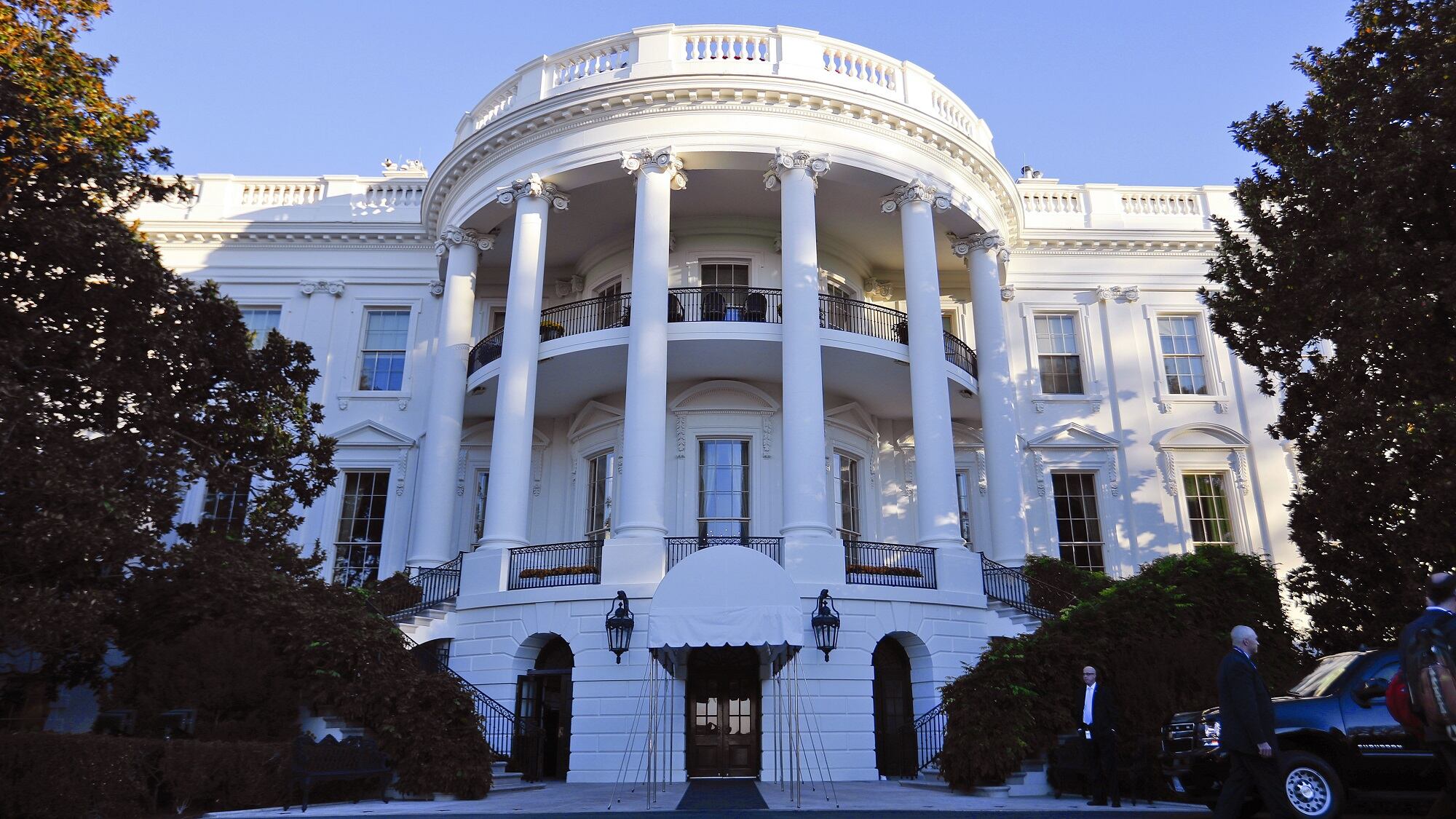
It’s that state-level mechanism that made Trump’s post-election efforts somewhat plausible. It was a big deal that he invited Republicans in the Michigan legislature to the White House because it is theoretically within their power to change the rules of how presidential electors are chosen in the Great Lakes State. The problem is that if the Michigan lawmakers decided to go along with the president's plan, especially after the vote in the state was done, it would likely have drawn legal challenges and massive public backlash.
But experts say the fact that this was even a question should concern us.
“Many things that were theoretical have become concrete prospects,” said Amel Ahmed, an elections expert and associate professor of political science at the University of Massachusetts Amherst. “On all sides we see people pushing boundaries of what is possible within the confines of the law. It pushes our institutions to a point where people feel like the rules they play under are not sustainable.”
Advocates for reform, like Wegman, point to alternatives like the National Popular Vote Interstate Compact and say they create a simpler, more just, and more democratic process. They also argue that a popular vote would force presidential candidates to broaden their focus and compete for votes in a way that would end the idea of “swing states” as we know it today.
“The presidency is the only office who has to represent all Americans everywhere equally, no matter where they live,” Wegman said. “The president is not the president of the states. The president is the president of the American people. So it's the people who should be electing that office.”
Others who defend the Electoral College, like Ahmed, argue that the college serves as a valuable function for consensus-building and forces candidates to win voters with a wide diversity of interests. Ahmed also said that while it is natural to reach for institutional reforms when certain actors try to stretch them, that does not ultimately prevent future shenanigans.
“When we get into situations like this and we see new uses of established institutions, people rightly get nervous and it’s natural to reach for institutional changes,” she said. “Changing the institution doesn’t make that disappear. It doesn’t make it so that next time there won’t be a creative way around the institution. If you see a political pathology at the base of this, an institutional fix won’t help.”
What’s Next in the Process?
Electors in all 50 states meet Monday to cast their votes for president and vice president. Every state except for Maine and Nebraska awards all their electors to the winner of the popular vote in their state. The other two award one vote for the winner in each congressional district and two for the statewide winner.
If no electors defect (which may happen, but not likely in a big enough way to change the result), Biden will win the electoral vote 306 to 232. President Trump won the same margin on Election Day in 2016, but seven faithless electors voted for candidates other than Trump and Hillary Clinton, making the final vote 304 to 227.
After the Monday vote, the electors send several “Certificates of Vote” to a few different places, including the National Archives and state Secretaries of State. But the most important of those places is Congress, since the House and Senate will ultimately count the votes on Jan. 6, 2021, in a joint session and confirm Biden as the winner.
There is potential for some final shenanigans from Trump’s allies in Congress, though. Rep. Mo Brooks of Alabama promises to challenge the Electoral College votes from several states. To be clear, it is not normal for that to happen, but it also will not work.
First, during Congress’ count, both a representative and a senator must object to a state’s electoral votes. If that happens, the count stops for up to two hours while the House and Senate consider the objection separately. That’s where Brooks’ plan fizzles because to reject a state’s electoral votes, both chambers have to agree, and the Democratic-controlled House will almost certainly not.
In short, the most congressional Republicans can do after the Electoral College vote is delay Biden’s inevitable victory by a few hours. He won a majority of Electoral College votes and will be inaugurated on Jan. 20.
And then, truly then, the election will end.