The state of Arkansas sued TikTok and Facebook parent Meta on Tuesday, claiming the social media companies were misleading consumers about the safety of children on their platforms and protections of users' private data.
The state filed two lawsuits against TikTok and its Chinese parent company ByteDance and a third lawsuit against Meta, which also owns Instagram, accusing the companies of violating the state's deceptive trade practices act.
“TikTok is a wolf in sheep's clothing,” one of the lawsuits, filed in state court, said. “As long as TikTok is permitted to deceive and mislead Arkansas consumers about the risks to their data, those consumers and their privacy are easy prey.”
Gov. Sarah Huckabee Sanders and Attorney General Tim Griffin, both Republicans, announced the lawsuit as TikTok faces growing questions about the safety of its users' data. Both the FBI and officials at the Federal Communications Commission have warned that ByteDance could share TikTok user data with China's authoritarian government.
One of Sanders' first moves after she was sworn in as Arkansas' governor in January was to sign an executive order banning TikTok from state devices.
One of the lawsuits claims that TikTok isn't taking proper steps to protect minors who use the platform from inappropriate content, including sexual content and material depicting drug or alcohol use. TikTok did not immediately respond to an email requesting comment Tuesday.
“We have watched over the past decade as one social media company after another has exploited our kids for profit and escaped government oversight,” Sanders said in a statement released by her office. "My administration will not tolerate that failed status quo.”
The lawsuit against Meta accuses the company of manipulating Facebook to maximize the amount of time that young people spend on the platform, which it says has helped fuel mental health problems among the state's youth.
Meta on Tuesday outlined steps it has taken to protect teens on its platforms, including age- verification technology and technology that finds and removes content related to suicide, self-injury or eating disorders.
“These are complex issues, but we will continue working with parents, experts and regulators such as the state attorneys general to develop new tools, features and policies that meet the needs of teens and their families,” Antigone Davis, Meta's head of safety, said in a statement.
Indiana last year filed a similar lawsuit against TikTok, claiming the video-sharing platform misleads its users, particularly children, about the level of inappropriate content and security of consumer information. Seattle's public school district in January also sued the tech giants behind TikTok, Instagram, Facebook, YouTube and Snapchat, seeking to hold them accountable for the mental health crisis among youth.
Sanders is also backing a bill advancing in the Arkansas Legislature that would require parental permission for anyone under 18 to use a social media site. The proposal, which a Senate panel endorsed on Tuesday, would require social media sites to verify a user's age.
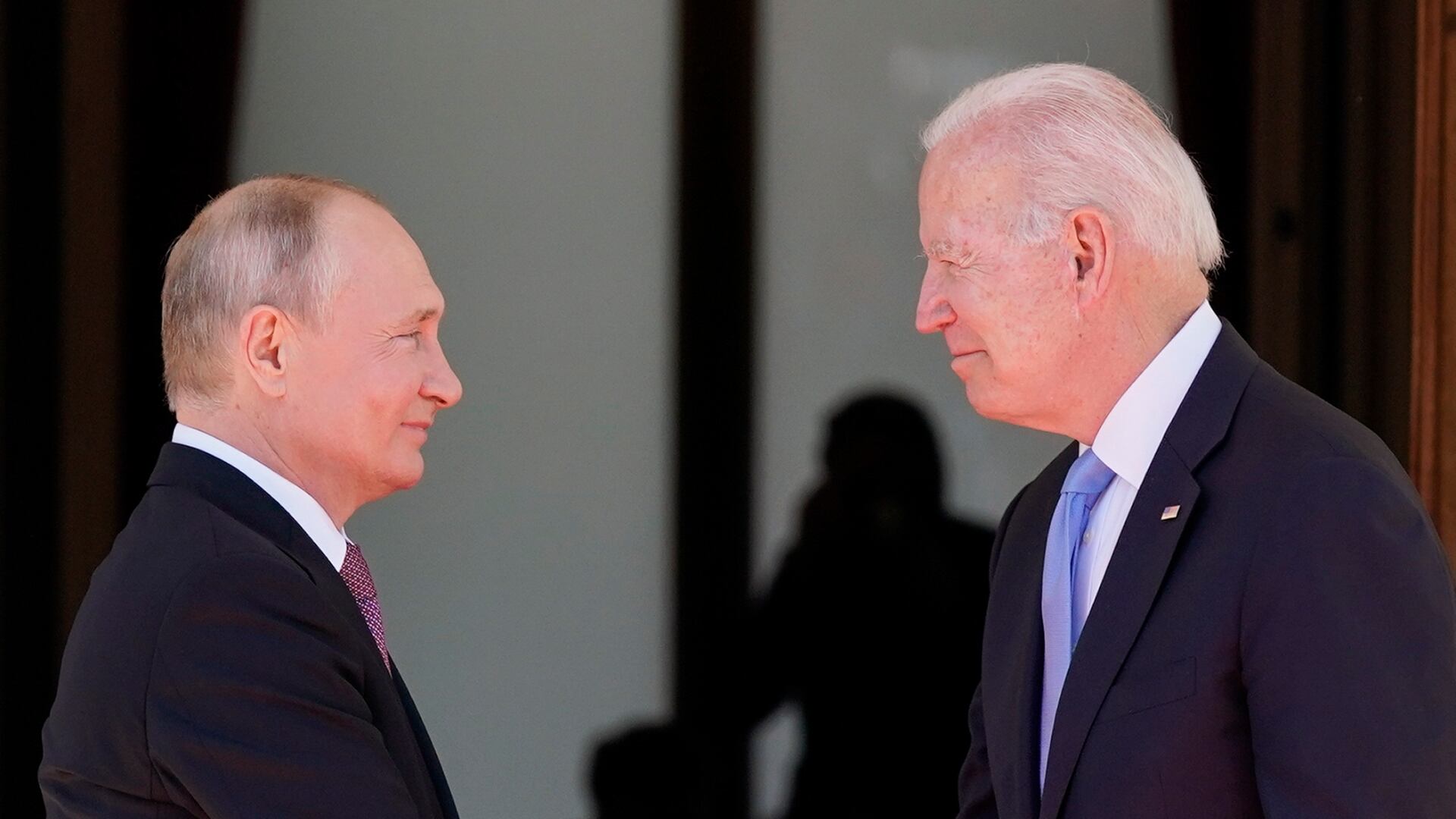
Face to face for just over two hours, President Joe Biden and Russia’s Vladimir Putin squared off in a secure video call Tuesday as the U.S. president put Moscow on notice that an invasion of Ukraine would bring enormous harm to the Russian economy.
Ahead of Instagram head Adam Mosseri's congressional hearing on the mental impact of the social platform on teens, the company announced a number of updates aimed at teen safety.
Troubled Chinese real estate giant Evergrande is once again nearing the brink of collapse. Shares of Evergrande sunk to a new record low on Monday, closing down 20 percent, as debt default fears resurfaced. Drew Bernstein, co-chairman at consultancy MarcumBP, joined Cheddar's Opening Bell to discuss. He said U.S. investors have to understand that "there is no company in China that's too big to fail, that's for sure," and that the Chinese government will be prioritizing the social welfare of the populace. Bernstein did note that it would be a managed collapse in some form.
Joan Greve, a politics reporter at The Guardian US, joined Wake Up With Cheddar to break down the implications of the Biden administration announcing a diplomatic boycott of the 2022 Beijing games in response to allegations of human rights abuses against Uyghur Muslims. She noted the significance of the move, assessing the already frayed relationship between the U.S. and China. "The Chinese have said that a boycott would be politically manipulative, and now they are actually threatening countermeasures," she said. "And that will certainly have an impact on the spirit of the games at the very least."
The Biden administration has reached an agreement with the Mexican government to resume the "Remain-in-Mexico" policy under court order. By reinstating a Trump-era border policy, asylum-seekers will be forced to stay in Mexico until their U.S. immigration court date. The program is set to resume on Monday. Ryan Devereaux, a reporter for The Intercept, joins Cheddar News to discuss.
The U.S. announced it will not send any official representation to the upcoming Beijing winter Olympics. Cheddar's Hena Doba speaks with East Asia expert Michael Swaine about the reasons behind the diplomatic move.
COVID-19 is still battering the nation's criminal justice system, causing a massive backlog in cases and delaying verdicts for months on end. This, combined with the fear of crowded prisons during a pandemic, has prompted many defendants to plead guilty in exchange for time served or probation. Tina Luongo, attorney-in-charge of the Criminal Defense Practice, joined Cheddar to discuss the court backlog, the rise in plea bargains, and why this was an issue long before the pandemic.
With so many high-profile court cases taking over the media, from the trial over the murder of Ahmaud Arbery to the trial of Kyle Rittenhouse to the ongoing Elizabeth Holmes trial, Cheddar took a look at these cases and why there is such a big interest in them. Rachel Fiset, a white collar criminal defense lawyer and partner with Zeiback, Fiset, and Coleman, and Bryan Hance, attorney-at-law, professor, and academic program director of the pre-law and paralegal studies program at National University, joined Cheddar for a roundtable discussion on why there is so much public interest in so-called courtroom drama.
Carlo and Baker discuss the sweeping new vaccine mandate in NYC that will target all private businesses. Plus, Trump's media venture gets its CEO and more.