As Arkansas emerges as one of the states with the highest per capita COVID-19 deaths, Governor Asa Hutchinson on Thursday defended his decision to keep much of the economy, including schools, open during the pandemic.
"It's all about maintaining a balance through the last year, and we never shut down our economy in Arkansas — [I] did not think that was the right decision," Hutchinson told Cheddar.
The University of Arkansas for Medical Sciences released a report on Tuesday that the state — with a total of 5,273 COVID deaths as of March 5 — has a higher per capita death rate than hard-hit states such as New York, Texas, Florida, and California
The governor, however, made the case that the state's higher death rate was not related to its pandemic response, but rather existing health indicators throughout the U.S. South.
"When you talk about the great tragedy of the death rates, that's sad," he said. "It's something that we want to avoid, but obviously when you look at the Southern states there's some health indicators that are not high on the scale, and I think history will look back and see exactly some of those reasons. But, I think we've maintained the balance through this here in Arkansas."
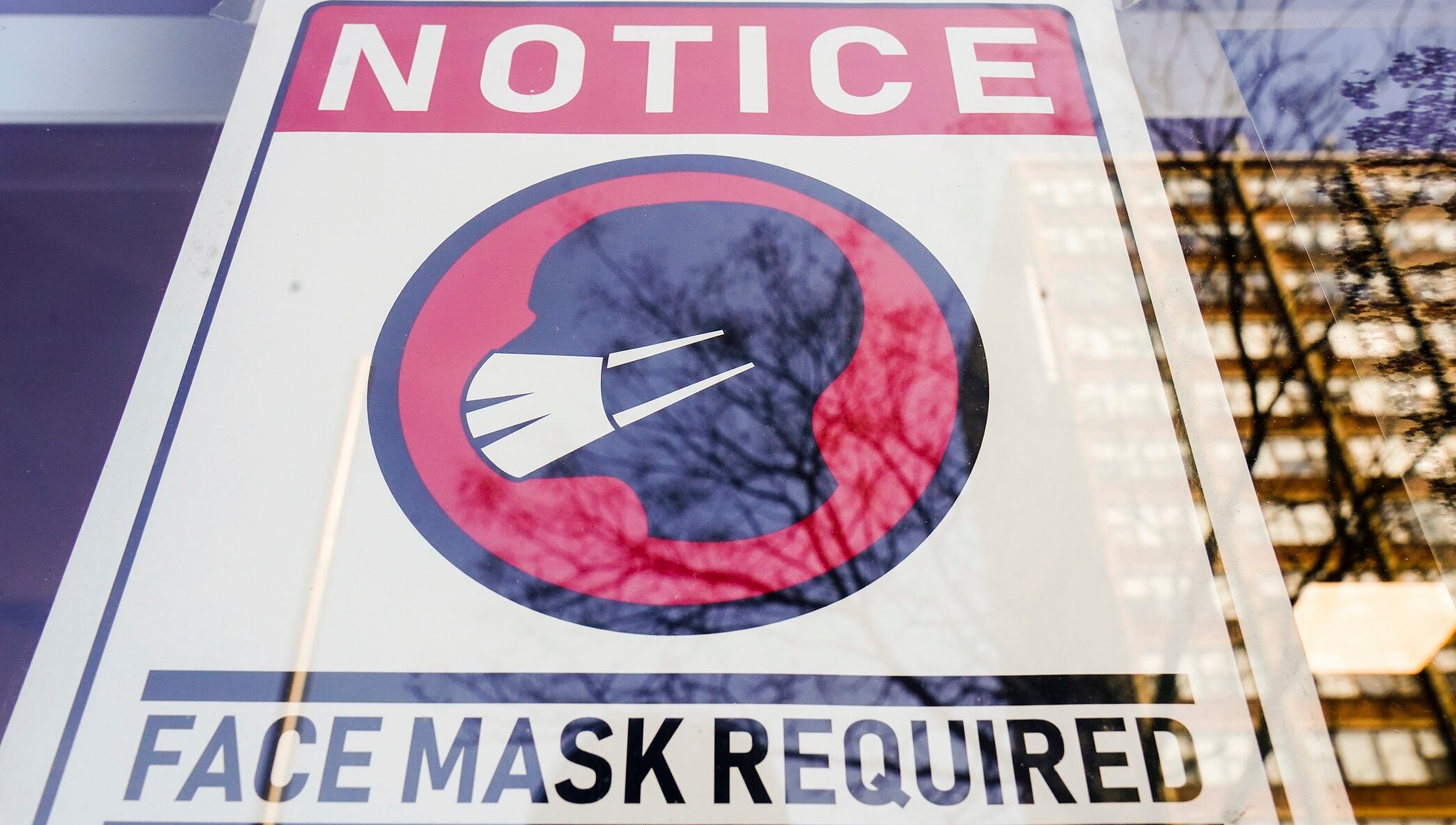
Hutchinson said he was aiming to end the state's mask mandate by March 31. At that point, the mandate would become guidance.
He noted that one criterion was the state reaching a positivity rate below 10 percent. The current rate is 2.9 percent.
The governor said private companies, however, will still have the right to mandate mask use, and that the state would incentivize them to follow the guidelines by offering liability protection.
"We also give them an incentive that if they follow guidelines, then they're going to have business liability immunity, so you can't be sued for somebody getting coronavirus if you're following the guidelines," he said.
Arkansas Near-Total Abortion Ban
Hutchinson also commented on his decision to sign a bill that represents a near-total ban on abortions in the state, including in cases of rape or incest, all but ensuring a challenge to Roe. v. Wade that could make its way to the U.S. Supreme Court.
While the governor had expressed support for those exceptions in the past, he said he signed the bill due to his overall pro-life stance and desire to bring a challenge in front of the conservative Court.
"This was designed to give a challenge to the Supreme Court and an option to reverse Roe versus Wade," he said. "Yes, I would have preferred to have the rape and incest exceptions in there. I think that would make it more amenable to the Supreme Court to review the case, because it has more popular acceptance, but in Arkansas, you can override the governor's veto by a simple majority vote."
The bill had overwhelming support in the state legislature, he added.
The Biden administration will significantly loosen federal mask-wearing guidelines to protect against COVID-19 transmission on Friday, according to two people familiar with the matter.
Russian President Vladimir Putin openly invaded the neighboring country of Ukraine on Thursday following weeks of overtures and discussions on keeping an incursion from happening. David Salvo, the deputy director for the Alliance for Securing Democracy, joined Cheddar to go into the Russian leader's motivations. "What I'm sure he understands is that his invasion of Ukraine in 2014 probably ended the discussion of Ukraine joining NATO, even if publicly we won't admit that, that's just the reality. And I'm sure that President Putin understands that," he said, noting that Putin could be using the taking of Ukraine territory as leverage to gain more security concessions from the West.
Following Russia's incursion into Ukraine, the U.S. is warning businesses and major banks to brace themselves for cyberattacks. Lester Munson, a senior fellow at the National Security Institute, joined Cheddar News to break down what this means for financial institutions “So we need to be concerned about not just intentional Russian hacks against American entities but also what Russia is doing in Ukraine. Those things can impact us as well," he said
After weeks of talks and posturing in hopes of staving off an attack, Russia invaded Ukraine on Thursday, an incident that has already impacted the global economy, including the U.S.. Jason McMann, head of geopolitical risk analysis for Morning Consult, joined Cheddar’s Closing Bell to break down what investors might do to prepare themselves as the crisis continues. "I think there are a few things that we have our eye on over at Morning Consult that could cause the situation to become a bit more severe or unstable as far as market outcomes would be concerned," McMann said. "One of those things would be if the U.S. and the EU kind of moved in concerted fashion to block Russia from the SWIFT transaction system. So, I would say that's one thing that would be worth keeping an eye on."
Alex Walker, candidate for Colorado's 3rd Congressional District, joins Cheddar News to discuss why he's running against Lauren Boebert and the inspiration behind his viral campaign ad.
Lisa Hagen, politics reporter for U.S. News and World Report, joins Cheddar News to preview what to expect from President Biden's State of the Union Address on March 1.
Minh-Thu Pham, co-founder of New American Voices, joins Cheddar News to discuss the organization and why new citizens are key to defending U.S. democracy.
Joel Willett, a former CIA operative, joins Cheddar News to discuss Russian President Vladimir Putin officially launching a "special military operation" in Ukraine