As Arkansas emerges as one of the states with the highest per capita COVID-19 deaths, Governor Asa Hutchinson on Thursday defended his decision to keep much of the economy, including schools, open during the pandemic.
"It's all about maintaining a balance through the last year, and we never shut down our economy in Arkansas — [I] did not think that was the right decision," Hutchinson told Cheddar.
The University of Arkansas for Medical Sciences released a report on Tuesday that the state — with a total of 5,273 COVID deaths as of March 5 — has a higher per capita death rate than hard-hit states such as New York, Texas, Florida, and California
The governor, however, made the case that the state's higher death rate was not related to its pandemic response, but rather existing health indicators throughout the U.S. South.
"When you talk about the great tragedy of the death rates, that's sad," he said. "It's something that we want to avoid, but obviously when you look at the Southern states there's some health indicators that are not high on the scale, and I think history will look back and see exactly some of those reasons. But, I think we've maintained the balance through this here in Arkansas."
Hutchinson said he was aiming to end the state's mask mandate by March 31. At that point, the mandate would become guidance.
He noted that one criterion was the state reaching a positivity rate below 10 percent. The current rate is 2.9 percent.
The governor said private companies, however, will still have the right to mandate mask use, and that the state would incentivize them to follow the guidelines by offering liability protection.
"We also give them an incentive that if they follow guidelines, then they're going to have business liability immunity, so you can't be sued for somebody getting coronavirus if you're following the guidelines," he said.
Arkansas Near-Total Abortion Ban
Hutchinson also commented on his decision to sign a bill that represents a near-total ban on abortions in the state, including in cases of rape or incest, all but ensuring a challenge to Roe. v. Wade that could make its way to the U.S. Supreme Court.
While the governor had expressed support for those exceptions in the past, he said he signed the bill due to his overall pro-life stance and desire to bring a challenge in front of the conservative Court.
"This was designed to give a challenge to the Supreme Court and an option to reverse Roe versus Wade," he said. "Yes, I would have preferred to have the rape and incest exceptions in there. I think that would make it more amenable to the Supreme Court to review the case, because it has more popular acceptance, but in Arkansas, you can override the governor's veto by a simple majority vote."
The bill had overwhelming support in the state legislature, he added.
President Joe Biden on Wednesday signed a long-awaited executive order on cryptocurrencies, striking a careful balance between highlighting the risks of digital assets and touting their potential benefits.
McDonald’s said Tuesday it is temporarily closing all of its 850 restaurants in Russia in response to the country's invasion of Ukraine. The burger giant said it will continue paying its 62,000 employees in Russia.
The price of nickel, one of the key minerals needed to produce stainless steel and lithium-ion batteries, saw an unprecedented surge Tuesday amid fears that Western sanctions could cut off Russian supplies of the crucial commodity.
As Western companies cut ties with Russia over its invasion of Ukraine, there's a possibility their Chinese rivals could move in and fill the void. Major corporations such as Apple, Samsung, Dell, and more have halted sales in Russia in hopes of encouraging Putin to back down, but now it seems those sanctions could be presenting a unique opportunity for China. Michael Friedson, Co-founder and Executive Editor of The Media Line News Agency, joined Cheddar's Opening Bell to discuss how these Western boycotts are reshaping geopolitical alignments, the global economy, and international trade.
Gas prices have reached their highest level since 2008, topping an average of $4 across the country. The surge comes as Russia's invasion of Ukraine triggers supply concerns in what was already an extremely tight oil market. Jay Hatfield, Chief Investment Officer at ICAP, breaks down why costs at the pump are so high right now, and just how high they could go.
President Joe Biden has announced that the U.S. will ban all Russian oil imports, toughening the toll on Russia’s economy in retaliation for its invasion of Ukraine.
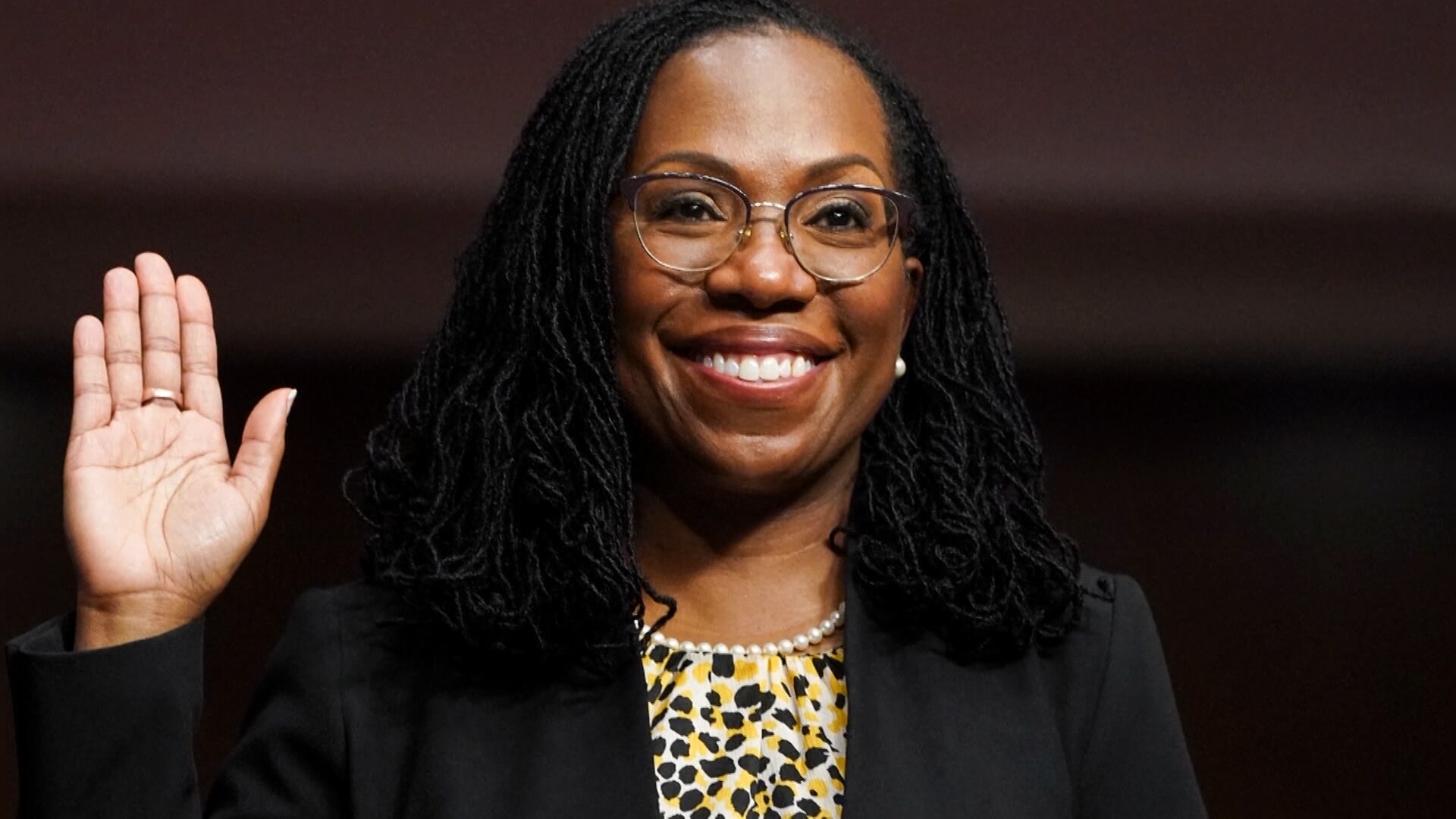
If confirmed, judge Ketanji Brown Jackson could become the first black woman on the bench of the U.S. Supreme Court. Cheddar News speaks with Katie Barlow, Chief Legal Correspondent at Fox 5 to discuss the significance of the nomination.
The European Union is historically divided and slow when it comes to decision-making, but in the recent weeks, the 27 members have agreed upon several sanctions and decisions regarding foreign policy and defense. The EU has cut off Russian banks from the swift payment system, blocked Russian propaganda channels, and closed European skies for air travel to and from Russia. Germany, for example, who has refused to send any deadly weapons to conflict zones, has now agreed to send lethal weapons to Ukraine. Rupert Steiner, London Bureau Chief at Barron's, joins cheddar news to discuss.
Sam Stovall, Chief Investment Strategist at CFRA Research, joins Cheddar News' Closing Bell where he dives into the factors contributing to Monday's market plunge and what could be in store when February's CPI data comes out on Tuesday.
Derek Shearer, former U.S. Ambassador to Finland and contributing writer for Washington Monthly, joins Cheddar News to discuss the latest developments in the Russia-Ukraine conflict.