Argentina's stock market and currency value plummeted this week following a shocking electoral defeat on Sunday for President Mauricio Macri, the nation's conservative leader.
The Argentine peso fell by nearly 30 percent on Monday and the Merval Index on the Buenos Aires Stock Exchange closed the day down 31 percent. Modest gains were made in opening trading hours on Tuesday, although stocks overall remain way down.
The sudden collapse comes after Macri was trounced in a primary election by his center-left opponent, Alberto Fernández, and his running mate Cristina Fernández de Kirchner, the former president who implemented several populist economic policies during her tenure from 2007 to 2015.
The government "will continue to work side-by-side, taking care of our task," Macri said during a press conference on Monday. "We are here to continue working, convinced that we still have many more things to show, to propose, to debate, to do."
Argentina holds a nationwide primary vote ahead of its general presidential elections to narrow the field of contenders. Only candidates that receive a minimum of 1.5 percent of votes are allowed on the general ballot, which will be voted upon on October 27. Macri was elected in 2015 as the pro-business candidate and is currently seeking a second term. Despite facing widespread criticism for his austerity measures, Macri was largely viewed as the frontrunner.
"In Argentina, nowadays, you have some segments of the middle class which are not happy with Macri administration," Ezequiel Burgos, economics editor at the major newspaper Clarín, told Cheddar.
Argentina has faced several economic crises in recent years as its economy continues to be burdened by inflation and debt. Just last year, Macri slashed nearly half of the nation's government ministries and hiked export taxes after securing a $57 billion bailout from the International Monetary Fund (IMF) — the largest aid package in the organization's history.
Last month, the IMF released the latest installment of the loan, bringing the total disbursements so far to $44.1 billion.
"The Argentine government has consistently demonstrated its commitment to fiscal discipline," David Lipton, the IMF's acting managing director, said in a statement when the release was approved in July. "Although inflation is still high, it is now on a downward path that is expected to continue in the coming months."
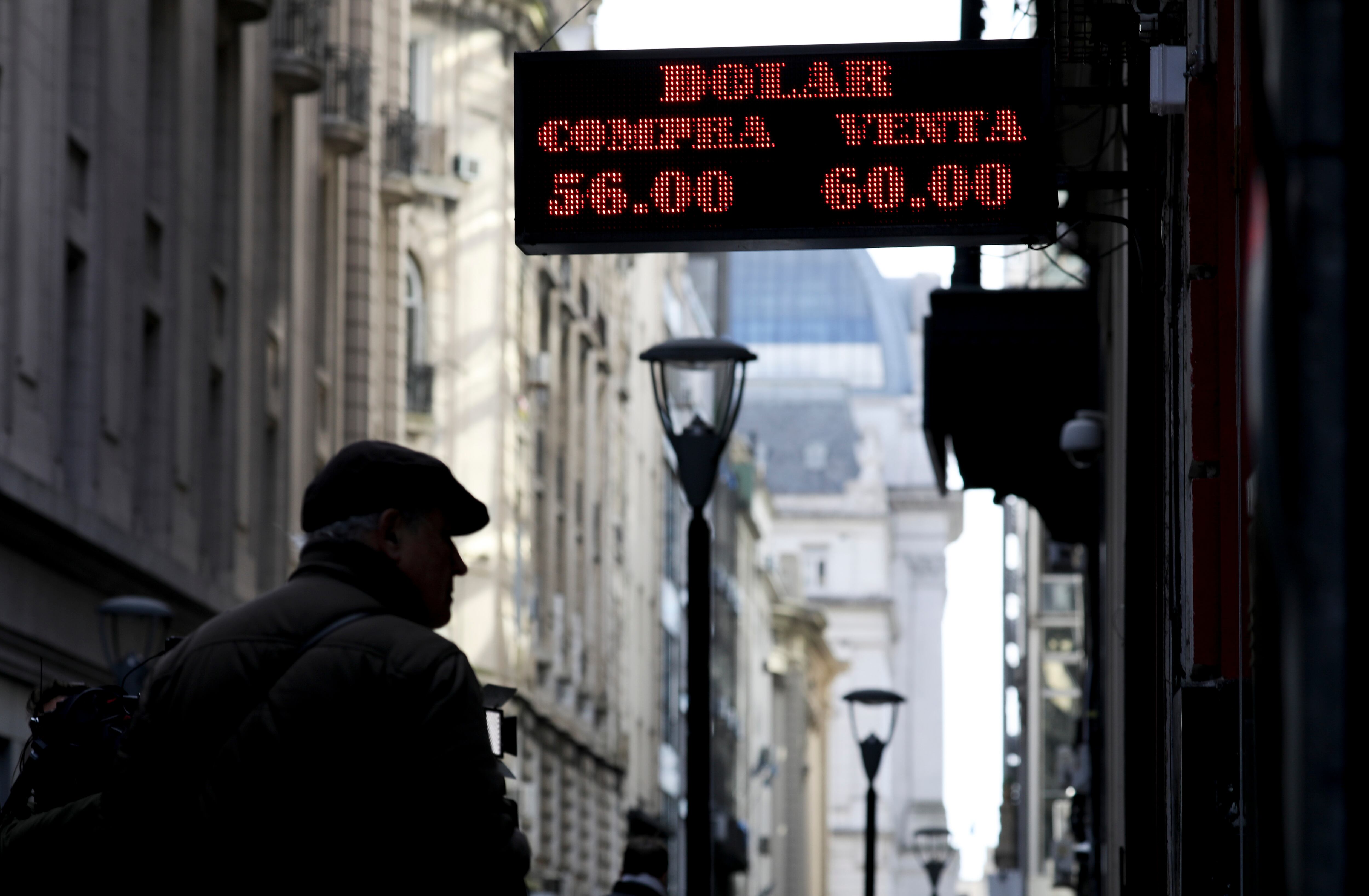
Yet Burgos told Cheddar that the post-election economic nosedive will have a "huge impact" on inflation, which, he said, is forecasted to rise by over 50 percent this year.
The election outcome also forecasted potential distributions to the European Union's recently inked trade agreement with Mercosur, the South American trade bloc currently comprised of Argentina, Brazil, Paraguay, and Uruguay. The deal, which was signed in June, was the largest trading pact concluded by the EU and was greatly supported by Macri. Fernández and Kirchner, however, have expressed skepticism over the deal.
"I also want to say that every election is a message and that we listen to it," Macri added on Monday, noting that the votes for Fernández "represent an accumulated anger" over economic grievances.