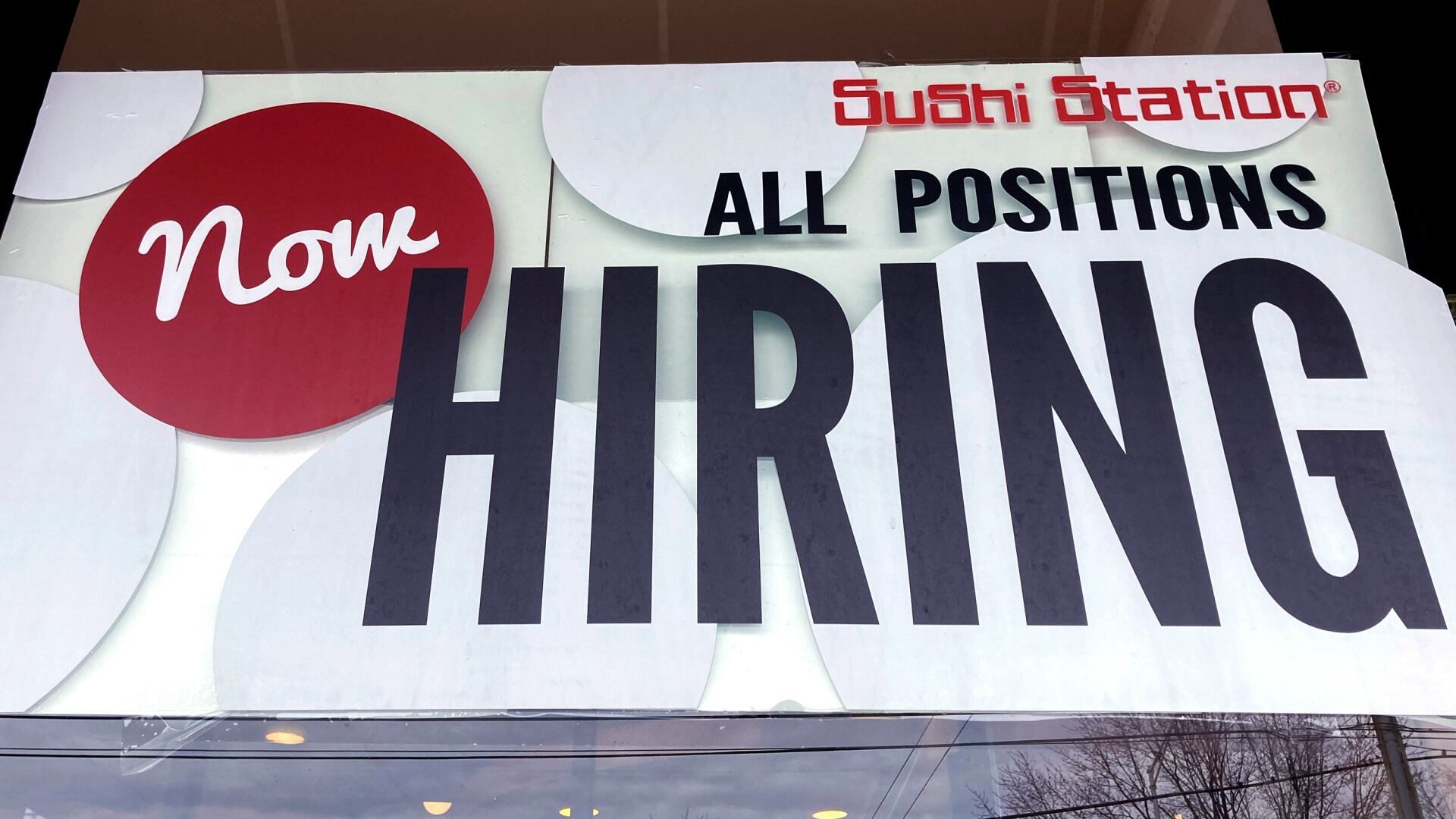
A hiring sign is displayed at a restaurant in Rolling Meadows, Ill., Tuesday, Dec. 27, 2022. On Thursday, the Labor Department reports on the number of people who applied for unemployment benefits last week. (AP Photo/Nam Y. Huh, File)
By Matt Ott
The number of Americans seeking unemployment aid was higher over the past few months than the government had initially reported, reflecting a modest rise in layoffs as the economy has slowed in the face of higher interest rates.
The Labor Department reported Thursday that the number of applications has been above 200,000 since early February — above previous estimates, though still relatively low by historical standards.
The department has revised its estimates of the number of weekly applications for jobless benefits under a new formula it is using to reflect seasonal adjustments. The new formula is intended to more accurately capture seasonal patterns in job losses.
For the week that ended April 1, the number of Americans applying for jobless aid was 228,000, the government estimated. That was down from 246,000 in the previous week and 247,000 in the week before that. Using its new seasonal adjustment formula, the government revised up each of those figures by nearly 50,000.
Applications for unemployment benefits serve as a proxy for the number of job cuts because most people who are laid off file for jobless aid. About 1.82 million people were receiving jobless aid in the week that ended March 25, an increase of 6,000 from the week before.
Though the U.S. labor market remains healthy, layoffs have been mounting in the technology sector, where many companies hired aggressively during the pandemic. IBM, Microsoft, Salesforce, Twitter and DoorDash have all announced layoffs in recent months. Amazon and Facebook have announced two sets of job cuts since the beginning of 2023.
“The trend in seasonally adjusted initial claims is noticeably higher than previously estimated, which does suggest that the flurry of layoff announcements so far this year has begun to show up in these data,” Stephen Stanley, chief U.S. economist of Santander U.S. Capital Markets, wrote in a research note.
It's a tough time for the job market. Amid wider economic uncertainty, some analysts have said that businesses are at a “no-hire, no fire” standstill. At the same time, some sizeable layoffs have continued to pile up — raising worker anxieties across sectors. Some companies have pointed to rising operational costs due to U.S.'s new tariffs, while others have redirected money to artificial intelligence investments. Workers in the public sector have also been hit hard. Federal jobs were cut by the thousands earlier this year. And many workers are now going without pay as the U.S. government shutdown has now dragged on for more than a month.
Nvidia smashes earnings with record-breaking revenue and soaring Blackwell demand as shares slip this morning, Barron’s senior writer Adam Levine unpacks it all
Jeff Wagoner, CEO of Outrigger Hospitality Group, discusses the company’s coral preservation initiatives and sustainable practices at their hotels and resorts.
Dena Jalbert, Head of M&A at Align Advisory, discusses the state of mergers and acquisitions in 2025 and beyond, highlighting key trends and opportunities.
Kim Perell, author and entrepreneur, shares actionable tips and tricks to help current and aspiring entrepreneurs kick off 2026 with confidence and momentum.
Computer chipmaker Nvidia is poised to release a quarterly earnings report that is expected to either deepen a recent downturn in the stock market or prompt an ebullient sigh of relief among investors increasingly worried the world’s most valuable company is perched upon an artificial intelligence bubble about to burst.
Emera CEO Scott Balfour discusses soaring energy demand, AI-driven grid challenges, clean-power investments, and how the company is building a resilient future.
JB Mackenzie discusses Robinhood’s new entertainment prediction markets, letting users engage with pop culture, award shows, and more through low-stakes bets.