SAN FRANCISCO (AP) — Apple snapped out of a recent iPhone sales slump during its summer quarter, an early sign that its recent efforts to revive demand for its marquee product with an infusion of artificial intelligence are paying off.
Sales of the iPhone totaled $46.22 billion for the July-September period, a 6% increase from the same time last year, according to Apple’s fiscal fourth-quarter report released Thursday. That improvement reversed two consecutive year-over-year declines in the iPhone’s quarterly sales.
The iPhone boost helped Apple deliver total quarterly revenue and profit that exceeded the analyst projections that sway investors, excluding a one-time charge of $10.2 billion to account for a recent European Union court decision that lumped the Cupertino, California, company with a huge bill for back taxes.
Apple earned $14.74 billion, or 97 cents per share, a 36% decrease from the same time last year. If not for the one-time tax hit, Apple said it would have earned $1.64 per share — topping the $1.60 per share predicted by analysts, according to FactSet Research. Revenue rose 6% from last year to $94.93 billion, about $400 million more than analysts forecast.
But investors evidently were hoping for an even better quarter and appeared disappointed by an Apple forecast that implied its revenue for the October-December quarter covering the holiday shopping season might not grow as robustly as analysts envisioned. Apple's stock price shed about 2% in Thursday's extended trading, leaving the shares hovering around $221 — well below their peak of about $237 reached in mid-October.
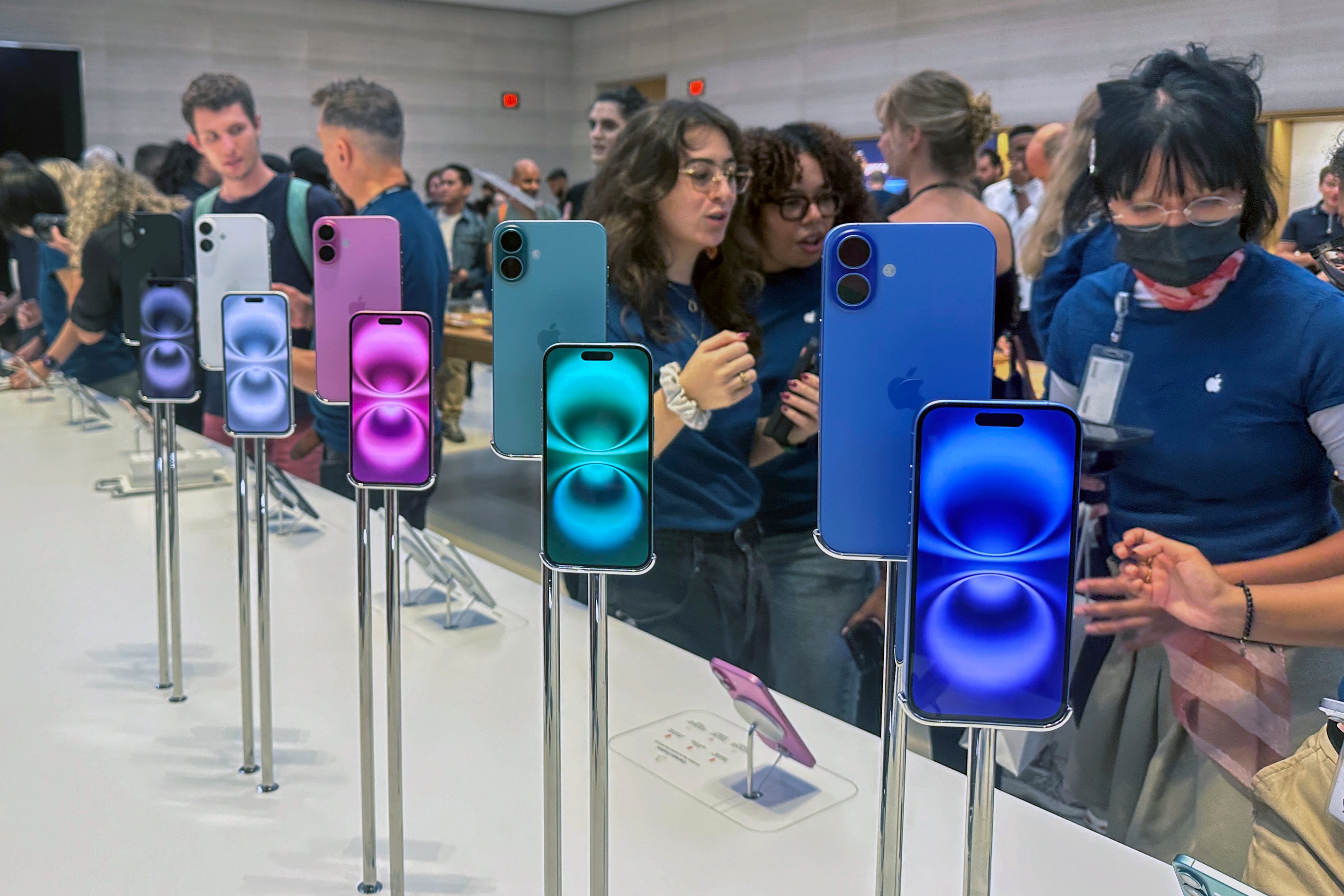
The latest quarterly results captured the first few days that consumers were able to buy a new iPhone 16 line-up that included four different models designed to handle a variety of AI wizardry that the company is marketing as “Apple Intelligence.” The branding is part of Apple’s effort to distinguish its approach to AI from rivals such as Samsung and Google that got a head start on bringing the technology to smartphones.
Even though the iPhone 16 was specifically built with AI in mind, the technology didn’t become available until Apple released a free software update earlier this week that activated its first batch of technological tricks, including a feature designed to make its virtual assistant Siri smarter, more versatile and more colorful. And those improvements are only available in the U.S. for now.
“This is just the beginning of what we believe generative AI can do,” Apple CEO Tim Cook told analysts during a Thursday conference call.
Cook said plans to expand the AI iPhone features into other countries in December, as well as roll out other software updates that will inject even more of the technology in the iPhone 16 and two high-end iPhone 15 models that are also equipped with the special computer chips needed for the slick new features. The December expansion will include an option to connect with OpenAI's ChatGPT to take advantage of technology that Apple isn't making on its own. More languages
Investors are betting that as Apple’s AI becomes more broadly available, it will prompt the hundreds of millions of consumers who are using older iPhones to upgrade to newer models in order to get their hands on the latest technology.
“We believe it’s a compelling upgrade reason,” Cook asserted. But Investing.com analyst Thomas Monteiro believes iPhone sales would already be accelerating at a faster pace if consumers were blown away by Apple’s AI technology, increasing the pressure on the company “to do an overall better job to impress the public.”