*By Alisha Haridasani*
Apple wants to turn its Pay function into a bigger revenue stream by expanding the use of its cashless payment tool to include a wider range of transactions.
At its annual developers conference this week, Apple announced partnerships with six American universities to incorporate their students' IDs into the Pay and Wallet system.
“When you look at students, if you’ll remember, you use your ID to do so many things ー to get into your dorm room, to go to the library, to pay for your food and your meal plan, to check in to the work out facilities,” Jennifer Bailey, head of Apple Pay, said in an interview with Cheddar’s Hope King. “Now having it in their phones in a secure way, we think students are going to love it.”
Apple Pay also launched a transit payment system in four Chinese cities earlier this year, allowing users to pay for train and bus rides using the Pay tool.
“People love to use it for everyday commuting,” said Bailey. The feature is available in cities in Japan, as well as Moscow, St. Petersburg, London, Chicago, Portland, Ore., and Salt Lake City. There are plans to integrate it with New York’s MTA system.
Apple’s efforts to expand the Pay and Wallet tools are part of its wider strategy to boost its services unit, which includes Pay, Music, and the iCloud. As iPhone sales start to slow, the company's services business become more important.
Revenue from Apple’s services accounted for around 15 percent of revenue in the [second quarter](https://www.apple.com/newsroom/pdfs/Q2_FY18_Data_Summary.pdf), bringing in $9 billion. While Apple doesn’t break down how each unit fares, the CFO Luca Maestri told [Bloomberg](https://www.bloomberg.com/news/articles/2018-05-01/apple-paid-subscribers-grew-by-100-million-from-year-ago) there are 270 million paid subscribers of its services.
The company is also investing more than [$1 billion](https://www.nytimes.com/2018/03/25/business/media/apple-hollywood-streaming.html) building out its entertainment unit. Details are sparse, but so far the company has courted the Hollywood stars Reese Witherspoon, Jennifer Aniston, Damien Chazelle, and Steven Spielberg for a dozen projects that are slated to be released next year.
For the full interview, [click here](https://cheddar.com/videos/apple-pay-vp-jennifer-bailey-on-future-of-mobile-payments).
The two tech- billionaires Elon Musk and Jack Dorsey are the latest voices to discuss the new hypothetical internet called Web 3.0. According to the billionaires, the new concept is just a "marketing buzzword" and cannot exist without venture capitalists or large backing. However, advocates of the Web 3.0 believe this decentralized space is the next big thing to help put ownership back into the hands of the people. Senior News Editor at The Verge, Richard Lawler, joined Cheddar to discuss more.
This year, the games market will generate total revenues of $180.3 billion dollars, a significant increase from 2020. While the industry continues to grow and expand into new spaces, such as the metaverse, there is still plenty of room for growth and reform in this male-dominated market. Katie Robinson, content creator, joins Cheddar News to discuss.
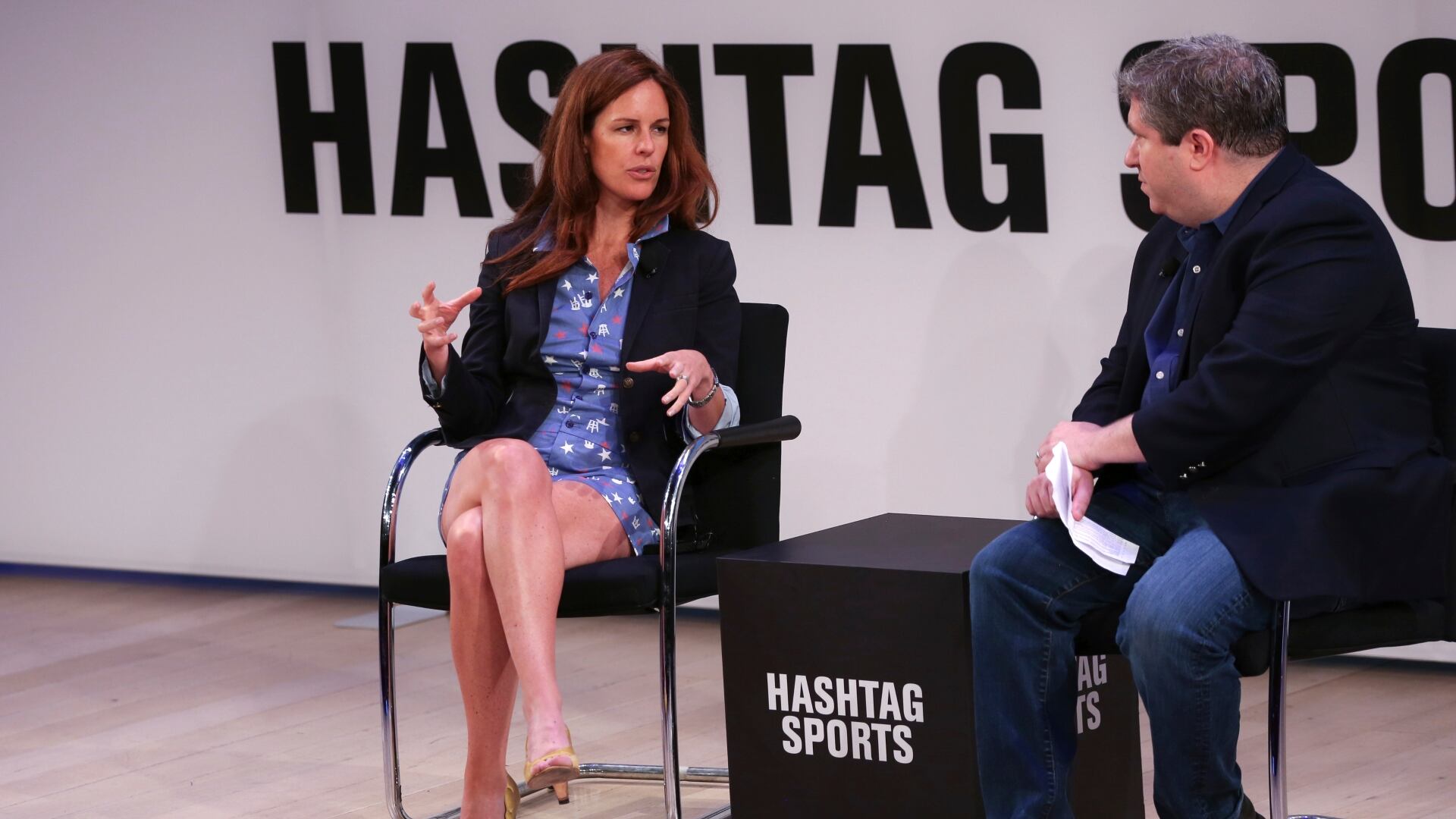
Barstool Sports CEO Erika Nardini joined Cheddar's Kristen Scholer to discuss plans for the future even as COVID-19 upended Barstool's sponsorship of the Arizona Bowl featuring the Boise State Broncos and the Central Michigan Chippewas due to the spreading omicron variant. "In our case as a company, coronavirus has been a big boom for us," she noted. "We've been able to create a lot of new programming, launch a lot of different personalities, and frankly take share from traditional media, and that's what we've done the entire pandemic." While she admitted to taking a hit on the canceled Bowl game, live events aren't completely off the table for Barstool in 2022. Nardini also talked about potential sports betting expansion following its partnership with Penn National Gaming.
Interest in the concept of the metaverse is heating up as more companies get on board, and Cathy Hackl, CEO of Futures Intelligence Group, a metaverse-focused consultancy, joined Cheddar to talk about trends to watch out for in 2022 and what it will take for it to be more than just a buzzword. Hackl noted that businesses likely will have to consider big technology upgrades in the upcoming year in order to keep up. "We're going to need new levels of computing power to be able to enable shared virtual experiences, both in VR but also in augmented reality," she said.
Ron Gutman, Co-CEO of Intrivo, joins Cheddar News to discuss how the company is creating a test and tech solution for Covid testing called 2Gather, and how it's using data-driven digital diagnostics to make these tests widely available and affordable.
The metaverse took the world by storm in 2021 and it is just the beginning of the virtual universe. Consumers are jumping on board and companies like Meta and Roblox are already taking advantage. Entrepreneur Andrew Duplessie joined Cheddar to discuss how the metaverse will impact the future of socialization and business. "If I'm doing anything right now, I'm building an app, I'm jumping into that ecosystem, and I'm testing it. I'm seeing what people think," he said.