*By Alisha Haridasani*
Apple wants to turn its Pay function into a bigger revenue stream by expanding the use of its cashless payment tool to include a wider range of transactions.
At its annual developers conference this week, Apple announced partnerships with six American universities to incorporate their students' IDs into the Pay and Wallet system.
“When you look at students, if you’ll remember, you use your ID to do so many things ー to get into your dorm room, to go to the library, to pay for your food and your meal plan, to check in to the work out facilities,” Jennifer Bailey, head of Apple Pay, said in an interview with Cheddar’s Hope King. “Now having it in their phones in a secure way, we think students are going to love it.”
Apple Pay also launched a transit payment system in four Chinese cities earlier this year, allowing users to pay for train and bus rides using the Pay tool.
“People love to use it for everyday commuting,” said Bailey. The feature is available in cities in Japan, as well as Moscow, St. Petersburg, London, Chicago, Portland, Ore., and Salt Lake City. There are plans to integrate it with New York’s MTA system.
Apple’s efforts to expand the Pay and Wallet tools are part of its wider strategy to boost its services unit, which includes Pay, Music, and the iCloud. As iPhone sales start to slow, the company's services business become more important.
Revenue from Apple’s services accounted for around 15 percent of revenue in the [second quarter](https://www.apple.com/newsroom/pdfs/Q2_FY18_Data_Summary.pdf), bringing in $9 billion. While Apple doesn’t break down how each unit fares, the CFO Luca Maestri told [Bloomberg](https://www.bloomberg.com/news/articles/2018-05-01/apple-paid-subscribers-grew-by-100-million-from-year-ago) there are 270 million paid subscribers of its services.
The company is also investing more than [$1 billion](https://www.nytimes.com/2018/03/25/business/media/apple-hollywood-streaming.html) building out its entertainment unit. Details are sparse, but so far the company has courted the Hollywood stars Reese Witherspoon, Jennifer Aniston, Damien Chazelle, and Steven Spielberg for a dozen projects that are slated to be released next year.
For the full interview, [click here](https://cheddar.com/videos/apple-pay-vp-jennifer-bailey-on-future-of-mobile-payments).
Members of Congress have voted to advance a bill meant to address antitrust concerns related to tech giants including Amazon, Apple, Google, and Meta. The 'American Innovation and Choice Online Act' is largely seen as one of the best chances for the government to reign in Big Tech's dominance
Seth Schachner, Managing Director StratAmericas; Digital Business Executive joined Cheddar's Opening Bell to discuss.
The Federal Reserve released its highly-anticipated research weighing the pros and cons of a digital dollar in the U.S. The report comes as economic rivals like china have already piloted their own central bank digital currencies. Edward Moya, Senior Market Analyst, The Americas, Oanda, joined Cheddar's Opening Bell to discuss.
Verizon and AT&T officially launched their 5G wireless services Wednesday across the U.S. Despite pushback from U.S. airlines and the FAA over safety concerns, the telecom giants rolled out the next generation of wireless cellular technology, with speeds up to 20 times faster than 4G LTE. John Biggs, Editor, Tech Crunch joined Cheddar's Opening Bell to discuss.
Earnings season kicks into high gear this week as big players are on tap to report their Q4 numbers, including Microsoft, Apple, and Tesla. Investors will be watching for key indicators on how the companies are dealing with inflation, Omicron and interest rates. Christine Short, VP of Research, Wall Street Horizon joined Cheddar's Opening Bell to discuss.
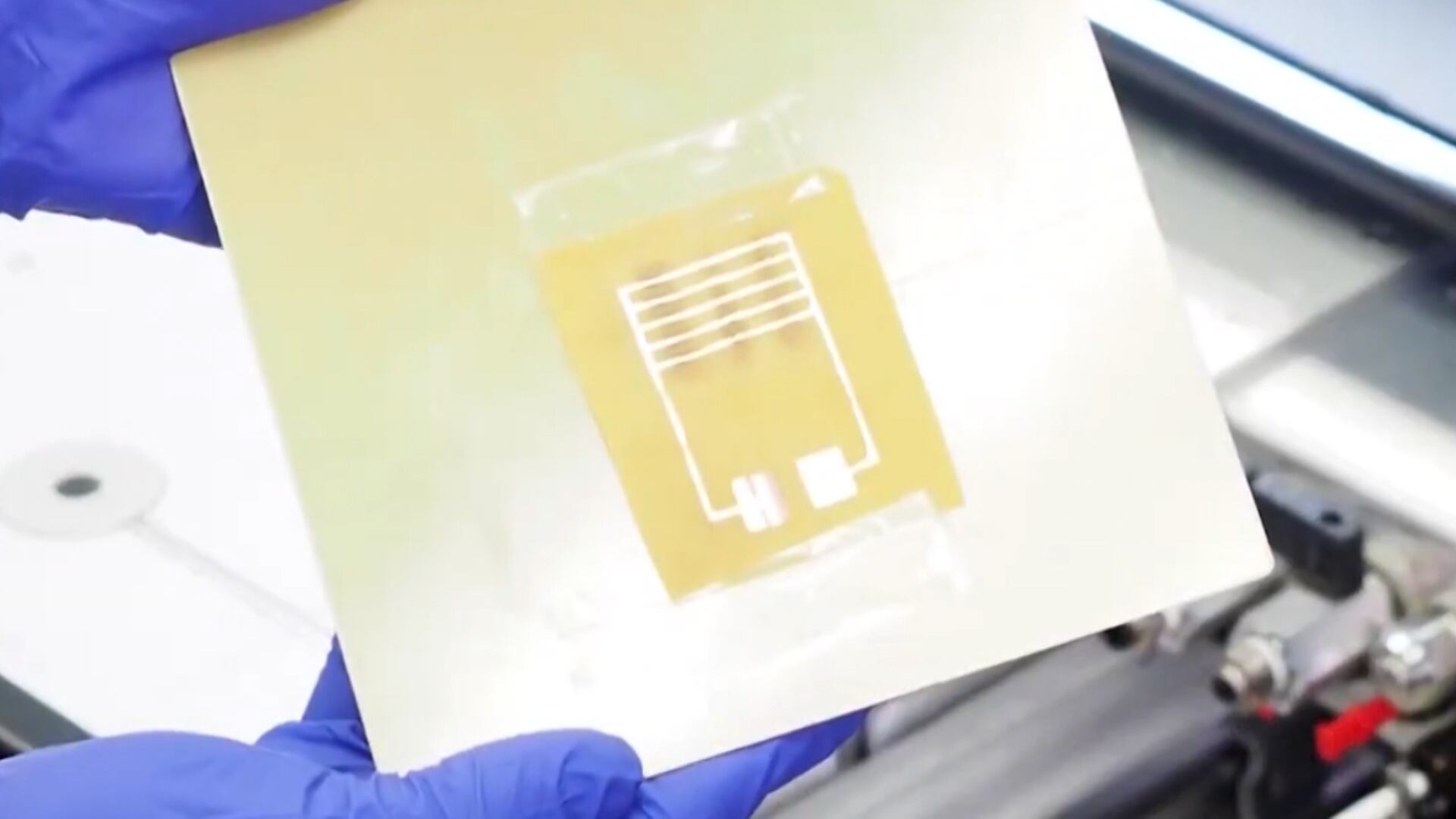
Stan Farnsworth, chief marketing officer at PulseForge, joined Cheddar to talk about his company's debut at CES 2022 and how it plans to innovate the sustainable tech manufacturing space. PulseForge is bringing a new approach to industrial thermal processing, which contributes to 30 percent of global greenhouse gas emissions, according to Farnsworth. "By using 85 percent less energy in the processing of materials through a variety of manufacturing processes, we can make a direct impact in reducing carbon output and reducing carbon footprint associated with manufacturing," he said.