By Julie Pace and Hannah Fingerhut
President Joe Biden is plunging into the next phase of his administration with the steady approval of a majority of Americans, according to a new poll from The Associated Press-NORC Center for Public Affairs Research. The survey shows Biden is buoyed in particular by the public's broad backing for his handling of the coronavirus pandemic.
In the fourth month of his presidency, Biden's overall approval rating sits at 63%. When it comes to the new Democratic president's handling of the pandemic, 71% of Americans approve, including 47% of Republicans.
The AP-NORC poll also shows an uptick in Americans' overall optimism about the state of the country. Fifty-four percent say the country is on the right track, higher than at any point in AP-NORC polls conducted since 2017; 44% think the nation is on the wrong track.
Those positive marks have fueled the Biden White House's confidence coming out of the president's first 100 days in office, a stretch in which he secured passage of a sweeping $1.9 trillion pandemic relief package and surged COVID-19 vaccines across the country. The U.S., which has suffered the most virus deaths of any nation, is now viewed enviably by much of the rest of the world for its speedy vaccination program and robust supplies of the shots.
“We are turning a corner," said Jeff Zients, the White House's COVID-19 response coordinator.
The improvements have also impacted Americans' concerns about the virus. The AP-NORC poll shows the public's worries about the pandemic are at their lowest level since February 2020, when the virus was first reaching the U.S. About half of Americans say they are at least somewhat worried that they or a relative could be infected with the virus, down from about 7 in 10 just a month earlier.
As has been the case throughout the pandemic, there is a wide partisan gap in Americans' views of pandemic risks. Among Democrats, 69% say they remain at least somewhat worried about being infected with the virus, compared with just 33% of Republicans.
Despite the overall positive assessments of Americans, Biden's advisers are well aware that the next phase of his presidency is potentially trickier. Vaccination rates have slowed, and the administration is grappling with how to persuade those who are reluctant to get the shots about their safety and efficacy.
Biden's legislative agenda for the rest of this year also faces obstacles on Capitol Hill. Republicans are resisting his calls for passing a sweeping infrastructure package, and there's insufficient support among Democrats for overhauling Senate rules in a way that would allow the party to tackle changes to immigration policy, gun laws and voting rights on its own.
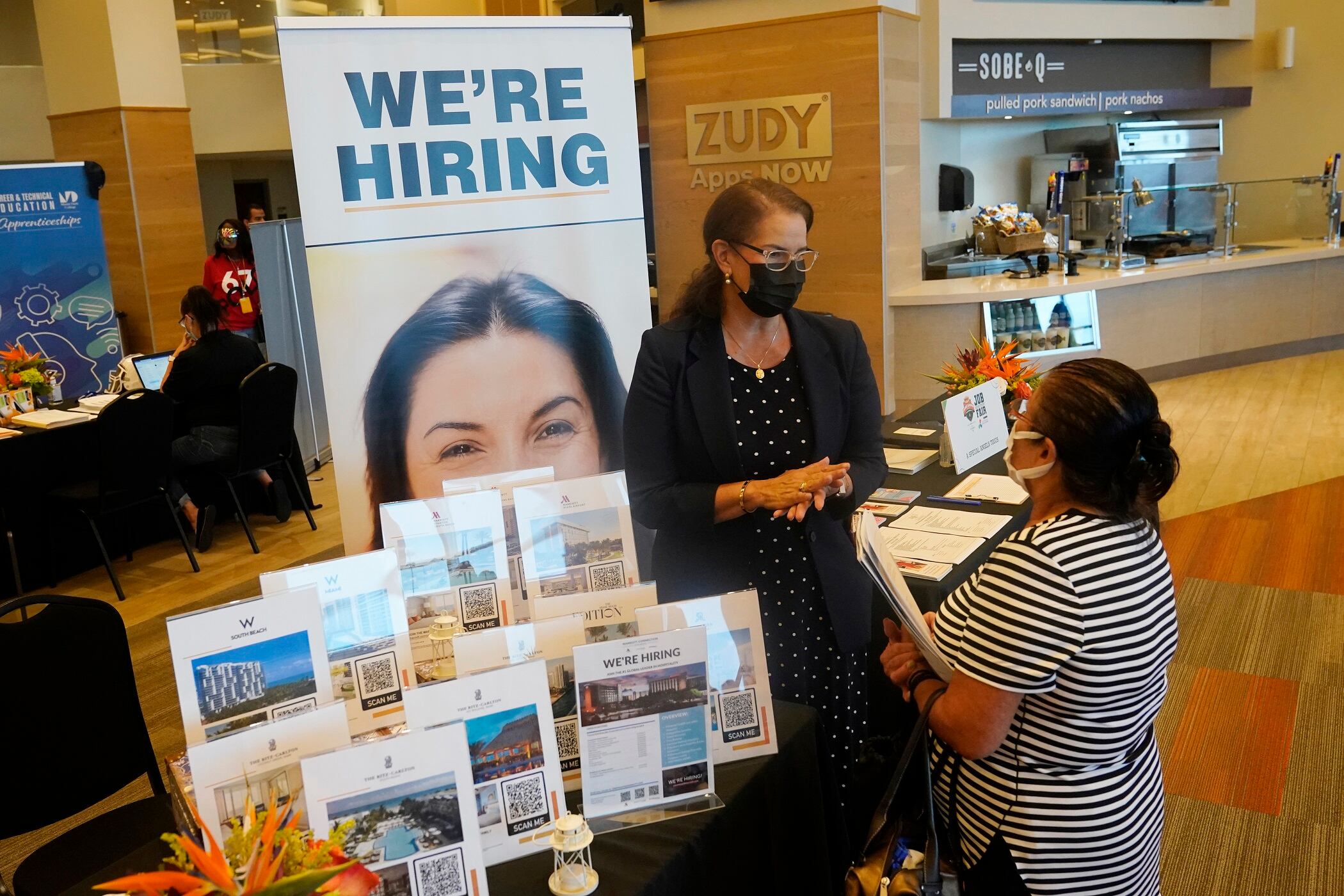
There are also potential warning signs emerging on the economy after a strong start to the year. A new government report out Friday showed employers added just 266,000 jobs in April, sharply lower than in March and far fewer than economists had expected. The slowdown was attributed to a multitude of factors, including nearly 3 million people reluctant to look for work because they fear catching the virus. Some businesses — and Republican lawmakers — also argue that a $300-a-week jobless benefit, paid for by the federal government, is discouraging some of the unemployed from taking new jobs.
Biden, however, argued that the report is an indication that more federal spending is needed to help bolster the economy. He's pitched to Congress a $4 trillion package for spending on infrastructure, education and children, a measure many liberal Democrats say should be bigger and most Republicans argue is far too large.
“We never thought that after the first 50 or 60 days everything would be fine,” Biden said after Friday's job report was released. "There’s more evidence our economy is moving in the right direction. But it’s clear we have a long way to go.”
What's unclear is whether the employment slowdown will continue or how it will impact Americans' views of Biden's handling of the economy. Ahead of Friday's new jobs numbers, his approval rating on the economy stood at a solid 57%.
Compared with Biden's approval ratings on the pandemic, there is a starker partisan divide in views of his handling of the economy. Nearly all Democrats, 91%, back his economic stewardship, while just 19% of GOP voters do.
While the pandemic and the economy have dominated Biden's early months in office, other significant issues loom.
Immigration in particular has become a growing concern for the White House as it grapples with an increase in migration, including by unaccompanied minors, at the U.S. border with Mexico. Republicans have tried to tie the uptick to Biden's rollback of more stringent border policies enacted by his predecessor, Donald Trump.
Immigration is also among Biden's lowest-rated issues in the AP-NORC survey. Overall, 43% approve of his handling of the issue, while 54% disapprove.
The president also receives lower marks on gun policy, which has catapulted back to the forefront of the national debate following a string of mass shootings across the country. Americans are largely split over Biden's approach to the issue, with 48% approving and 49% disapproving.
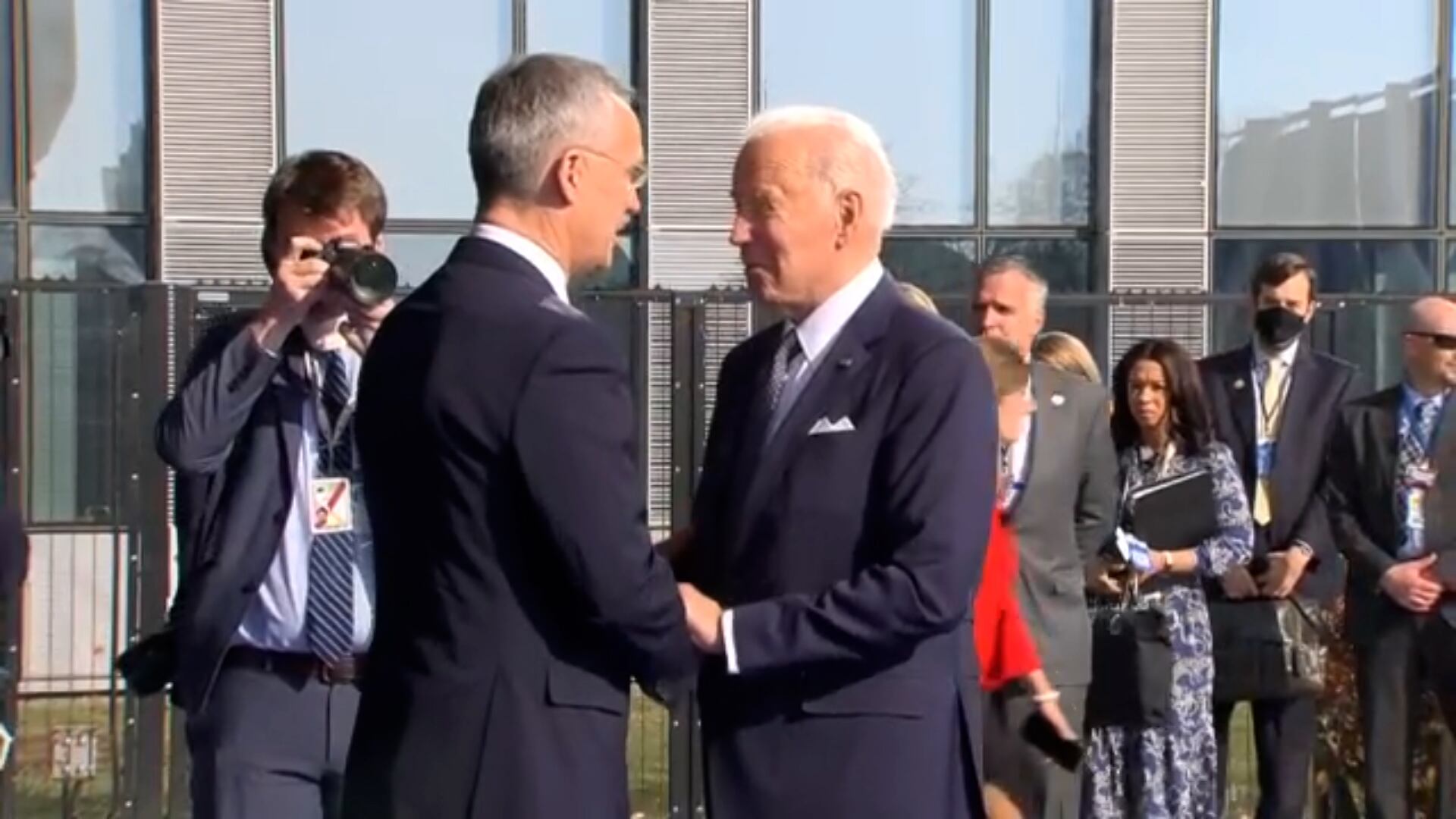
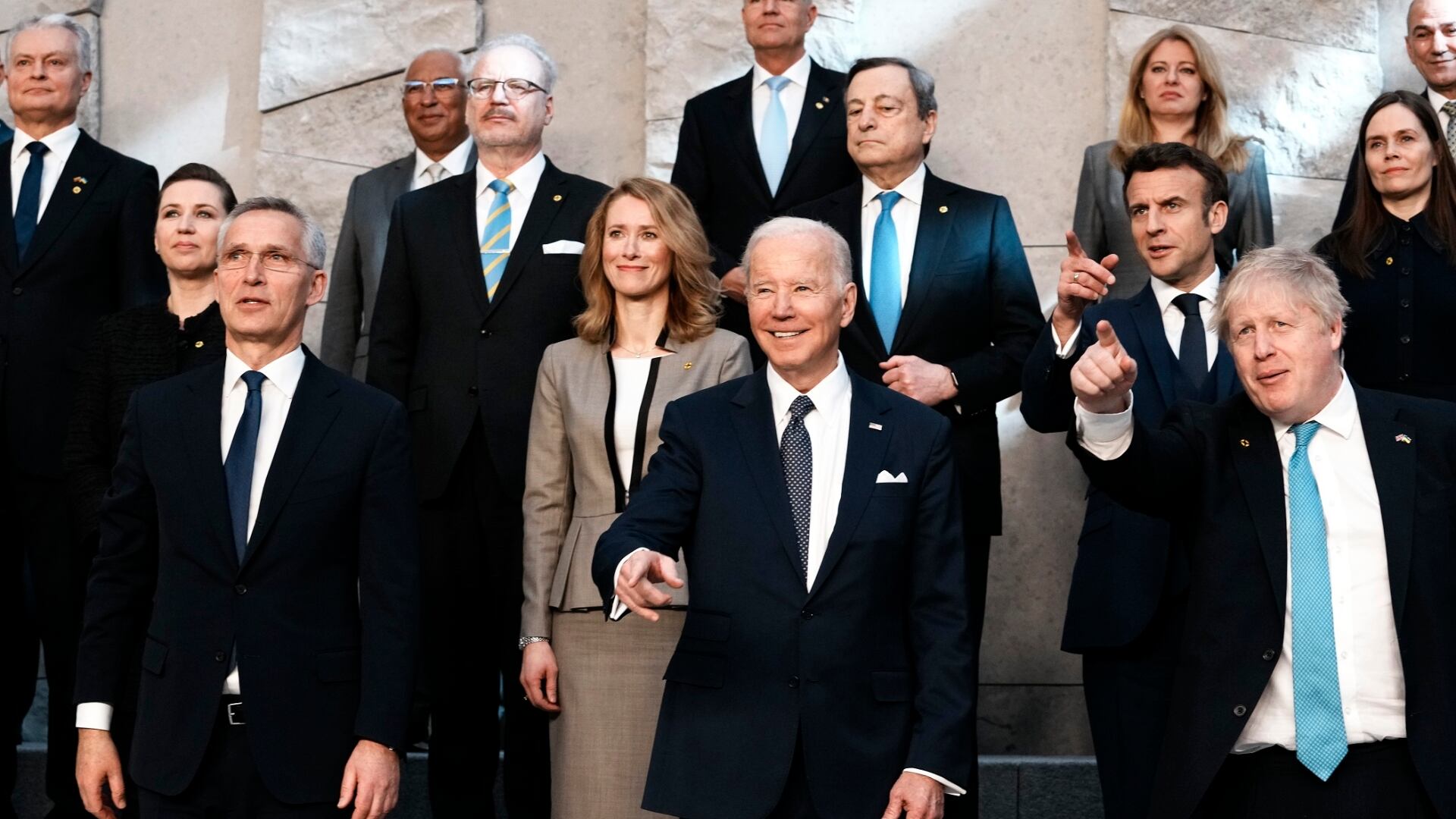
The next phase of Biden's presidency is also likely to include more action on foreign policy. He announced that all U.S. troops will withdraw from Afghanistan by September, and American negotiators have resumed discussions with Iran on a new nuclear agreement. The White House has also signaled that Biden may hold his first in-person meeting with Russian President Vladimir Putin this summer.
Thus far, a slim majority of Americans, 54%, say they approve of Biden's foreign policy.
___
The AP-NORC poll of 1,842 adults was conducted April 29-May 3 using a sample drawn from NORC’s probability-based AmeriSpeak Panel, which is designed to be representative of the U.S. population. The margin of sampling error for all respondents is plus or minus 3.2 percentage points.