By Anthony Izaguirre and Pia Deshpande
The slice of Michigan that covers Detroit, its suburbs, and towns dependent on the auto industry is coveted political terrain in one of this year's most important presidential swing states. It also has another distinction as home to one of the worst-performing U.S. Postal Service districts in the country.
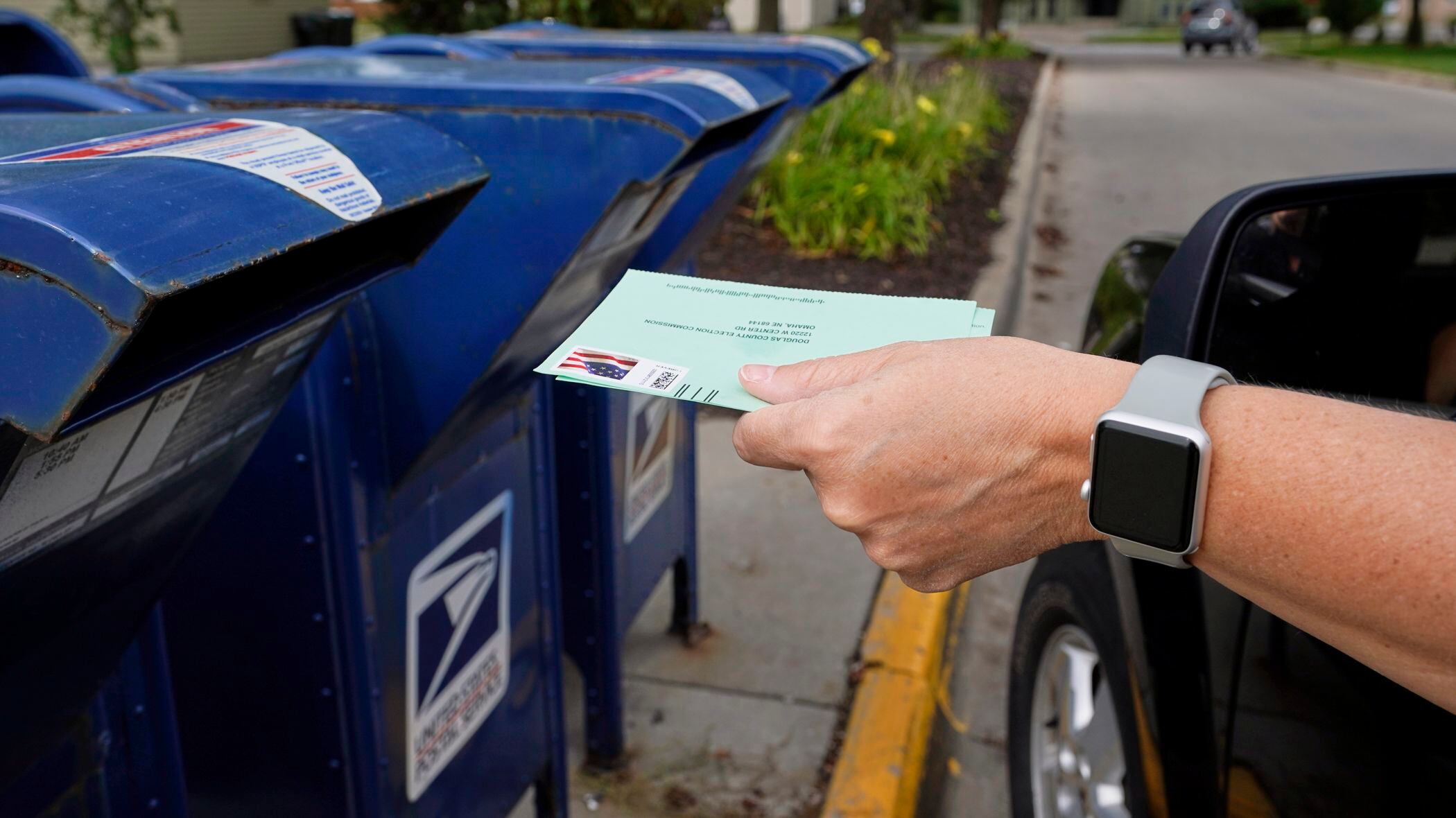
In Michigan and beyond, states are seeing record-breaking interest in mail-in voting during the coronavirus pandemic. But controversial changes at the Postal Service have compounded long-standing delivery delays nationwide and sparked concerns among election officials and voters alike over the agency's ability to deliver this fall.
Data obtained by The Associated Press shows postal districts across the country are missing by wide margins the agency's own goals for on-time delivery, raising the possibility that scores of mailed ballots could miss deadlines for reaching local election offices if voters wait too long. Missing a deadline is a key reason mail-in ballots get rejected.
Several postal districts serving urban regions in battleground states have a history of delivering mail at below the national targets and saw sharp drop-offs in performance over the summer. The message to voters is clear: Mail those ballots early.
"As soon as possible," said Michigan Secretary of State Jocelyn Benson, a Democrat.
The Postal Service, long an afterthought in the political process, has been drawn into the fray after its new leader, Postmaster General Louis DeJoy, implemented a series of cost-cutting measures that delayed deliveries nationwide. The changes have sparked a flurry of legal challenges and caused concerns over the agency's ability to handle the anticipated crush of election mail this year, although DeJoy has said it will be the Postal Service's top priority.
DeJoy, a GOP megadonor with no previous experience at the Postal Service, postponed the removal of mail sorting machines and collection boxes last month. He said it was "to avoid even the appearance of impact on election mail."
Despite pausing some policies, DeJoy left in place rules restricting when mail can leave warehouses, which several postal workers have said is a main culprit behind the delays. Federal judges have since ordered the Postal Service to halt all changes, although the agency said it is exploring its legal options.
On-time delivery across the country dipped substantially in the weeks after DeJoy took office in mid-June, according to internal weekly performance data obtained by The Associated Press through a Freedom of Information Act request. While service began rebounding toward the end of summer, no Postal Service region is meeting the agency's target of delivering more than 95% of first-class mail within five days.
"One of the most frustrating aspects about the changes that have happened at the Postal Service over the past several months is that it's created uncertainty and chaos where none existed prior, and now you do have so many citizens asking, 'Is my vote going to get there on time?'" Benson said.
Even as DeJoy took over, many of the Postal Service districts serving regions that are in important presidential swing states delivered mail at well below the national average. Quarterly data covering April through June shows that 17.5% of first-class mail took longer than three or five days to arrive at its destination in many parts of the country.
Mail arrived within three to five days less than 90% of the time in Milwaukee, Miami, Orlando, the Ohio valley, and in the North Carolina cities of Raleigh, Durham, and Charlotte, according to the agency's quarterly data.
Delivery times worsened after DeJoy started and remained below the agency's targets at the end of August. On-time delivery in northern Ohio, which includes Cleveland, dipped to as low as 63% in July before rising to 88% by the end of August.
The trend in Pennsylvania was similar. On-time delivery declined to as low as 79% for the Philadelphia area and to 67% for the central part of the state. Earlier this year, the Philadelphia district averaged 84.5% on-time delivery, according to the quarterly data.
Nick Custodio, deputy city commissioner in Philadelphia, urged mail-in voters to move quickly to obtain an absentee ballot and send it back to avoid any delivery delays.
"People should apply early," he said. "Apply now, in fact."
The Michigan secretary of state is mailing every registered voter a ballot application and is encouraging residents to make a plan for voting. That could include circumventing the Postal Service altogether through early voting or by placing ballots in drop boxes.
The postal district covering the eastern part of the state includes Detroit and other places that could determine how Michigan votes in the presidential race, including Dearborn, Flint, and Macomb County. On-time mail deliveries there fell to as low as 61% at the beginning of last month and rose to around 80% by the end of August. The greater Michigan area, which covers a part of the state that leans more Republican overall, performed at just over 90%.
"We're encouraging voters to make a plan to vote now," said Merissa Kovach, a policy strategist at the American Civil Liberties Union of Michigan, adding that voters should use ballot drop boxes if Election Day is nearing and they haven't yet mailed their ballot.
A judge last week said Michigan must count mailed absentee ballots that arrive within 14 days after Election Day if postmarked by Nov. 2. Republicans are trying to appeal.
Postal Service spokesman Dave Partenheimer said the agency is committed to improving service and pointed to a nearly 89% national on-time rate for first-class mail at the start of September.
On the ground, the public turmoil surrounding the Postal Service has at least some voters wondering if the mail-in system will work.
"Lots of customers have asked me if their ballots will get there on time," said Laura Hogg, a letter carrier in Minneapolis, Minnesota. "Some people have said they're going to go vote in person just because of the gravity of the election. They just want to make sure their vote is counted."
___
Izaguirre reported from Lindenhurst, New York. Deshpande reported from Chicago.
___
The Associated Press produced this coverage with support from the Carnegie Corporation of New York.