An AI-based drone speeds up the detection and monitoring of wildfires
By Pietro De Cristofaro
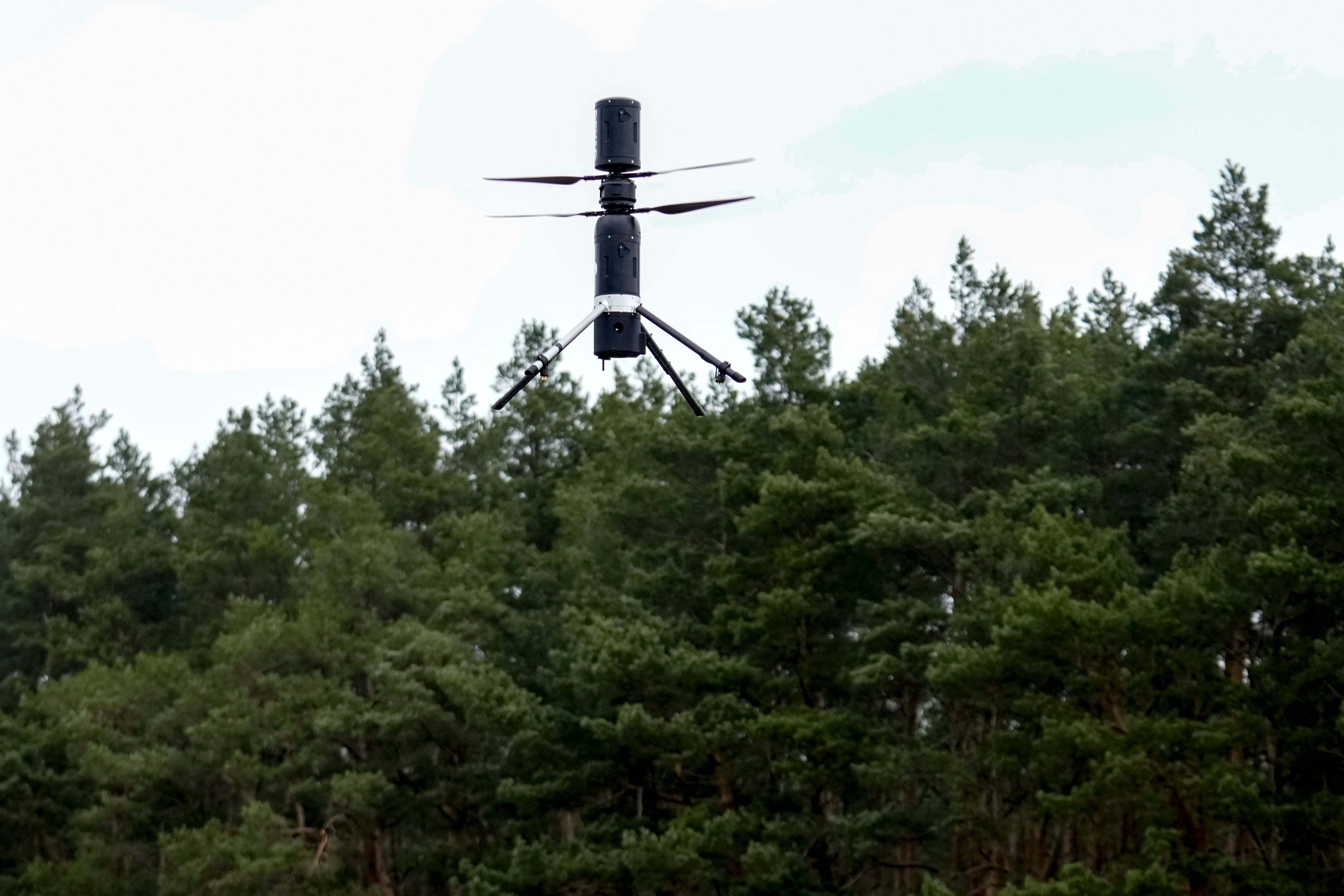
A prototype AI-based drone system with an autonomous Al-based system for early detection of forest fires by Dryad Networks, takes off during the presentation of Silvaguard, in Eberswalde, eastern Germany, Thursday, March 27, 2025. (AP Photo/Ebrahim Noroozi)
EBERSWALDE, Germany (AP) — A company that specializes in early wildfire detection has developed a new, AI-based drone it says will help speed up the detection, location and monitoring of fires.
The Silvaguard drone by Dryard Networks was presented Thursday in Eberswalde outside of Berlin as wildfires driven by extreme heat and climate change are becoming a more common, often deadly phenomenon around the globe.
The drone will deliver infrared images, among other things, and works in combination with a fire detection system that the company developed earlier and that's already being used in several countries. The fire detection system, called Silvanet, is designed to detect wildfires at the smoldering stage using solar-powered gas sensors connected via a wireless network.
Each gas sensor can protect an area the size of a football field and be attached to a tree. The plan is that once Silvanet detects a fire, it will trigger a nearby Silvaguard drone to fly to the location and provide detailed images.
“Today we saw a combination of Silvanet — the solar powered gas sensors that detected the fire within minutes — with Silvaguard, the first prototype of an autonomous, an AI enabled drone that we dispatched in response to a fire," said Carsten Brinkschulte, the CEO and co-founder, Dryad Networks.
The drone “flew autonomously to the location of the sensor, detecting the fire, and delivered overhead infrared and optical video from the point of fire,” he said of the newly developed drone.
The company is still waiting to get the go-ahead for the commercial use of Silvaguard drone from authorities.
The information about the fire, including geographic coordinates, video and infrared images, will then be sent to the firefighters who will then know where the fire is spreading and how big it is, which will help them know how many firefighters need to be deployed.
“When it comes to wildfires, time is of the essence, you cannot be fast enough,” Brinkschulte said.
The end of 2025 is almost upon us. And it’s time to unpack Spotify Wrapped. On Wednesday, the music streaming giant delivered its annual recap — giving its hundreds of millions of users worldwide a look at the top songs, artists, podcasts and other audio they listened to over the past year. Spotify isn’t the only platform to roll out a yearly glimpse of data collected from consumers’ online lives. But since its launch about a decade ago, Wrapped has become one of the most anticipated. And Spotify is billing the 2025 edition to be the biggest yet, with a host of new features it hopes may also address some disappointments users had last year.
Elon Musk’s X unveiled a feature that lets users see where an account is based. Online sleuths and experts quickly found that many popular accounts, often posting in support of the U.S. MAGA movement with thousands or hundreds of thousands of followers, are based outside the U.S. This raises concerns about foreign influence in U.S. politics.
The Enhanced Games is going public in two ways — with a new listing on the Nadsaq stock exchange and also by offering a direct-to-consumer business focused on performance products.
Real estate software company RealPage has agreed to stop sharing nonpublic information between landlords as part of a settlement with the Department of Justice.
2025’s top Black Friday tech deals from smart speakers to wearables. Tom’s Guide editor Kate Kozuch shares expert picks and tips for smart holiday shopping.
Computer chipmaker Nvidia is poised to release a quarterly earnings report that is expected to either deepen a recent downturn in the stock market or prompt an ebullient sigh of relief among investors increasingly worried the world’s most valuable company is perched upon an artificial intelligence bubble about to burst.
Phoebe Gates and Sophia Kianni introduce Phia, a fashion tech startup that helps users find price comparisons and discover alternative options for apparel