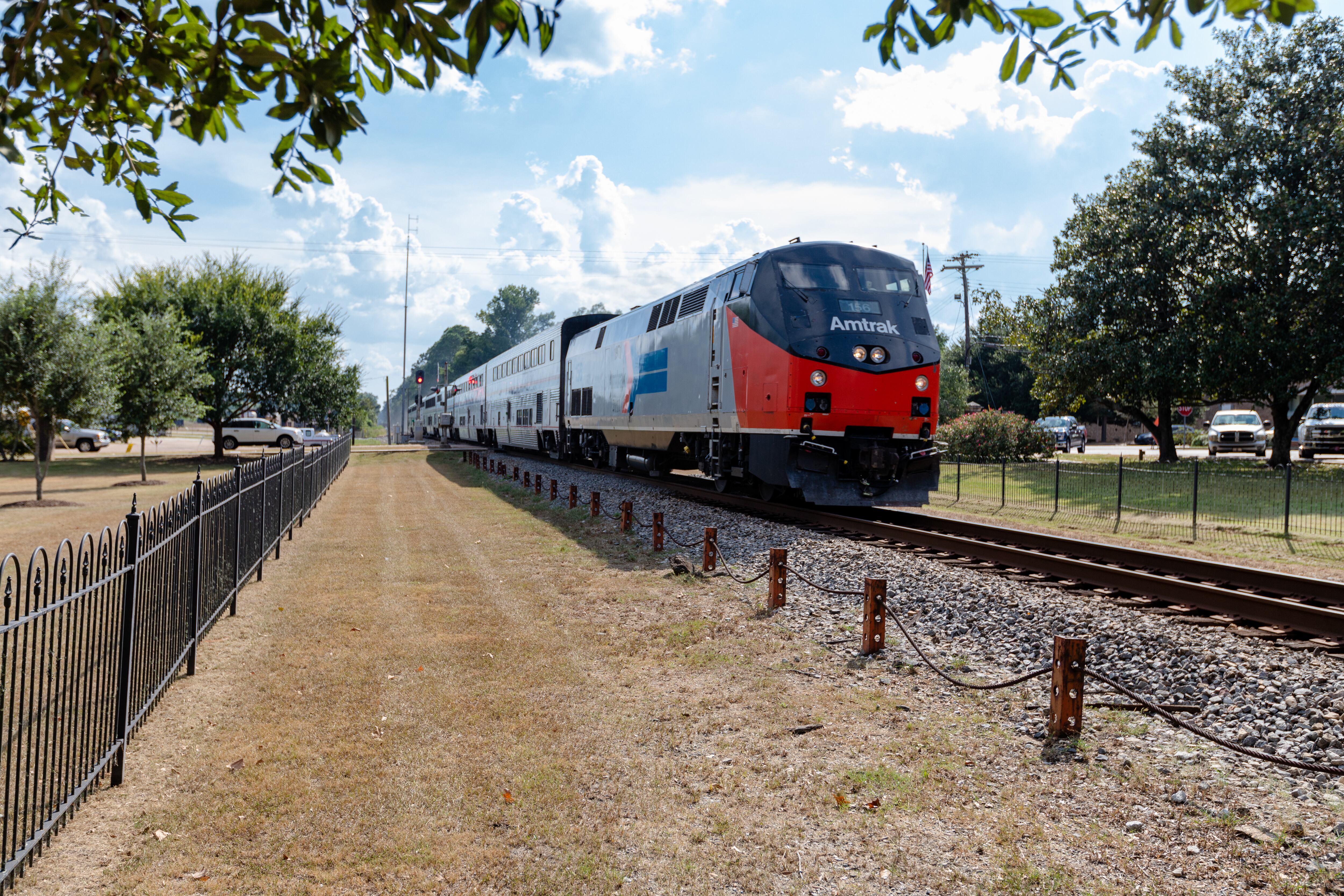
Amtrak is considering adding a number of new stops along its heavily traveled Northeast Corridor in a bid to "connect every single municipality that we touch" from Virginia to Maine, CEO Richard Anderson said in a call with reporters Friday.
The potential new train service is part of a long-term plan to vastly expand the types of travel – and range of ticket prices – that the state and federally funded, privately run passenger rail company provides. It comes roughly two years into an ambitious effort by Amtrak, under intense pressure from federal and state lawmakers in the wake of cost overruns and a series of deadly crashes, to slash spending, boost revenue, enhance service, and improve safety across the network.
The effort so far seems to be succeeding: Just three years after posting an operating loss of $230 million – and annual losses that soared as high as $469 million between 2007 and 2012 – Amtrak this year reported that its operating loss amounted to just $29.8 million, which it declared its "best operating performance in history."
The company also asserted that it's finally in compliance with federal requirements to install "positive train control," or PTC, a safety system that can slow or stop a train going too fast and which has long been a feature of European and Asian rail networks. Congress had initially required that PTC be installed by 2015 and later extended the deadline to 2018.
The system, if installed and activated, would likely have averted deadly crashes and derailments in 2016, 2017, and 2018 that left close to a dozen people dead and injured hundreds more. The deadly 2016 incident had prompted the National Transportation Safety Board to cite "deficient safety management across many levels" of Amtrak.
"We are in full compliance with the PTC statute," Anderson said on Friday's call. "On the railroad that we operate, we are essentially 100 percent installed on the PTC. On the remainder of the railroad required by statute to have PTC, we're 91 percent installed."
He noted that the railroad experienced no passenger or employee fatalities in 2019, reduced its customer incident rate by 26 percent, and saw a 72 percent improvement in serious injuries to employees.
The company meanwhile hit a new record in ridership with 32.5 million customer trips, representing an increase of 800,000 passengers from fiscal 2018 and a 3.6 percent increase in operating revenue. It meanwhile made $1.6 billion in capital improvements – a nearly 10 percent bump from last year – including on a number of projects sure to be noticed by passengers and, not least, the lawmakers responsible for approving Amtrak's funding: new interiors across the heavily traveled Northeast Corridor, a fleet of new cars to replace aging Acela trains that were rolled out at the turn of the century, station upgrades, and 75 new locomotives.
The moves come roughly two years into Anderson's tenure as CEO. A veteran executive of Delta Airlines, he has wasted little time in making big changes to Amtrak – and not without some opposition. Decisions to overhaul in-train meal options, replace some routes with buses, close call centers, and, perhaps most notably, reduce or wholly eliminate certain long-distance train routes that have long bedeviled the company's balance sheet have rankled some inside the company, as well as union officials and longtime Amtrak enthusiasts.
One train enthusiast, Bennett Levin, a former Philadelphia city official, has posted billboards alongside the tracks outside Philadelphia, declaring "FIRE ANDERSON" and "SAVE AMTRAK."
The ridership and revenue figures, however, suggest that Anderson's moves are widely popular, even despite periodic high-profile incidents, such as a train in Oregon in February that ended up being stranded by snow for 36 hours. As recently as 2018, the long-haul routes were posting losses of as much as $540 million, even as the profitable Northeast Corridor between Boston and the nation's capital was bringing in more than $524 million in earnings.
The company is seeking to build on this year's fiscal success by offering new types of service nationwide, and especially in the Northeast Corridor.
Earlier this year, Amtrak introduced nonstop trains between New York and the District of Columbia, connecting the cities in 2 hours and 35 minutes – about 20 minutes quicker than the normal high-speed Acela. Its new fleet of Acela trains that are expected to hit the rails in 2021, along with upgrades to tracks along the route, are expected to shorten the trip even further.
Amtrak is also looking at comparatively more local service: Taking a page from railroads overseas, Anderson said, the company aims to introduce trains that make more stops along the Northeast Corridor in addition to the nearly four-dozen station already visited by Northeast Regional trains.
"The long-term plan will be to run nonstop Acelas both ways in the peaks – in the mornings and the evenings, between New York and Washington, Boston and New York. Then we'll run the regular Acelas, then we'll run the current Northeast Regional. And then ultimately we need, much like European trains, trains that stop at virtually every location we can along the corridor," Anderson said.
He emphasized that he did not see that type of new service, if introduced, as competition with commuter rail offerings from agencies like New Jersey Transit or the Massachusetts Bay Transportation Authority.
"We don't view any expansion of rail service as competition," Anderson said. "We more view Amtrak as underpinning efforts all across the United States to expand rail service as part of our statutory mandate."
The leg between Boston and New York, as well as routes between Seattle and Portland, San Diego and Los Angeles, and Los Angeles and San Francisco, will also see new focus from Amtrak.
At the same time, the railroad is looking into new fare models, such as by offering lower fares in exchange for new restrictions on refunds, or for the new Northeast Corridor train with more stops.
"Those will be the significant areas of growth as we go into next year," Anderson said. "Our goal is to drive up the ridership by being able to offer a wider variety of fares that appeal to a wider variety of customers."