Americans cut back on their spending last month as a surge in COVID-19 cases kept people away from stores.
Retail sales fell a seasonal adjusted 1.1% in July from the month before, the U.S. Commerce Department said Tuesday. It was a much larger drop than the 0.3% decline Wall Street analysts had expected.
The report offers the first solid glimpse of how the spread of the delta variant of COVID-19 may have changed the spending habits of Americans. At the end of July, the U.S. Centers for Disease Control and Prevention began recommending that even vaccinated people start wearing masks indoors in public places.
According to Tuesday's report, spending fell at stores that sell clothing, furniture and sporting goods. At restaurant and bars, spending still rose nearly 2%, but the rate of growth has slowed from recent months before the delta variant spread and people were feeling safer about dining without their masks with others.
Economists think Americans are also shifting their spending from goods to services, things like haircuts or vacations, which are not included in Tuesday’s report. And rising prices for everything from food to washing machines may have checked spending.
Major retailers are releasing quarterly financial results this week, offering more insight into behavior during yet another uptick in infections. On Tuesday, Walmart raised its sales outlook for the year, a sign it expects Americans to keep on shopping at the same pace.
But the Commerce Department reported Tuesday that even online sales have begun to slow, falling 3.1% from the month before. Companies have reported a slowdown after astronomical growth last year as people stayed home and shopped more online during the pandemic.
Ebay, for example, said its number of active shoppers slipped 2% to 159 million in its latest quarter. UPS said it's shipping fewer packages in the U.S. And Amazon, the world's largest online retailer, said online sales grew 13% in its most recent quarter, the company’s smallest quarterly online sales growth in two years.
Commercial property ownership platform withco recently raised $32 million across a seed and Series A funding round. The company purchases properties and then rents them back to small business owners and works to transition them into full ownership. Founder and CEO Kevin Song says withco was inspired by his family's experience of operating a Brooklyn grocery store for two decades and being forced to shutter the business due to a doubling in rent by a new landlord. Now, Song says his mission is to help small business owners become commercial property owners, in a way that's simple and affordable. Song joined Cheddar News' Closing Bell to discuss.
David Nelson, Chief Strategist at Belpointe, joins Cheddar News' Closing Bell, where he says that Wednesday's market movement shows a rotation back into the industries that were hit hard in January, but says his eyes are firmly fixed on the January CPI data set to be released Thursday.
Earlier this week, Peloton announced a change in its C-suite, with new chief executive Barry McCarthy telling the company's remaining staff in an email that he’s, 'here for the comeback story.' Greg Martin, Co-Founder of Rainmaker Securities, joins Cheddar's Closing Bell where he discusses how difficult are Peloton's challenges will be to overcome, especially after the company recently laid off approximately 20% of its staff.
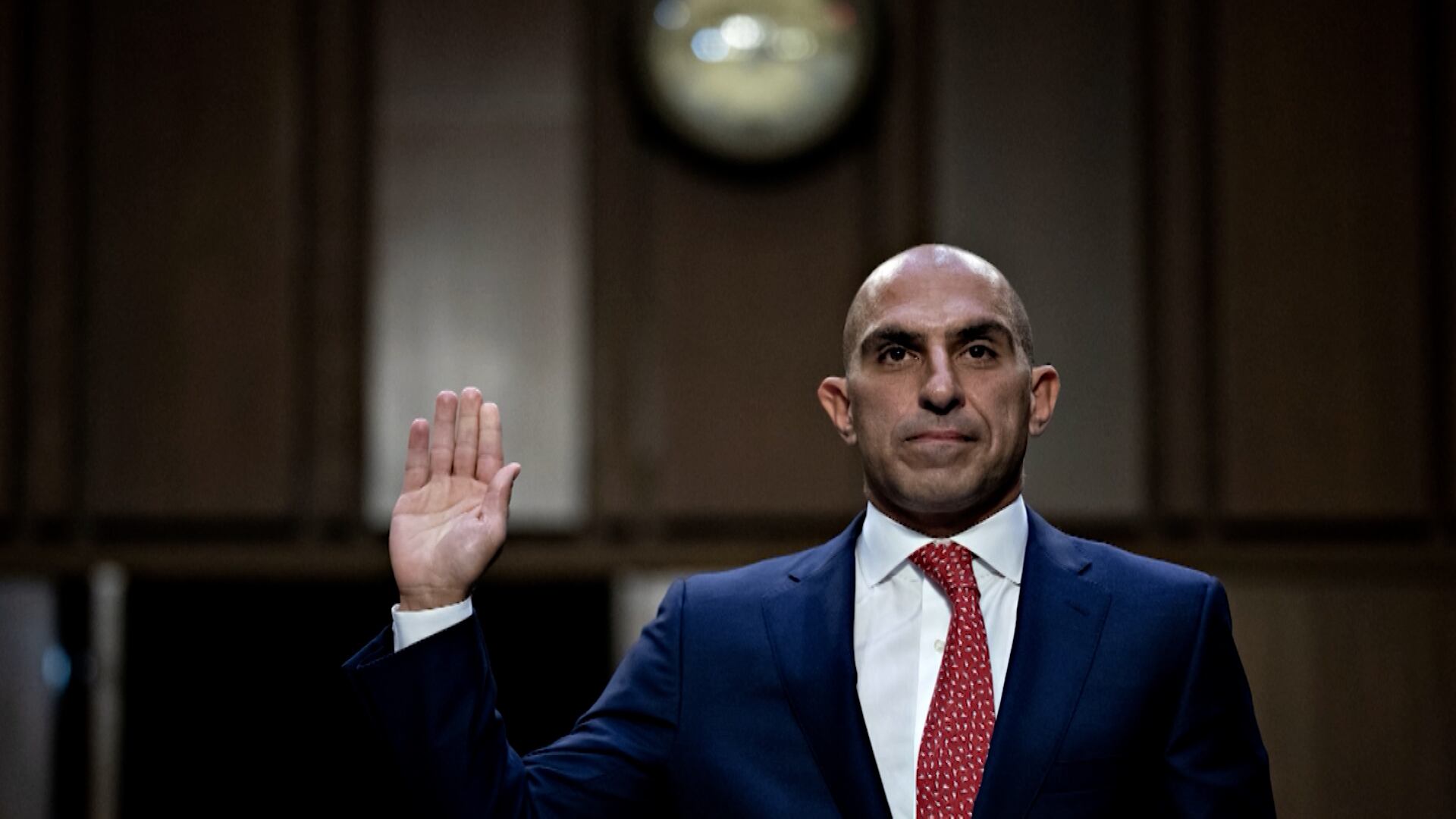
Ben McMillan, Founder and CIO at IDX Digital Assets, joins Cheddar News' Closing Bell, where he discusses the significance of CFTC Chairman Rostin Behnam testifying at Wednesday's Senate Agriculture Committee hearing, and when we could expect to see more regulation in place following the second straight day of congressional hearings on the crypto industry.
Truckers in Canada have blockaded the Ambassador Bridge, the busiest border crossing between Canada and the U.S. protesting a COVID-19 vaccine mandate. Cheddar News spoke with Samir Kapadia, head of trade practice at the Vogal Group, about how this impacts trade between the two countries.